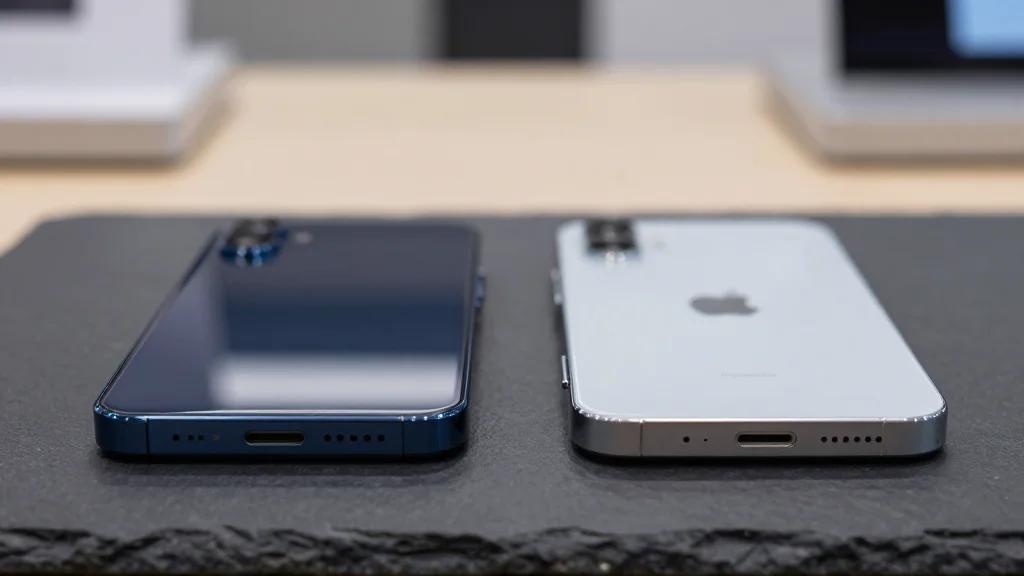
Vivo vs Samsung in India Smartphone Market Q1 2026: Leadership Stability Amid Demand Pressure
Companies Mentioned
Why It Matters
The results show that strong brand portfolios and adaptive pricing can preserve market leadership even as overall demand weakens, signaling a competitive edge for firms that balance premium and affordable offerings in price‑sensitive markets.
Key Takeaways
- •Vivo shipped 6.3 million phones, holding 20% market share in Q1 2026
- •Samsung delivered 5.1 million units, securing 16% share despite market dip
- •Both firms used phased price hikes to protect demand in ₹10‑20k segment
- •Mid‑premium V70 series drove Vivo’s visibility, while Galaxy S26 boosted Samsung
- •India's smartphone shipments fell 5% to 30.9 million, weakest quarter in six years
Pulse Analysis
India’s smartphone market entered a challenging phase in the first quarter of 2026, with total shipments dropping 5% to 30.9 million units – the weakest quarter in six years. The slowdown reflects macro pressures such as rising inflation, a depreciating rupee and higher component costs, especially memory. Consumers are gravitating toward the ₹10,000‑₹20,000 price band, roughly $120‑$240, where affordability remains a key driver. This environment forced manufacturers to rethink pricing strategies while maintaining inventory health across a fragmented channel network.
Against this backdrop, Vivo and Samsung demonstrated why scale and portfolio agility matter. Vivo’s V70 series captured strong sell‑out visibility in the mid‑premium segment, enabling the company to ship 6.3 million units and secure a 20% share. Its disciplined channel approach and phased price adjustments helped preserve demand in the cost‑sensitive $120‑$240 range. Samsung, with 5.1 million units shipped, leveraged the flagship Galaxy S26 and a refreshed A‑series that targets the $180‑$240 segment. Attractive offers on entry‑level A‑models and record pre‑bookings for the S26 Ultra reinforced its 16% share, illustrating how a balanced mix of premium and mass‑market devices can offset broader market weakness.
The implications for the Indian ecosystem are significant. Competitors that rely on aggressive discounting may erode margins, while those that adopt measured price hikes and expand product breadth stand to maintain or grow share. Investors will watch how both brands navigate rising component costs and whether their pricing discipline can be replicated across other emerging markets. Looking ahead, sustained consumer confidence and a gradual easing of inflation will be critical for reviving growth, but Vivo and Samsung’s resilience underscores the strategic advantage of combining brand strength with adaptive pricing in a price‑sensitive landscape.
Vivo vs Samsung in India Smartphone Market Q1 2026: Leadership Stability Amid Demand Pressure
Comments
Want to join the conversation?
Loading comments...