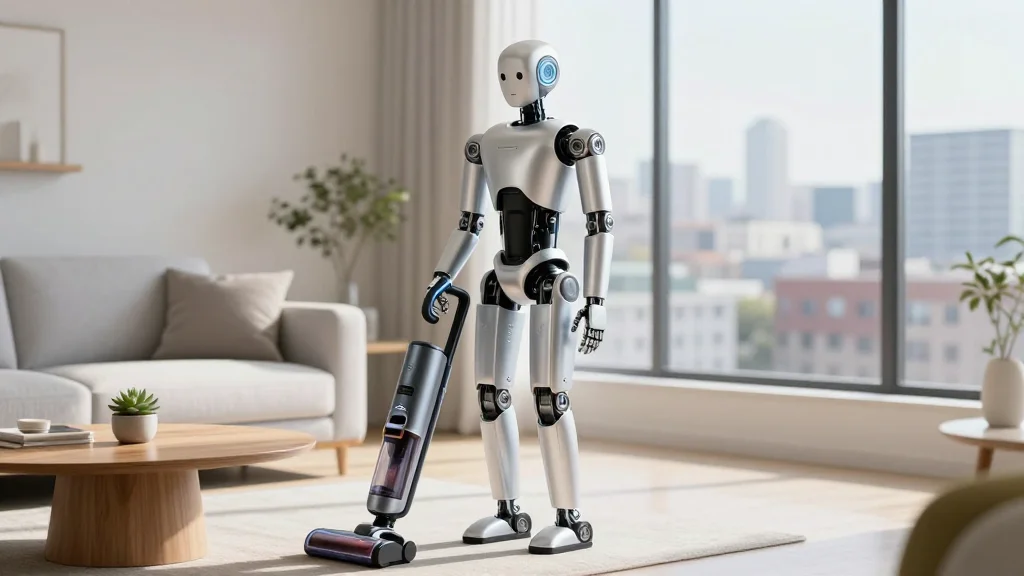
West Egg Labs' Gatsby Robot Completes First On‑demand Home‑cleaning Service in San Francisco

Why It Matters
The successful deployment of Gatsby demonstrates that humanoid robots can move beyond laboratory prototypes to real‑world consumer applications. By offering a subscription‑style, on‑demand model, West Egg Labs challenges the traditional capital‑intensive approach of selling robots outright, potentially lowering the barrier to entry for households. The service also forces a conversation about data privacy in private spaces, as remote teleoperation introduces new vectors for data collection. If the model proves economically viable, it could catalyze a wave of similar services, reshaping the domestic labor market and prompting regulators to develop standards for robotic presence in homes. The technology may also spur innovation in robot perception, navigation, and manipulation, accelerating progress across the broader consumer robotics sector.
Key Takeaways
- •Gatsby completed its first consumer cleaning in a San Francisco apartment on Tuesday
- •Flat $150 fee covers a full‑apartment clean regardless of size
- •Cleaning took about three hours, with no human cleaner inside the home
- •Service is booked via a dedicated iOS app, similar to ride‑hailing platforms
- •West Egg Labs plans to expand to other U.S. cities and add subscription options
Pulse Analysis
West Egg Labs' entry into the consumer robotics market reflects a strategic pivot from hardware sales to a service‑first model, a trend already visible in sectors like electric scooters and shared mobility. By decoupling robot ownership from the consumer, the company sidesteps the high upfront cost that has historically limited adoption of domestic robots. This could democratize access, especially in high‑cost urban centers where labor rates make traditional cleaning services expensive.
The $150 price point is deliberately positioned to undercut premium cleaning firms, but it also raises questions about scalability. Labor‑intensive tasks such as laundry folding still require sophisticated manipulation capabilities, and remote teleoperation adds operational overhead. The key to profitability will be reducing the robot’s cycle time through AI‑driven perception upgrades and improving reliability to minimize human intervention.
Privacy will be a make‑or‑break factor. While the robot does not have a human inside the apartment, data from cameras and sensors must be transmitted for navigation and potential remote assistance. Transparent data policies and robust encryption will be essential to gain consumer trust, especially as regulators begin to scrutinize AI‑enabled devices in private spaces. If West Egg Labs can navigate these challenges, it may set a template for a new class of on‑demand household robotics services, prompting incumbents in the cleaning industry to either partner with robot providers or accelerate their own automation efforts.
West Egg Labs' Gatsby robot completes first on‑demand home‑cleaning service in San Francisco
Comments
Want to join the conversation?
Loading comments...