Companies Mentioned
Why It Matters
The Galaxy Watch 9 could cement Samsung’s leadership in wearable health analytics while the Snapdragon Wear Elite chip raises the performance ceiling for on‑wrist AI, influencing both consumer adoption and the broader wearable ecosystem.
Key Takeaways
- •Samsung Health app update previews AI-driven health features for upcoming watch
- •Snapdragon Wear Elite chip promises up to 5x CPU, 7x GPU performance
- •FCC filings list 40mm and 44mm Galaxy Watch 9 models, no Classic version
- •Expected launch: announcement late July 2026, sales early August 2026
- •Prices likely near $350‑$650 range, similar to Galaxy Watch 8 lineup
Pulse Analysis
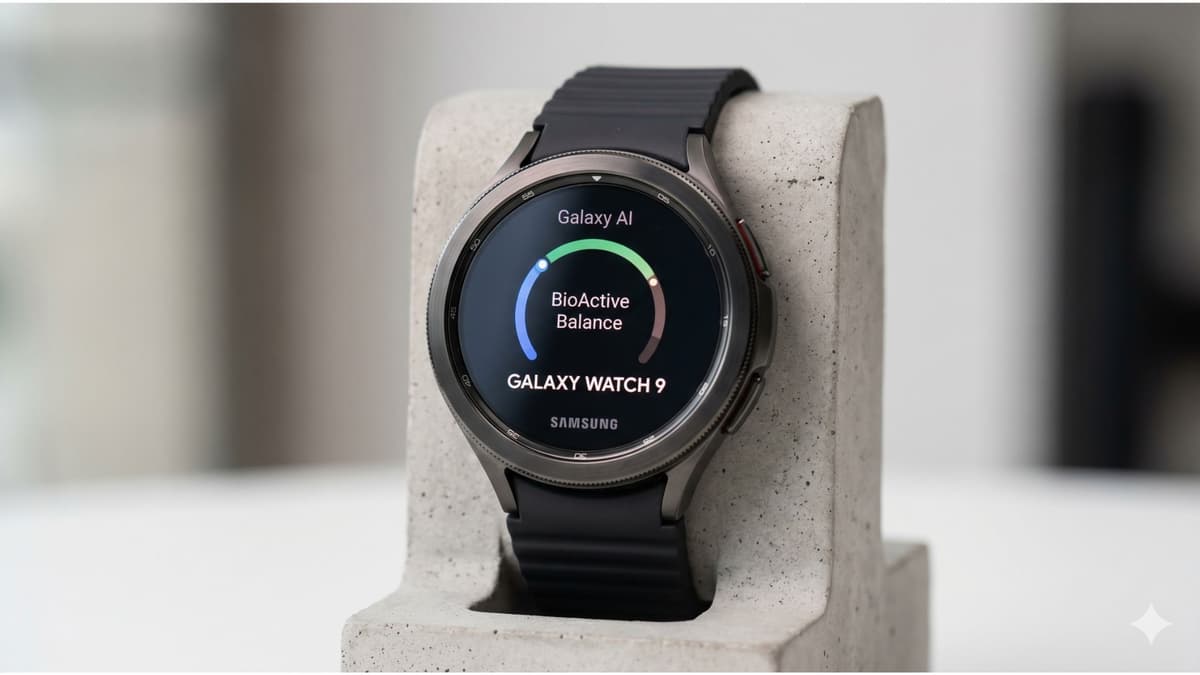
Samsung’s smartwatch roadmap has long hinged on health‑centric innovation, and the upcoming Galaxy Watch 9 reinforces that strategy. By rolling out a revamped Samsung Health app that aggregates sleep, activity, nutrition, mindfulness and vital signs into AI‑generated scores, the company is positioning the watch as a comprehensive wellness companion. This move directly challenges Apple’s health ecosystem and aligns with a growing consumer appetite for data‑driven fitness tools, especially as wearables become primary health‑monitoring devices.
The hardware underpinnings could be a game‑changer. Qualcomm’s Snapdragon Wear Elite, a 3nm processor with a dedicated AI engine, promises up to five times the CPU power and seven times the GPU capability of its predecessor, enabling on‑device inference for models with billions of parameters. Coupled with a 30% battery boost and rapid 10‑minute charging, the chip may allow real‑time analysis of metrics like heart‑rate variability, blood‑oxygen trends, and even experimental glucose monitoring. Whether Samsung opts for this chip across the standard Watch 9 or reserves it for the Ultra 2 remains unclear, but the performance leap sets a new benchmark for the wearable market.
From a commercial perspective, the timing and pricing are critical. Historical patterns suggest a July announcement followed by an early‑August sale, positioning the Watch 9 against rival launches from Apple and Google. With FCC filings confirming 40 mm and 44 mm variants and price expectations anchored between $350 and $650—mirroring the Galaxy Watch 8 lineup—Samsung aims to capture both mid‑range and premium segments. The absence of a Classic model could streamline the portfolio, while the Ultra 2’s expanded connectivity (5G, satellite) may attract adventure‑oriented users. Overall, the Galaxy Watch 9 is poised to strengthen Samsung’s foothold in the fast‑growing wearable sector.
What to expect from Samsung Galaxy Watch 9
Comments
Want to join the conversation?
Loading comments...