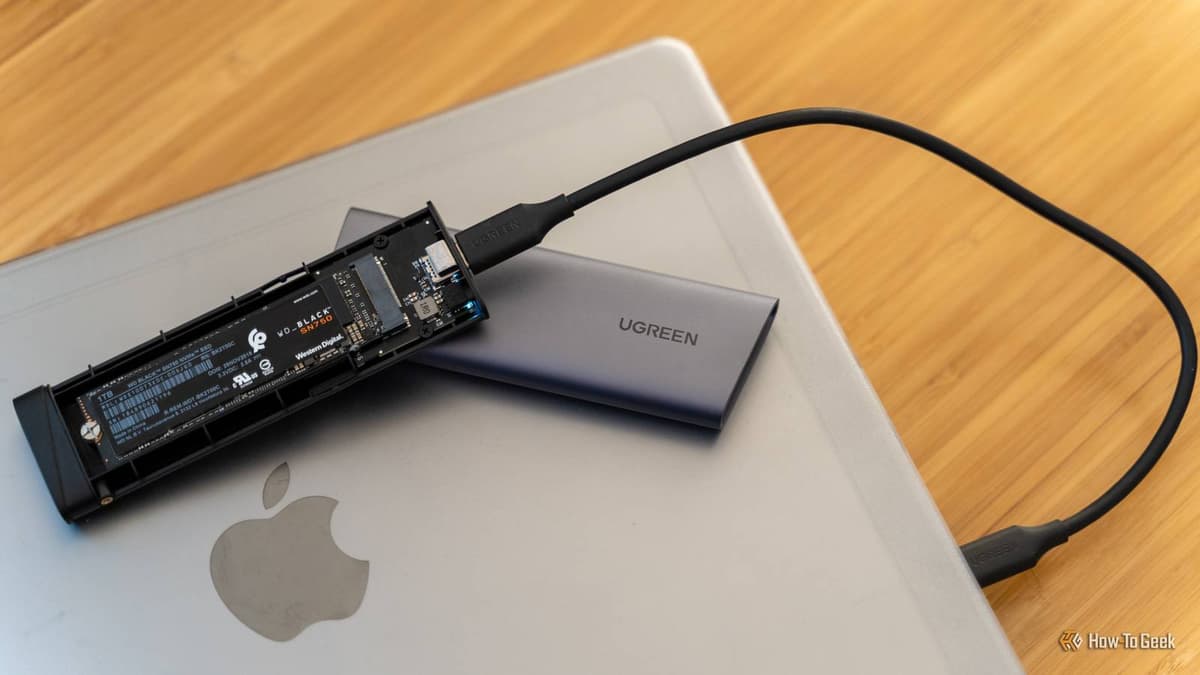
Why I Built My External SSD Instead of Buying a Premade One
Companies Mentioned
Why It Matters
Custom external SSDs provide a cost‑effective, future‑proof solution for professionals who require high‑speed, portable storage, reducing capital expenditure and avoiding vendor lock‑in. The ability to upgrade components extends device lifespan and aligns with fast‑evolving storage standards.
Key Takeaways
- •Custom SSDs cost less than pre‑built portable drives
- •M.2 enclosures support future upgrades via USB, Thunderbolt standards
- •Swapping NVMe modules adds capacity without replacing the whole unit
- •DIY builds give control over performance and data security
Pulse Analysis
The external storage market has exploded as creators and enterprises demand fast, portable solutions for massive data sets. While plug‑and‑play USB SSDs like the Samsung T7 Shield dominate retail shelves, they lock users into a single performance tier and capacity. For professionals managing terabytes of high‑resolution media, that rigidity translates into higher long‑term costs and frequent device replacements. Building a custom drive sidesteps these constraints, allowing users to source components at market rates and tailor specifications to exact workflow needs.
M.2 NVMe enclosures bridge the gap between internal performance and external convenience. Modern enclosures support USB 3.2 Gen 2, USB 4, Thunderbolt 4, and the emerging Thunderbolt 5, delivering up to 40 Gbps when paired with PCIe 5.0 SSDs that can exceed 14 GB/s sequential reads. Because the enclosure and the SSD are separate, upgrading is as simple as swapping a chassis or inserting a higher‑capacity NVMe module. This modularity not only future‑proofs the investment but also leverages the rapid price declines in NVMe storage, making high‑end performance accessible to small studios and freelancers.
For businesses such as photography agencies, video production houses, and field engineers, the financial and operational benefits are clear. A DIY external SSD can cost a fraction of a comparable pre‑built unit while offering the same or better throughput. The ability to upgrade incrementally reduces capital outlay and aligns with asset‑management strategies that prioritize longevity and scalability. Moreover, controlling the hardware stack enhances data security, as users can select drives with built‑in encryption and avoid proprietary firmware. In an era where data velocity directly impacts productivity, custom external SSDs present a compelling, cost‑efficient alternative to off‑the‑shelf solutions.
Why I built my external SSD instead of buying a premade one
Comments
Want to join the conversation?
Loading comments...