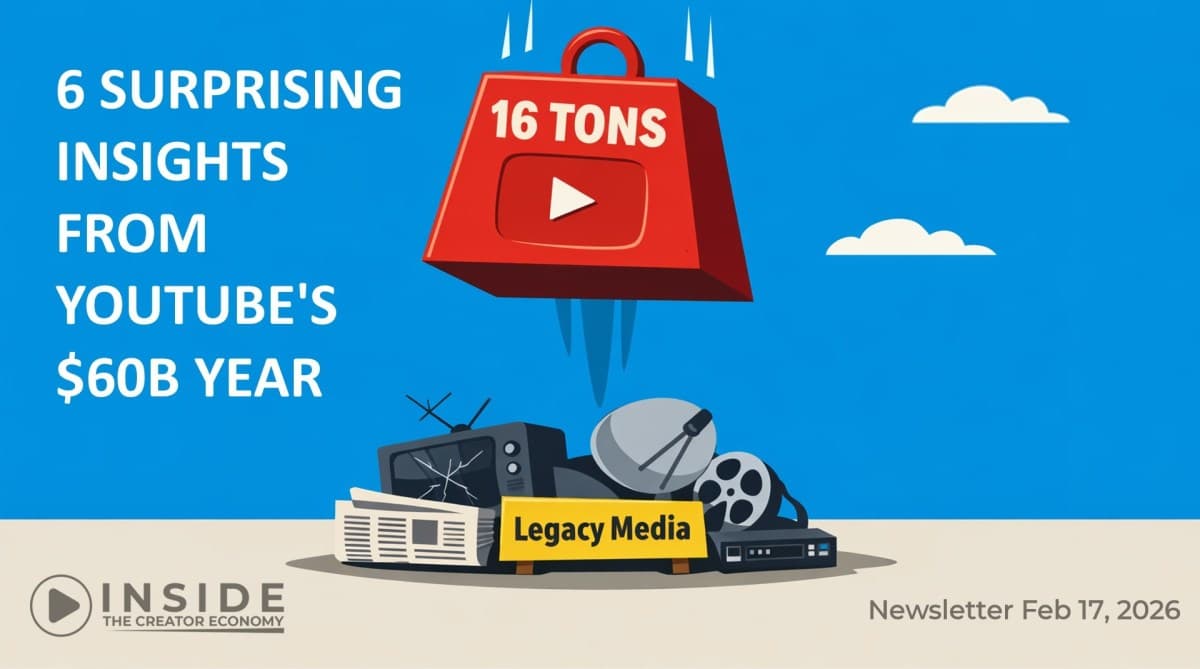

Key Takeaways
- •YouTube 2025 revenue $60 B, third Alphabet contributor.
- •Paid subscriptions 325 M, matching Netflix.
- •Creator payouts exceed $28 B, surpassing Disney's content spend.
- •Fox’s Supercast deal risks creator trust amid politics.
- •AI tools reshaping creator production, 64% teams adopt in‑house.
Pulse Analysis
YouTube’s unprecedented revenue disclosure puts the platform squarely in the league of traditional media giants. Generating about $60 billion in 2025, it now dwarfs Netflix’s earnings and rivals Disney’s core entertainment segment once theme‑park and cruise revenues are stripped out. This financial heft not only reinforces Alphabet’s diversification beyond search but also signals a shift in how advertisers evaluate audience reach, with YouTube’s hybrid ad‑subscription model delivering both scale and monetization efficiency.
The creator payout model is a cornerstone of YouTube’s dominance. By disbursing roughly $28 billion to creators—more than Disney’s $23 billion content‑rights outlay—the platform functions as the world’s largest content buyer without bearing the risk of box‑office failures. Payments are tied directly to audience performance, aligning incentives for creators and advertisers alike. This structure fuels a vibrant ecosystem where independent creators can compete with legacy studios, while brands gain access to measurable, performance‑based inventory that drives higher ROI.
Beyond YouTube, the broader creator economy faces two pivotal challenges. Fox’s purchase of Supercast illustrates the tension between vertical integration and creator trust, especially when political affiliations could alienate progressive talent. Simultaneously, research from the IAB and Wistia shows a growing reliance on AI tools—64% of teams now produce videos in‑house—creating efficiency gains but also widening the gap between AI‑savvy creators and those who ignore the technology. As measurement standards evolve and AI reshapes production workflows, the next wave of creator‑driven media will hinge on transparent attribution, adaptable platforms, and the ability to balance human storytelling with algorithmic assistance.
YouTube’s Quiet Monopoly
Comments
Want to join the conversation?