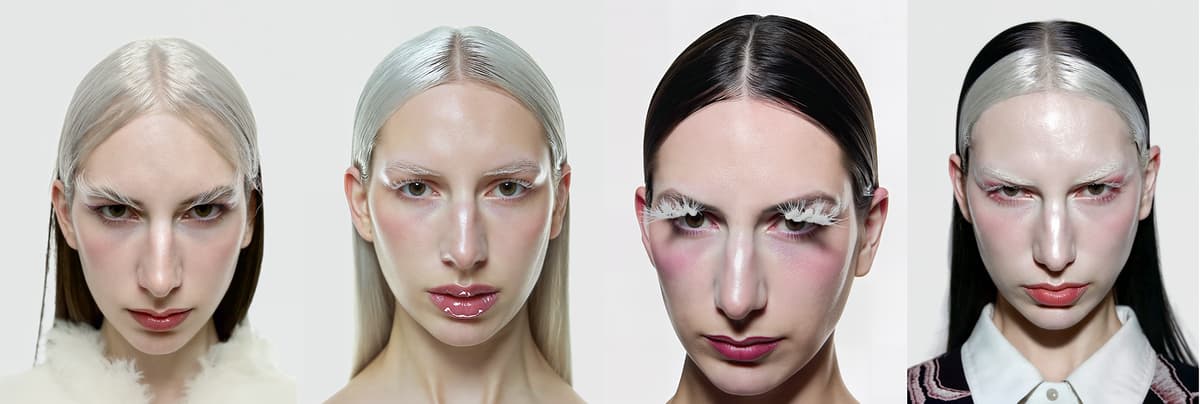
The Monthly Interview: Johanna Jaskowska
Why It Matters
Jaskowska’s stance underscores a pivotal shift: AI could redefine creative production while sparking industry‑wide debates over authenticity, labor displacement, and ethical use of generated content.
Key Takeaways
- •Jaskowska pioneered Instagram AR filters, influencing digital fashion trends
- •She advocates realistic AI expectations, warning against oversimplified hype
- •At Offf festival, she highlighted AI's role in evolving creative workflows
- •AI adoption may reshape jobs, prompting industry debate over ethics
- •Jaskowska experiments with AI-generated art, merging tech and aesthetics
Pulse Analysis
Johanna Jaskowska’s career illustrates how digital fashion has moved from novelty Instagram filters to sophisticated AI‑driven creations. Her early work—interactive AR lenses that let users overlay virtual garments—helped mainstream the concept of wearable digital aesthetics. By leveraging platforms like Instagram and Snapchat, she built a following that bridges tech enthusiasts and style influencers, setting a precedent for brands seeking immersive, data‑rich experiences. This background gives her a unique authority when she now tackles AI, positioning her insights as a barometer for the next wave of visual innovation.
The creative industry is currently wrestling with AI’s rapid ascent, and Jaskowska’s commentary cuts through the hype. She warns that marketing narratives often portray AI as a simple substitute for human talent, ignoring the nuanced training data and ethical concerns involved. This critique resonates with designers, photographers, and copywriters who fear job erosion and the dilution of originality. At the Offf festival, she emphasized that AI should be viewed as an augmentative tool—one that expands a creator’s palette rather than replaces it—highlighting the need for transparent workflows and responsible sourcing of training datasets.
Looking ahead, Jaskowska’s experiments signal how AI could reshape fashion and beauty pipelines. Generative models can produce endless fabric patterns, virtual try‑on experiences, and hyper‑personalized beauty recommendations at scale, promising cost savings and faster time‑to‑market. However, the technology also raises questions about intellectual property, bias, and consumer trust. Brands that adopt AI responsibly—by integrating human oversight and clear attribution—stand to gain a competitive edge, while those that ignore the ethical dialogue risk reputational backlash. Jaskowska’s blend of artistic curiosity and critical advocacy offers a roadmap for navigating this transformative era.
The Monthly Interview: Johanna Jaskowska
Comments
Want to join the conversation?
Loading comments...