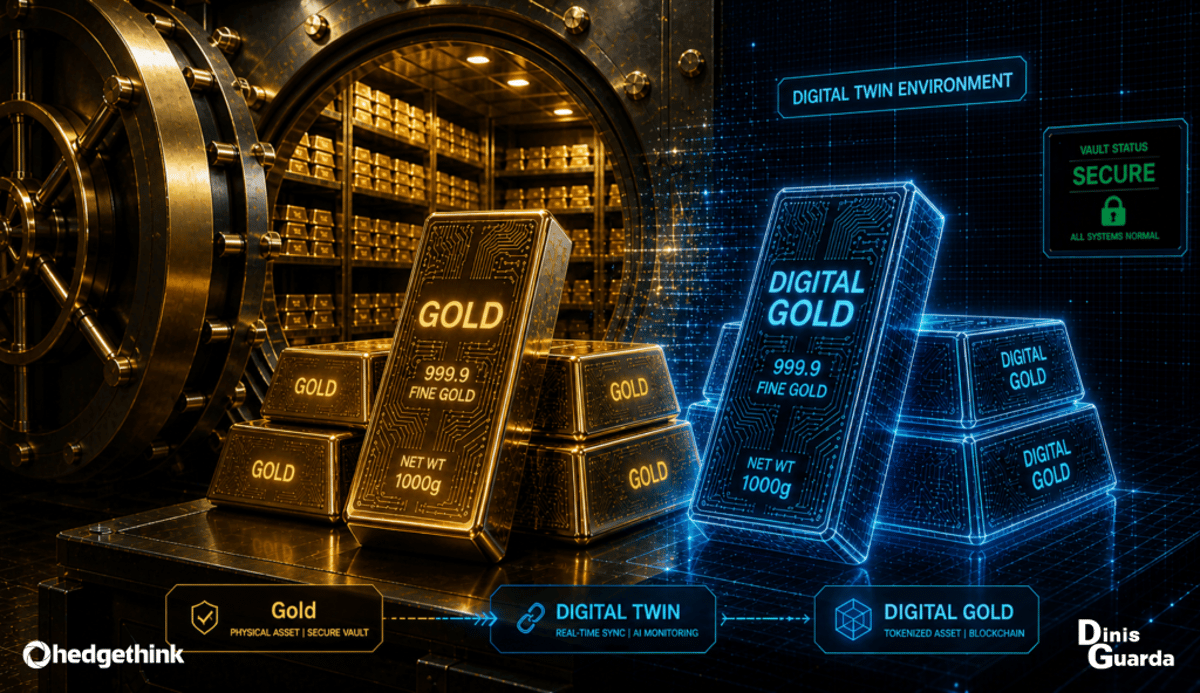
Gold Tokenisation (Part 1): The 5,000-Year Asset Meets the Programmable Blockchain Present
Key Takeaways
- •Tokenised gold market grew from $1.9B to $7.13B in one year
- •XAUT and PAXG represent about 73% of tokenised gold volume
- •Tokenised gold now ranks second by trading volume after SPDR Gold ETF
- •Gold price breached $5,000/oz, signaling fiat uncertainty and demand shift
- •Programmable tokens enable fractional ownership, instant settlement, and DeFi collateral use
Pulse Analysis
The surge in tokenised gold reflects a convergence of centuries‑old monetary trust and cutting‑edge blockchain technology. By converting physical bullion into verifiable digital twins, providers like Tether Gold and Paxos Gold have turned a historically storage‑heavy, indivisible asset into a liquid, 24/7 tradable token. This shift has propelled the tokenised segment from a niche $1.9 billion market to over $7 billion in just twelve months, positioning it as the second‑largest gold investment vehicle after the SPDR Gold Shares ETF. The rapid expansion underscores investors’ appetite for assets that combine the stability of gold with the speed and programmability of decentralized finance.
Beyond raw market size, tokenised gold is reshaping the financial architecture of both private and sovereign players. Central banks, already net buyers of physical gold, are exploring blockchain‑based custody to sidestep geopolitical seizure risks and to enable instantaneous settlement across borders. The BRICS+ bloc, seeking a gold‑linked reserve unit, views tokenisation as the technical backbone for a multipolar reserve system. For DeFi participants, gold tokens provide a low‑volatility collateral layer, allowing lenders to issue loans backed by a hard asset while preserving the ability to fractionalise holdings down to a few dollars.
Looking ahead, the growth trajectory will hinge on regulatory clarity, audit‑grade oracle integration, and broader institutional adoption. As auditors push real‑time on‑chain verification, the risk of “paper gold” diminishes, reinforcing confidence among large‑scale investors. Meanwhile, emerging AI‑driven analytics could further enhance price discovery and risk management for tokenised bullion. If these hurdles are cleared, tokenised gold may become the default bridge between legacy finance and the programmable economy, delivering a truly global, immutable store of value.
Gold Tokenisation (Part 1): The 5,000-Year Asset Meets the Programmable Blockchain Present
Comments
Want to join the conversation?