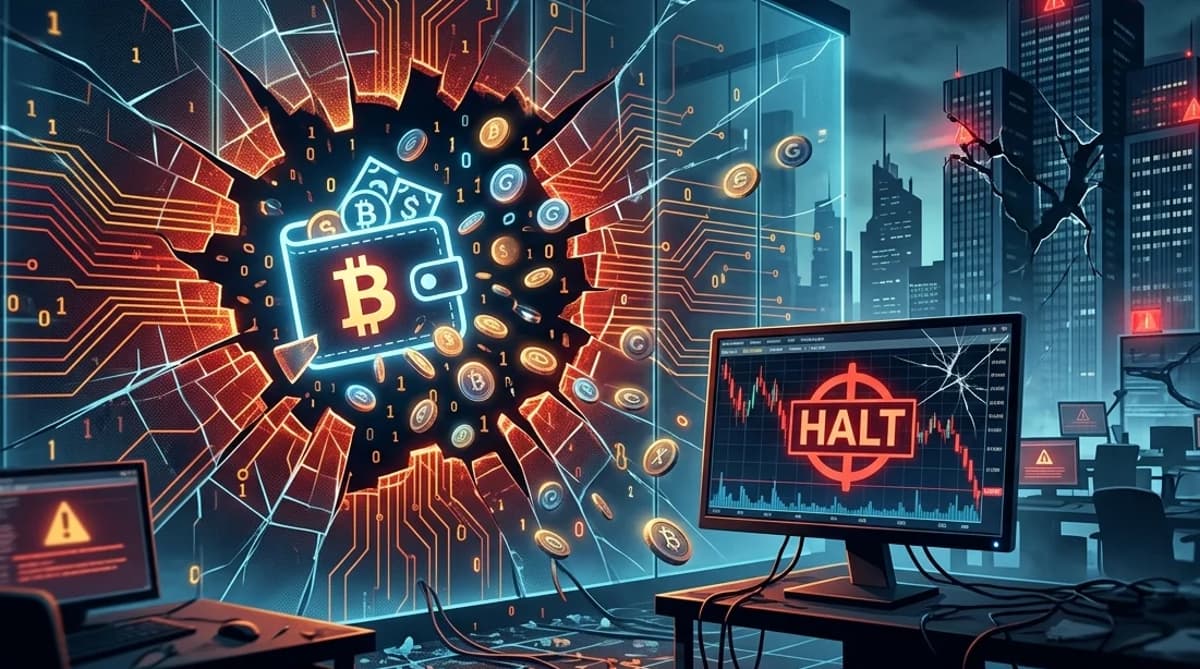
$15M Grinex Hack Forces Trading Halt After Major Crypto Wallet Breach
Why It Matters
The breach temporarily froze access for thousands of users and highlights how hot‑wallet flaws can jeopardize exchange stability, prompting tighter security scrutiny across the crypto sector.
Key Takeaways
- •Grinex halted all trading after $15M USDT theft
- •Hackers moved funds across Ethereum, Tron, consolidating 45.9M TRX
- •Attack highlights hot‑wallet vulnerabilities in crypto exchanges
- •Stolen assets quickly converted to avoid Tether freeze
- •Grinex inherits Garantex users, raising sanction‑evasion risk
Pulse Analysis
The Grinex incident arrives at a moment when crypto exchanges are increasingly targeted by sophisticated threat actors exploiting hot‑wallet exposures. Unlike cold‑storage solutions, hot wallets sit online to facilitate rapid transactions, making them attractive entry points for attackers with advanced tooling. By infiltrating Grinex’s wallet infrastructure, the perpetrators not only lifted $15 million in USDT but also leveraged chain‑hopping techniques—shifting assets from Ethereum to Tron—to muddy the audit trail. This rapid diversification mirrors tactics seen in high‑profile hacks of Binance and Coinbase, reinforcing the need for multi‑layered defenses and real‑time monitoring.
Beyond the immediate financial loss, the hack reverberates through the broader ecosystem of ruble‑denominated crypto platforms. Grinex inherited the liquidity and user base of the now‑sanctioned Garantex, positioning it as a critical conduit for Russian‑linked stablecoins such as A7A5. The theft therefore raises concerns about sanction evasion, as concentrated wallet activity can facilitate covert cross‑border flows. Regulators in the U.S., EU, and UK are watching these developments closely, considering stricter AML/KYC mandates for exchanges handling sanctioned assets. The incident also spotlights the strategic value of blockchain analytics firms like Elliptic, whose rapid tracing of fund movements can inform law‑enforcement interventions.
Looking ahead, crypto exchanges must prioritize cold‑storage migration for the bulk of their reserves and implement granular access controls for any remaining hot‑wallet balances. Real‑time anomaly detection, multi‑signature authorizations, and regular penetration testing are becoming industry baselines. As geopolitical tensions drive more state‑linked actors to target financial infrastructure, the Grinex breach serves as a cautionary tale: robust security architecture is no longer optional but a prerequisite for operational continuity and regulatory compliance. Stakeholders across finance, technology, and policy will need to collaborate to harden the crypto ecosystem against increasingly coordinated cyber threats.
$15M Grinex Hack Forces Trading Halt After Major Crypto Wallet Breach
Comments
Want to join the conversation?
Loading comments...