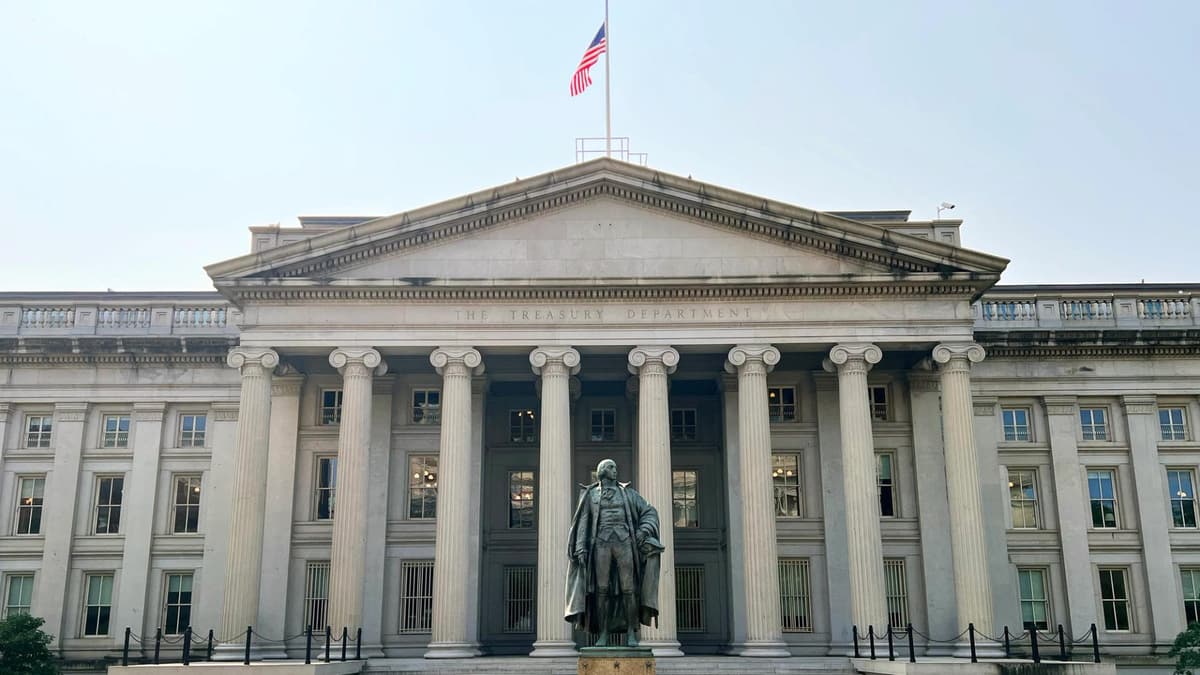
Banks Seek to Slow Down Implementation of Crypto's GENIUS Act on Stablecoin Oversight
Why It Matters
Delaying the comment periods could push key stablecoin regulations into the next fiscal year, affecting banks’ risk management and the crypto industry’s ability to launch compliant products. The request underscores the complexity of aligning multiple agency rules and may reshape the timeline for U.S. stablecoin oversight.
Key Takeaways
- •Banks ask Treasury to extend GENIUS Act comment periods by 60 days.
- •Request hinges on OCC's pending stablecoin oversight rule.
- •Extended timeline could delay FinCEN, OFAC, and FDIC rollouts.
- •Delay may push GENIUS Act implementation beyond 2027 target.
- •Crypto firms face heightened uncertainty and slower market adoption.
Pulse Analysis
The GENIUS Act, introduced in 2025, aims to create a unified federal framework for stablecoins, covering everything from consumer protection to anti‑money‑laundering safeguards. While the Treasury, FDIC and OFAC have each drafted complementary rules, the Office of the Comptroller of the Currency (OCC) is tasked with the core oversight regime that defines how banks can interact with stablecoin issuers. This multi‑agency approach reflects the broader regulatory ambition to treat stablecoins as a hybrid of traditional banking products and digital assets, a balance that has proven technically and legally intricate.
Bank trade groups, including the American Bankers Association and the Bank Policy Institute, argue that without the OCC’s final rule, any comment on the Treasury’s proposals would be speculative. Their letter to the Treasury requests a minimum 60‑day extension after the OCC framework is published, citing the need for comprehensive analysis across overlapping jurisdictions. By synchronizing comment periods, banks hope to submit more informed feedback, reducing the risk of contradictory regulations that could hamper compliance costs and operational readiness for both legacy institutions and fintech entrants.
If the Treasury grants the extension, the immediate effect will be a slower rollout of stablecoin oversight, potentially pushing key compliance deadlines past the 2027 target set by the GENIUS Act. For crypto firms, this translates into prolonged regulatory uncertainty, delaying product launches and investment decisions. Conversely, a more coordinated rulemaking process could yield clearer guidance, ultimately fostering a more stable environment for digital asset innovation. Stakeholders across the financial spectrum are watching closely, as the timing of these rules will influence capital allocation, risk assessment, and the competitive dynamics between traditional banks and emerging crypto platforms.
Banks seek to slow down implementation of crypto's GENIUS Act on stablecoin oversight
Comments
Want to join the conversation?
Loading comments...