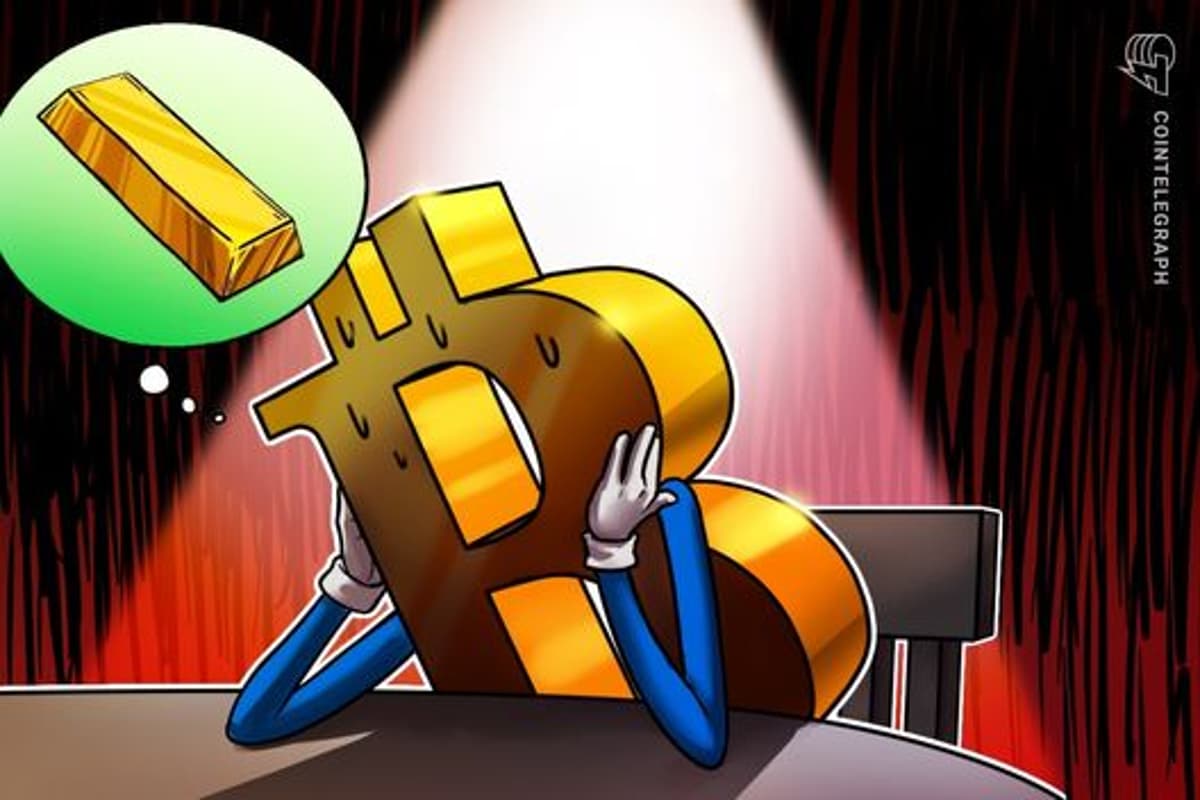
Bitcoin Down, Gold Futures up as Europe Threatens ‘Trade Bazooka’
•January 19, 2026
0
Companies Mentioned


Why It Matters
The episode highlights how geopolitical trade disputes can instantly reprice volatile crypto assets while boosting traditional hedges, reshaping short‑term capital flows. Investors must gauge policy risk as it directly influences liquidity and asset allocation decisions.
Key Takeaways
- •Bitcoin fell $3,500, 3.6% drop.
- •$750M long positions liquidated in four hours.
- •Gold futures hit record $4,667 per ounce.
- •EU considers €93B retaliatory tariffs.
- •Risk‑off sentiment drives investors to safe‑haven assets.
Pulse Analysis
The announcement of 10 % tariffs on eight European nations and the looming 25 % increase unless a Greenland agreement is reached has reignited the US‑EU trade dispute. European leaders, led by France’s Macron, are preparing an “anti‑coercion instrument” that could bar U.S. firms from key EU markets, while the bloc weighs €93 billion in delayed retaliatory duties. This renewed geopolitical friction immediately shifted market sentiment, pushing traditional safe‑haven commodities such as gold and silver to historic highs, and creating a pronounced risk‑off environment across asset classes.
Cryptocurrency markets reacted sharply, with Bitcoin tumbling 3.6 % to just under $92,000 on Coinbase. In the four‑hour plunge, roughly $750 million of long positions were liquidated, pushing 24‑hour crypto liquidations past $860 million. Analysts liken Bitcoin’s behavior to that of a high‑beta tech stock, vulnerable to macro‑driven fear, or “FUD.” The rapid unwind underscores the sector’s liquidity constraints and its sensitivity to geopolitical risk, reinforcing the narrative that digital assets remain a speculative class during periods of heightened uncertainty.
From an investment standpoint, the divergence between crypto and precious metals signals a reallocation toward traditional hedges. Institutional players, wary of a potential escalation, may increase exposure to gold and silver while trimming speculative crypto positions. However, some strategists argue that prolonged risk‑off cycles could eventually benefit Bitcoin if fiat currencies weaken, restoring its appeal as an alternative store of value. Market participants should monitor EU tariff negotiations and any U.S. policy shifts, as these macro variables will likely dictate liquidity flows and price trajectories across both digital and physical asset classes.
Bitcoin down, gold futures up as Europe threatens ‘trade bazooka’
0
Comments
Want to join the conversation?
Loading comments...