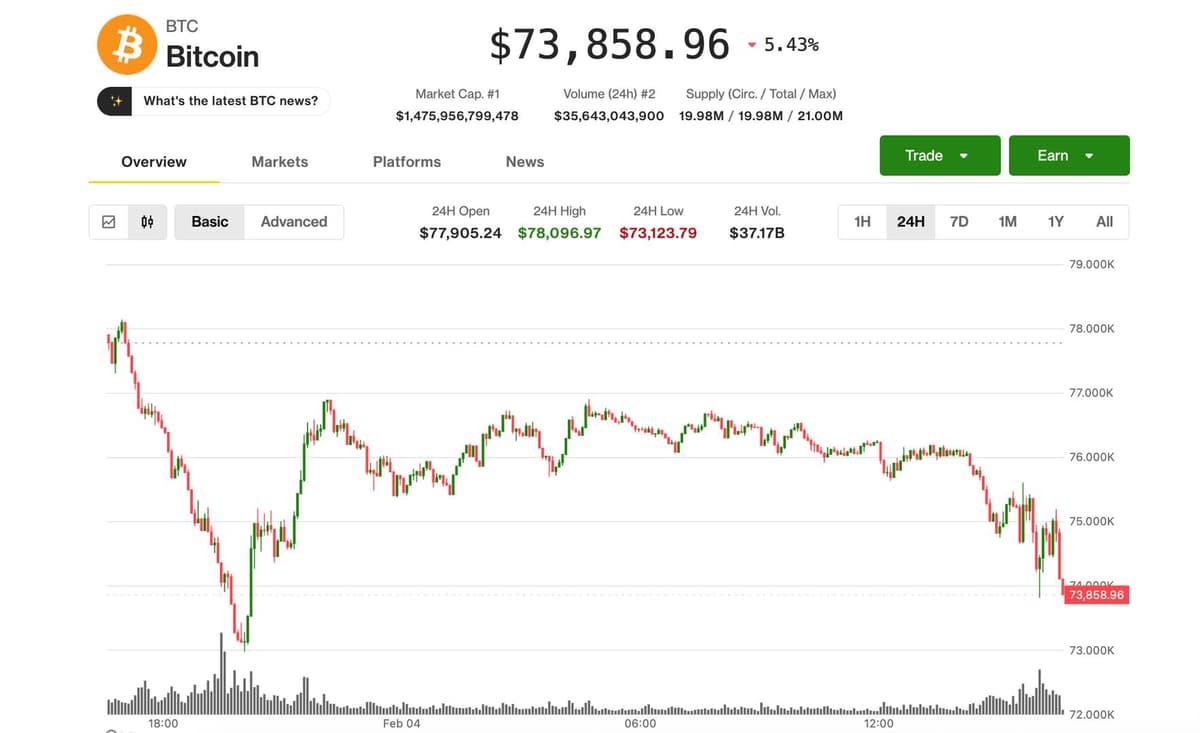
Bitcoin Falls Back to $74,000, Remaining on Defense as AI Jitters Shake Tech Sector
•February 4, 2026
0
Companies Mentioned


Why It Matters
The price dip highlights crypto’s growing sensitivity to AI‑related tech volatility and signals broader risk aversion that could affect funding for AI infrastructure projects. Investors watch these dynamics to gauge the interplay between digital assets, tech earnings and potential Fed stimulus.
Key Takeaways
- •Bitcoin slides below $74k as tech stocks weaken
- •AI‑related software ETF drops 4%, down 17% weekly
- •Crypto miners tumble >10% following AMD’s outlook miss
- •Gold slips below $5,000 amid broader sell‑off
- •Mixed US data fuels uncertainty on Fed stimulus
Pulse Analysis
Bitcoin’s retreat to sub‑$74,000 levels underscores a tightening correlation between the cryptocurrency market and broader tech equities. After a brief rebound, the digital asset fell in tandem with a 1% dip in the Nasdaq 100, driven by investor anxiety over AI’s disruptive potential. The iShares Expanded Tech‑Software ETF’s continued slide, now down 17% in a week, reflects heightened risk aversion toward software firms heavily invested in generative‑AI projects. This convergence suggests that Bitcoin is increasingly reacting to sector‑specific news rather than traditional macro drivers alone.
The downturn also hit crypto mining stocks hard, with Cipher Mining, IREN and Hut 8 each shedding double‑digit percentages. Their exposure stems from the reliance on high‑performance chips for AI‑related mining operations. AMD’s 14% plunge after a disappointing 2026 outlook amplified concerns, as miners anticipate tighter supply and higher costs for GPU‑based hardware. The episode illustrates how AI infrastructure build‑outs can create a feedback loop: weaker chip forecasts depress miner valuations, which in turn can pressure Bitcoin’s price as mining profitability wanes.
On the macro front, the U.S. economy presented a mixed picture. The ISM Services PMI held steady at 53.8, indicating continued expansion in the services sector, while the ADP report revealed a stark slowdown in private‑sector hiring, adding only 22,000 jobs versus expectations of 48,000. This divergence fuels speculation about the Federal Reserve’s policy stance, with some analysts arguing that markets may be underestimating potential stimulus in 2026. Gold’s slide below $5,000 mirrors the risk‑off sentiment, completing a broader sell‑off that ties together crypto, equities, and commodities. Investors will be watching upcoming employment data and Fed communications for clues on whether the current defensive posture will persist.
Bitcoin falls back to $74,000, remaining on defense as AI jitters shake tech sector
0
Comments
Want to join the conversation?
Loading comments...