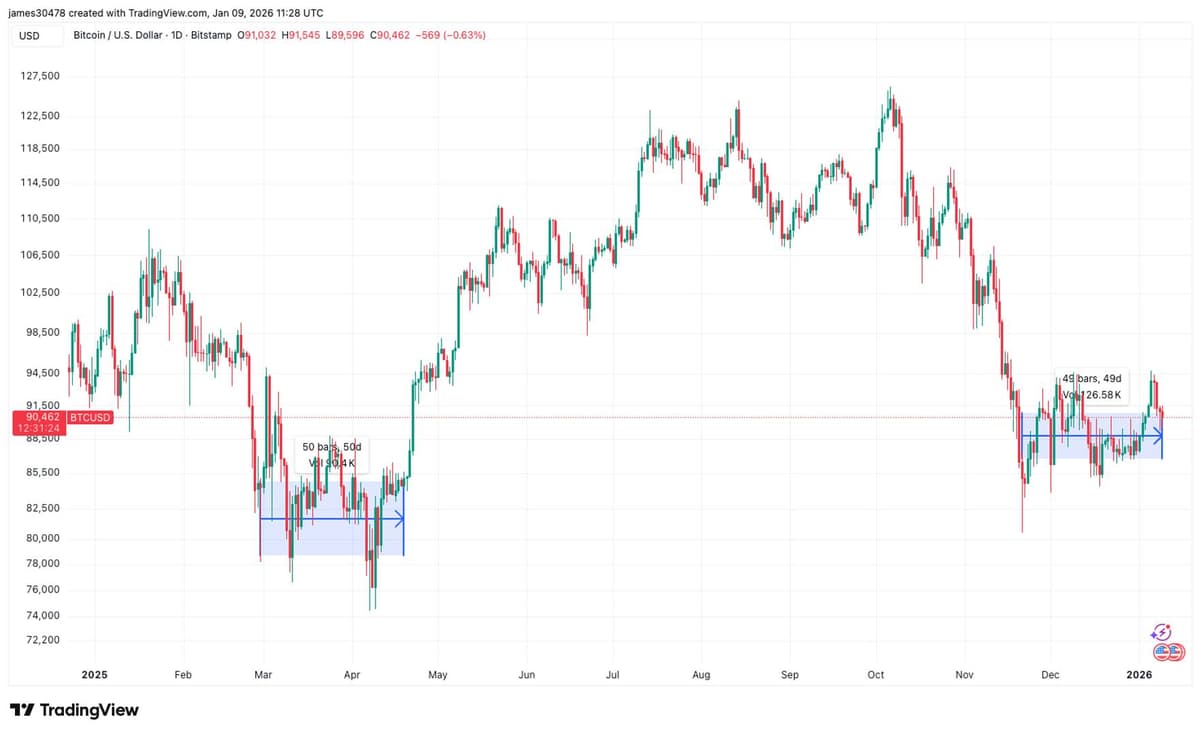
Bitcoin May Be Gearing up for a Rally that Sent Price to $126,000 Last Year
•January 9, 2026
0
Why It Matters
A renewed Bitcoin rally would boost risk‑on sentiment and influence crypto‑linked portfolios, while highlighting how fiscal and monetary policy can steer digital‑asset cycles.
Key Takeaways
- •Bitcoin trades $80k‑$95k, 50‑day consolidation.
- •Previous 52‑day range preceded $126k rally.
- •Time‑based capitulation drives impatient holder exits.
- •Fed likely to cut rates 2026, boosting risk assets.
- •Trump pushes $200B MBS purchases, adding liquidity.
Pulse Analysis
The current Bitcoin price corridor mirrors a classic time‑based capitulation, a term traders use for extended periods of low volatility that exhaust weak hands before a decisive move. In late 2025, a 52‑day squeeze between $76,000 and $85,000 set the stage for a dramatic breakout that pushed the cryptocurrency to a record $126,000 in October. Such patterns have become more predictable as Bitcoin matures, transitioning from erratic spikes to stair‑step climbs punctuated by measured consolidations.
Macro dynamics are now adding fuel to the potential breakout. The Atlanta Fed’s GDPNow model projects a robust 5.4% real‑GDP growth for Q4, reinforcing expectations that the Federal Reserve will commence a 50‑basis‑point rate cut sometime in 2026. Simultaneously, President Trump’s proposal to purchase up to $200 billion in mortgage‑backed securities signals an infusion of liquidity that could lower borrowing costs and improve overall market risk appetite. Former Pimco CEO Mohamed El‑Erian warns that such political pressure may extend beyond rate cuts to direct asset purchases, further bolstering the environment for risk assets like Bitcoin.
For investors, the convergence of technical consolidation and supportive macro policy creates a compelling case for positioning ahead of a possible Bitcoin rally. While the upside potential is attractive, participants should remain mindful of volatility spikes that often accompany the breakout phase. Diversified exposure, disciplined risk management, and close monitoring of Fed policy cues will be essential as the cryptocurrency market navigates this pivotal juncture.
Bitcoin may be gearing up for a rally that sent price to $126,000 last year
0
Comments
Want to join the conversation?
Loading comments...