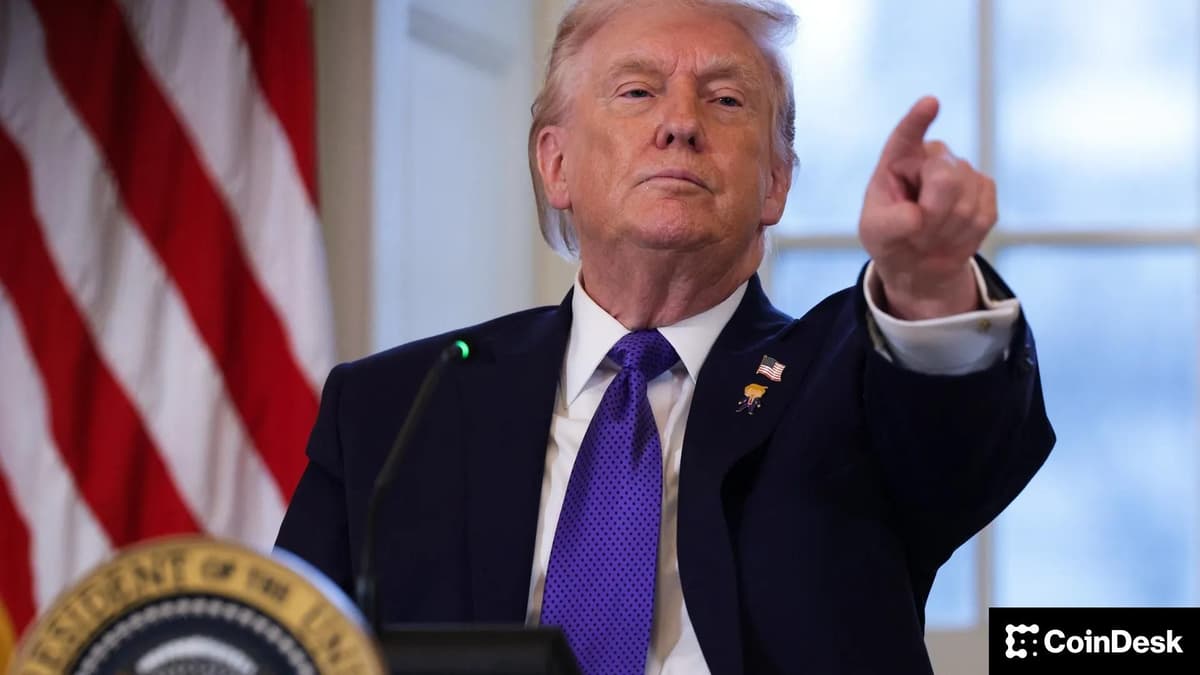
Bitcoin Pops Then Drops as Supreme Court Strikes Down Trump Tariffs
•February 20, 2026
0
Why It Matters
The decision removes a major policy uncertainty, tempering crypto’s speculative spikes while reinforcing the need for clearer trade rules. It also signals that inflation‑linked concerns will continue shaping asset‑class performance.
Key Takeaways
- •Supreme Court invalidated Trump’s tariff regime
- •Bitcoin rose 2% to $68k, then fell
- •Nasdaq outperformed crypto, gaining 0.6%
- •U.S. Q4 2025 growth slowed to 1.4%
- •Core PCE inflation hit 3% YoY, above expectations
Pulse Analysis
The Supreme Court’s 6‑3 ruling dismantling the Trump‑era tariff framework marks a rare judicial foray into trade policy, resetting expectations for import costs and corporate margins. By declaring the tariffs beyond presidential authority, the Court not only restores legal predictability but also removes a potential catalyst for geopolitical tension. Market participants, especially those with exposure to global supply chains, will now recalibrate risk models that previously factored in heightened tariff risk.
Crypto markets reacted with textbook volatility: Bitcoin’s 2% rally to $68,000 was swiftly erased as traders booked profits and reassessed the news’s relevance. Unlike equities, which absorbed the ruling as a modest positive signal—evidenced by the Nasdaq’s 0.6% rise—digital assets remain hypersensitive to regulatory cues and macro‑sentiment. The fleeting price spike underscores a broader pattern where crypto’s price action is increasingly decoupled from fundamental drivers, relying instead on short‑term narrative shifts.
Compounding the market’s nervousness, the latest U.S. economic data painted a stagflation picture: growth slowed to 1.4% in Q4 2025 while core personal consumption expenditures climbed 3% year‑over‑year. This mixed signal fuels speculation that the Federal Reserve will maintain a cautious stance, keeping interest rates elevated longer than anticipated. For Bitcoin, traditionally touted as an inflation hedge, the environment presents both a test of its store‑of‑value narrative and a reminder that macro‑economic fundamentals will continue to dominate long‑term valuation trajectories.
Bitcoin pops then drops as Supreme Court strikes down Trump tariffs
0
Comments
Want to join the conversation?
Loading comments...