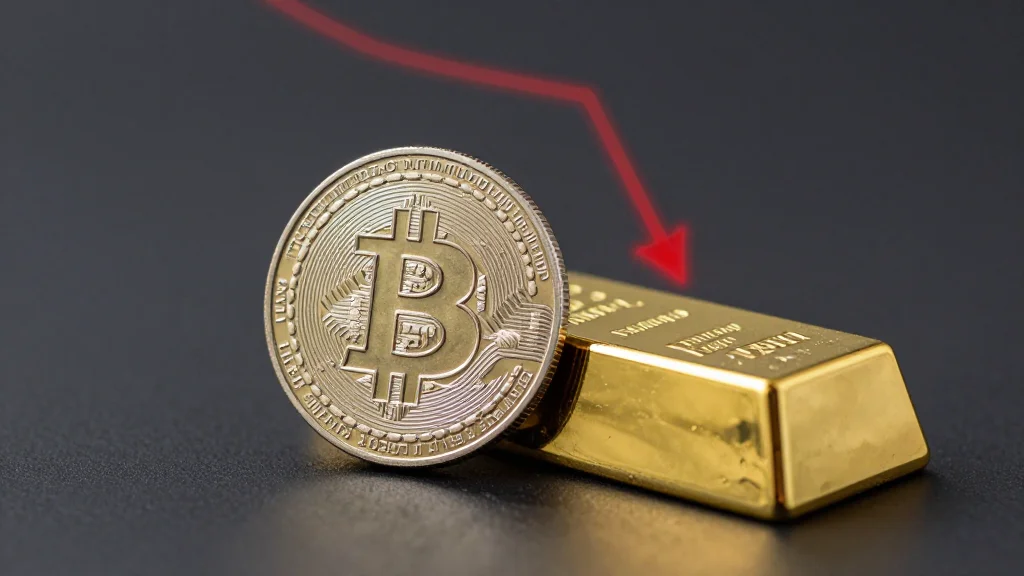
Bitcoin Slides 45% in Six Months, Analysts Split on Buy Verdict

Why It Matters
The steep 45% decline forces investors to confront the fundamental question of what constitutes a reliable store of wealth in a digital age. If Bitcoin fails to demonstrate resilience, capital may flow back to traditional assets like gold or to emerging stablecoins that promise lower volatility. Conversely, a rebound could validate the narrative that digital scarcity can rival physical scarcity, reshaping portfolio allocations across the financial industry. Beyond individual portfolios, the debate influences regulatory scrutiny. Persistent volatility may prompt lawmakers to tighten oversight, while a sustained recovery could accelerate the integration of crypto assets into mainstream financial products, affecting everything from retirement accounts to corporate treasury strategies.
Key Takeaways
- •Bitcoin has fallen roughly 45% over the past 180 days, far outpacing gold’s 15% decline in the same period
- •The cryptocurrency rose 0.73% in the latest trading session but remains on a steep downtrend
- •Bitcoin has experienced three drawdowns of more than 60% since its inception
- •Retail investors still hold the majority of Bitcoin, amplifying sentiment‑driven price swings
- •Analysts are divided: some cite digital scarcity as a strength, others warn of volatility and accessibility risks
Pulse Analysis
Bitcoin’s recent plunge underscores a recurring pattern in its price cycle: rapid ascents followed by equally swift corrections. Historically, each major rally has been fueled by a combination of retail enthusiasm, speculative inflows, and occasional institutional endorsement. The current 45% drop aligns with the tail end of the 2023‑2024 bull run, where heightened media coverage and the launch of several high‑profile crypto ETFs attracted new capital. As the hype waned, the market corrected, exposing the fragility of price support that rests largely on sentiment rather than fundamentals.
From a competitive standpoint, Bitcoin’s struggle to maintain its “digital gold” narrative pits it against both traditional safe havens and newer crypto assets designed for stability, such as algorithmic stablecoins and tokenized gold. While Bitcoin’s brand recognition remains unmatched, its inability to offer physical redemption or intrinsic utility beyond a store of value limits its appeal to a broader investor base. This gap has opened opportunities for platforms that bundle Bitcoin with other assets, offering diversified exposure that may mitigate the impact of single‑asset volatility.
Looking forward, the decisive factor will be whether Bitcoin can anchor a new price floor above the $20,000 level. A sustained rally could reignite institutional interest, especially if regulatory clarity improves and custodial solutions become more robust. Conversely, another breach of key support could accelerate capital outflows, reinforcing the argument that Bitcoin is still a speculative play rather than a reliable store of wealth. Market participants should monitor macroeconomic indicators, such as inflation trends and central‑bank policy, as they will likely dictate the risk appetite that ultimately determines Bitcoin’s trajectory.
Bitcoin Slides 45% in Six Months, Analysts Split on Buy Verdict
Comments
Want to join the conversation?
Loading comments...