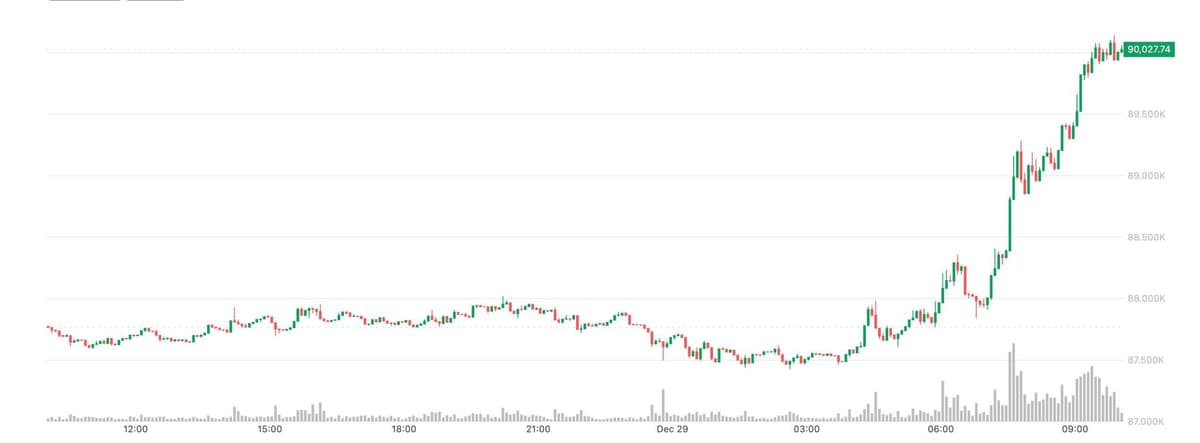
Bitcoin Tops $90,000, Oil Rises as Russia-Ukraine Peace Hopes Falter
•December 29, 2025
0
Why It Matters
The price breakout underscores how geopolitical shocks can simultaneously drive risk‑on sentiment in digital assets and push commodity prices higher, influencing global inflation and investment flows.
Key Takeaways
- •Bitcoin surpasses $90,000 amid geopolitical tension.
- •Ether, XRP, Solana each rise over 3%.
- •WTI crude climbs to $57.24 per barrel.
- •Energy attacks damage Russian and Ukrainian infrastructure.
- •Peace‑deal hopes wane, boosting risk assets.
Pulse Analysis
The latest Bitcoin rally illustrates the growing sensitivity of crypto markets to geopolitical events. As Russia and Ukraine escalated attacks on energy infrastructure, investors turned to Bitcoin as a hedge against traditional market uncertainty, propelling the flagship digital currency above the $90,000 threshold for the first time this year. This move also lifted a suite of altcoins, signaling broader confidence in the sector’s resilience despite macro‑level volatility.
Oil prices reacted in tandem, with WTI and Brent futures edging higher on news of disrupted supply chains and heightened risk of broader energy shortages. The attacks on Naftogaz’s heat plant in Kherson and Ukraine’s strike on the Syzran refinery underscored the fragility of regional energy supplies, prompting traders to price in a tighter market. The resulting commodity price lift adds pressure on global inflation, especially in economies still coping with post‑pandemic supply constraints.
For policymakers and investors, the dual surge in crypto and oil highlights the intertwined nature of modern financial systems. While digital assets offer an alternative store of value, their price dynamics are increasingly linked to real‑world events that also affect traditional commodities. Monitoring geopolitical developments will be crucial for portfolio risk management, as further escalations could amplify both crypto volatility and energy price spikes, reshaping capital allocation across asset classes.
Bitcoin tops $90,000, Oil rises as Russia-Ukraine peace hopes falter
0
Comments
Want to join the conversation?
Loading comments...