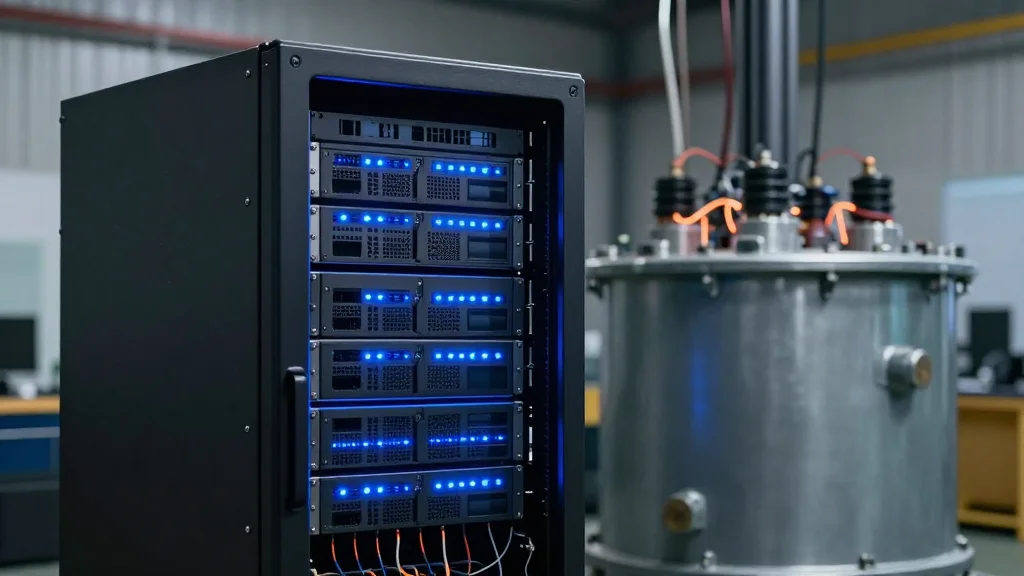
Bitfarms Rebrands as Keel Infrastructure, Shifts Focus to AI Power Assets

Companies Mentioned
Why It Matters
The Bitfarms‑Keel transition illustrates a nascent but potentially transformative trend: crypto‑mining assets being redeployed for AI workloads. As AI models grow in size and complexity, data‑center power constraints have become a bottleneck for cloud providers. Companies that already own cheap, reliable electricity and grid connections can shortcut the lengthy process of building new facilities, giving them a competitive edge. If Keel can successfully monetize its power assets, it may inspire a wave of similar conversions, reshaping the supply side of the AI infrastructure market. For the crypto ecosystem, the pivot signals a pragmatic response to Bitcoin’s price volatility. Miners facing prolonged periods of low coin prices can preserve cash flow by monetizing their core asset—electricity—rather than waiting for a market rebound. This could stabilize miner balance sheets and reduce the sector’s exposure to speculative price swings, while simultaneously feeding the AI boom with much‑needed power capacity.
Key Takeaways
- •Bitfarms rebrands as Keel Infrastructure, formally exiting Bitcoin mining.
- •South‑American mining assets sold; focus shifts to North‑American power sites.
- •Company aims to repurpose 200+ MW of electricity capacity for AI data‑centers.
- •Transition requires capital for cooling, fiber and high‑density power upgrades.
- •Success could set a template for other miners to monetize power assets amid AI demand.
Pulse Analysis
Keel’s strategy is a textbook example of asset redeployment in a rapidly evolving tech landscape. Historically, mining firms have been at the mercy of Bitcoin’s price cycles; when the coin rallies, miners profit, but prolonged downtrends erode cash flow and force equipment idling. By treating electricity as the true underlying asset—rather than the mined coin—Keel sidesteps price volatility and taps a growth market with a clear demand signal: AI workloads are hungry for megawatts. This mirrors the early 2010s when former data‑center operators pivoted to cloud services, leveraging existing infrastructure to capture higher‑margin revenue streams.
From a valuation perspective, the market may begin to price Keel more like a power‑utility or data‑center REIT than a crypto miner. Comparable AI‑infrastructure firms trade at forward P/E multiples of 20‑30, far above the typical 5‑10 range for mining stocks. If Keel can secure multi‑year contracts with cloud providers, its earnings visibility could improve dramatically, prompting analysts to upgrade earnings forecasts and potentially lift the stock’s price-to‑earnings ratio. However, the transition risk is real: retrofitting mining farms for AI is technically complex, and the company must compete with purpose‑built hyperscale data‑centers that benefit from economies of scale and deep vendor relationships.
Looking ahead, the broader implication is a convergence of two capital‑intensive sectors. As AI continues to dominate corporate IT spend, the scarcity of power will become a strategic lever. Miners who have already solved the grid‑connection puzzle are uniquely positioned to become power‑as‑a‑service providers. If Keel’s pilot projects in Ontario and Texas prove profitable, we could see a wave of similar rebrands, accelerating the decoupling of crypto mining from its traditional narrative and embedding it within the larger AI‑infrastructure ecosystem.
Bitfarms Rebrands as Keel Infrastructure, Shifts Focus to AI Power Assets
Comments
Want to join the conversation?
Loading comments...