BNB Token Ticks Higher as Technical Upgrades Frame Tight Price Compression
•January 5, 2026
0
Why It Matters
The price compression signals a market indecision that could break either way, while the network upgrades aim to boost scalability and attract more developers, directly influencing BNB’s valuation and Binance’s ecosystem competitiveness.
Key Takeaways
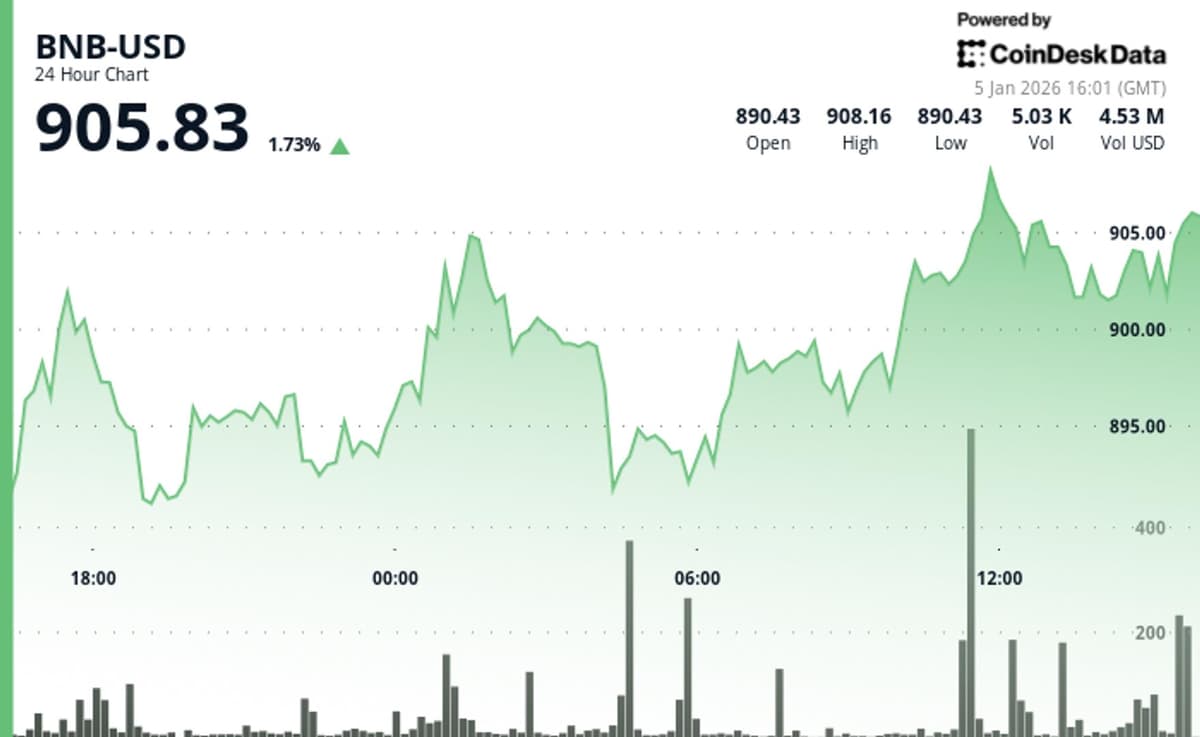
- •BNB up 1.7% to ~$906, trading within $890‑$910 range
- •Price compression between rising support and descending resistance near $910
- •2026 roadmap targets >20,000 TPS, lower fees, faster confirmations
- •Fermi hard fork scheduled mid‑January could spark volatility
- •Trading volume surged past $900, then tapered near resistance
Pulse Analysis
The recent 1.7% rally in BNB highlights a classic case of technical compression, where the token oscillates between a strengthening support base and a weakening resistance ceiling. Traders see the $902‑$908 band as a battleground; volume surged as price nudged past $900, yet the lack of aggressive buying near the ceiling suggests caution. This equilibrium often precedes a decisive breakout, making the next price move a focal point for both short‑term speculators and long‑term holders.
Beyond the charts, Binance’s BNB Chain is unveiling an ambitious 2026 roadmap that could reshape its competitive stance. Targeting more than 20,000 transactions per second, the upgrade leverages parallel execution and a new client architecture to slash fees and cut confirmation times. Such performance gains are designed to lure DeFi projects and NFT platforms that demand high throughput, potentially expanding BNB’s utility and reinforcing its position against rivals like Ethereum and Solana. The roadmap’s success hinges on developer adoption and the network’s ability to deliver on promised efficiencies.
The upcoming Fermi hard fork, slated for mid‑January, adds another layer of market dynamics. Validators must update software, and historically, such protocol changes can trigger short‑term price swings as participants reassess risk. While the fork is routine, its timing amid a compressed price range could amplify volatility. Investors should monitor on‑chain metrics and community sentiment, as the fork’s execution will test the resilience of BNB’s ecosystem and may set the tone for the token’s trajectory in the coming weeks.
BNB token ticks higher as technical upgrades frame tight price compression
0
Comments
Want to join the conversation?
Loading comments...