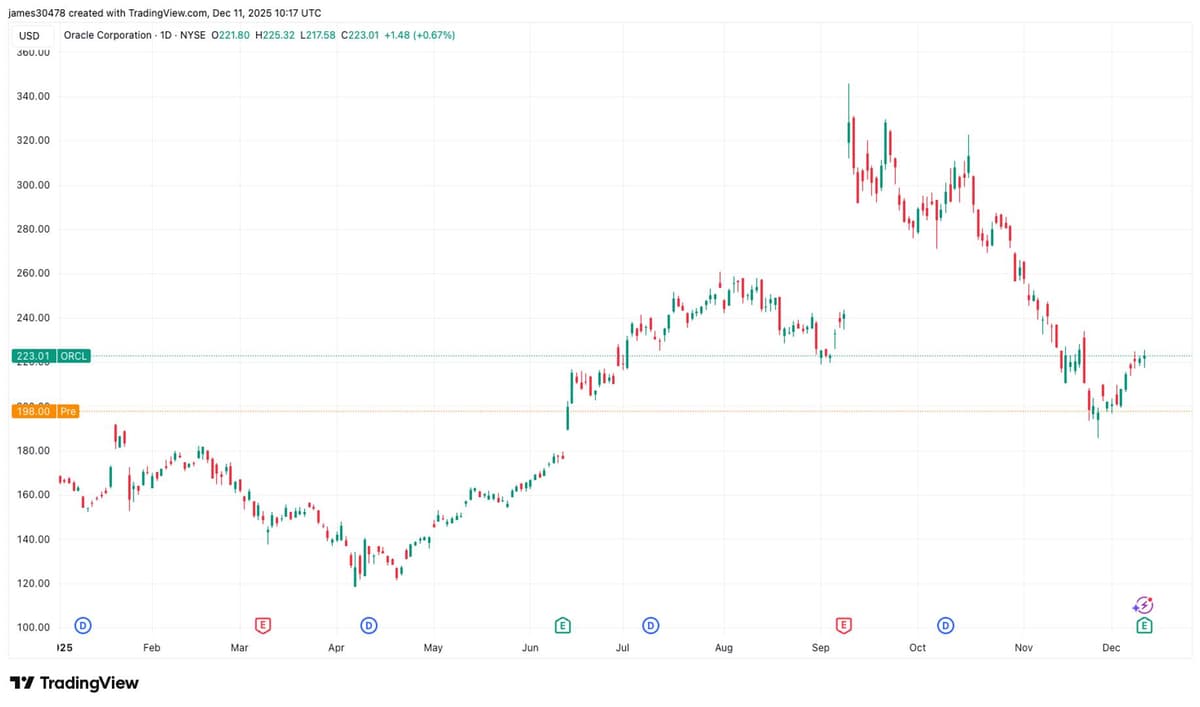
BTC, Nasdaq Futures Drop as Oracle Earnings Revive AI Bubble Fears
•December 11, 2025
0
Companies Mentioned


Why It Matters
The miss underscores the fragility of debt‑driven AI spending and triggers broader risk‑off pressure across tech‑heavy assets and crypto markets.
Key Takeaways
- •Oracle revenue missed consensus, cloud revenue fell short
- •Debt rose 25% to $99.6 billion
- •Oracle CDS spread widened to 117 bps
- •BTC dropped 2.8% to $90,000
- •Nasdaq futures fell 0.8% amid AI concerns
Pulse Analysis
Oracle’s latest earnings reveal a widening gap between the hype surrounding AI infrastructure and the cash reality for legacy software giants. While the firm announced a $15 billion increase in planned data‑centre spending, total revenue fell short of analyst forecasts and cloud‑infrastructure sales lagged, pushing long‑term debt to $99.6 billion. Morgan Stanley’s projection of $290 billion net debt by 2028 highlights the scale of financing required to sustain AI ambitions, raising questions about the sustainability of current capital‑intensive growth models.
The earnings shock rippled through risk assets, prompting a noticeable pullback in AI‑focused stocks and a broader market sell‑off. Bitcoin, often viewed as a barometer for risk appetite, slipped 2.8% to roughly $90,000, while Nasdaq futures, weighted toward technology, dropped 0.8%. Oracle’s 5‑year credit‑default swap spread widened dramatically to 117 basis points, signaling heightened perceived default risk despite still modest absolute probabilities. This market reaction illustrates how a single earnings miss can amplify concerns about sector‑wide debt exposure and trigger a cascade of price adjustments across correlated assets.
For investors, the episode serves as a cautionary tale about the perils of financing AI growth primarily through leverage. As central banks, including the Fed, navigate monetary policy amid mixed economic signals, companies with ballooning balance sheets may face tighter credit conditions and higher financing costs. The heightened scrutiny on Oracle’s debt trajectory could pressure other AI‑heavy firms to reassess capital allocation, potentially slowing the pace of AI infrastructure rollout and tempering the speculative fervor that has driven recent asset price rallies.
BTC, Nasdaq Futures Drop as Oracle Earnings Revive AI Bubble Fears
0
Comments
Want to join the conversation?
Loading comments...