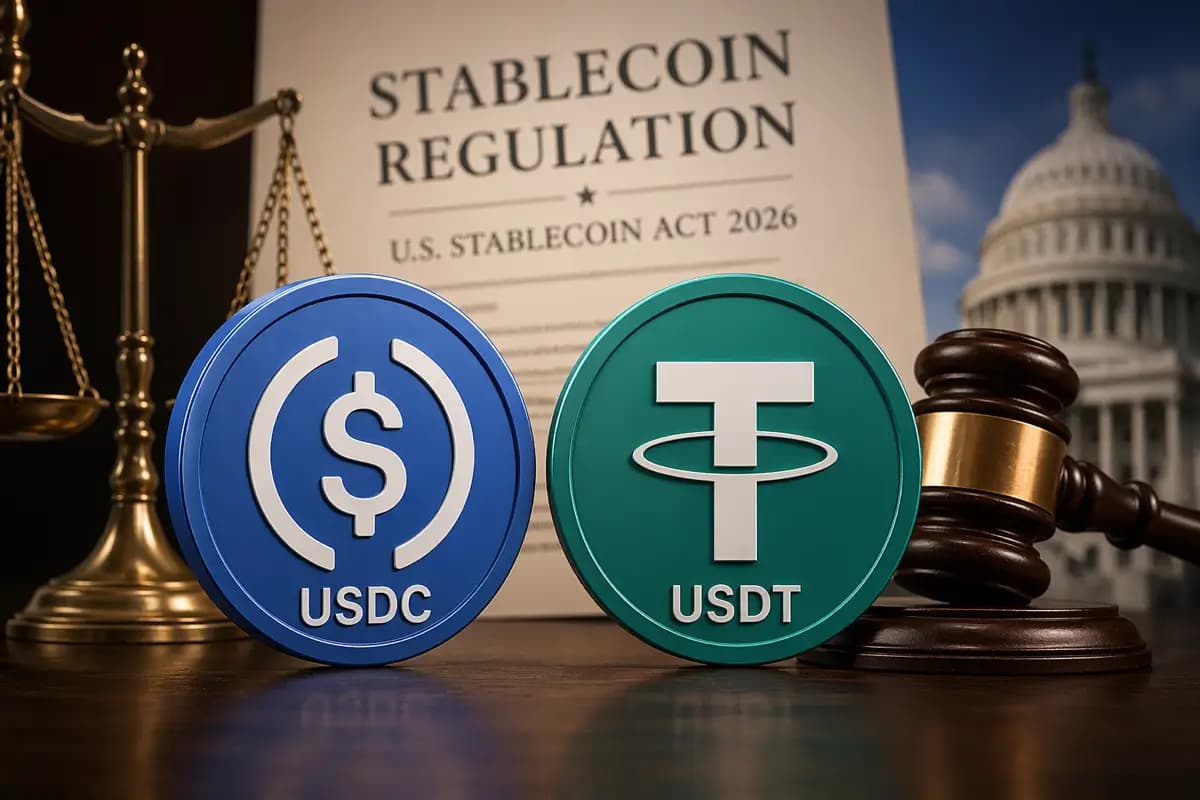
Circle and Tether at the Epicenter of U.S. Stablecoin Act 2026 as Regulation Challenges USDT $180B Liquidity Stronghold
Why It Matters
Regulatory pressure on USDT may force the largest stablecoin to increase transparency, altering liquidity flows and investor confidence across the crypto ecosystem.
Key Takeaways
- •Tether holds ~60% stablecoin market, ~US$180 billion in liquidity.
- •USDC supply jumped 220% since late 2023, gaining regulator favor.
- •MiCA compliance positions USDC for EU and upcoming U.S. rules.
- •GENIUS Act could force tighter oversight on USDT, reshaping market dynamics.
Pulse Analysis
The stablecoin sector remains anchored by Tether, whose USDT token still commands roughly 60 percent of global stablecoin volume and holds about US$180 billion in on‑chain liquidity. That scale gives Tether a de‑facto cash‑equivalent role in crypto trading, payments and decentralized finance, but it also draws the sharpest regulatory focus. U.S. lawmakers and international bodies argue that such concentration creates systemic risk, prompting a wave of legislative proposals aimed at increasing transparency, reserve verification, and consumer protection for the largest token.
Circle’s USDC, by contrast, has surged 220 percent in supply since late 2023, a growth driven largely by its early alignment with the European Union’s Markets in Crypto‑Assets (MiCA) framework. By meeting MiCA’s stringent capital‑reserve and audit requirements, USDC presents a ready‑made compliant alternative for both European and U.S. institutions seeking a low‑risk digital dollar. This regulatory friendliness has translated into broader adoption across fintech platforms, corporate treasuries, and cross‑border payment corridors, positioning USDC as the preferred stablecoin for entities wary of Tether’s opaque reserve practices.
The forthcoming U.S. Stablecoin Act, dubbed the GENIUS Act, is expected to codify many of these compliance expectations into law, potentially mandating real‑time reserve disclosures, third‑party audits, and limits on concentration of any single stablecoin. If enacted, the legislation could compel Tether to overhaul its reserve reporting or face market penalties, while rewarding compliant issuers like Circle with greater market share. Investors and businesses will need to monitor how the act reshapes liquidity flows, pricing spreads, and the overall risk profile of digital dollar assets in the coming years.
Circle and Tether at the Epicenter of U.S. Stablecoin Act 2026 as Regulation Challenges USDT $180B Liquidity Stronghold
Comments
Want to join the conversation?
Loading comments...