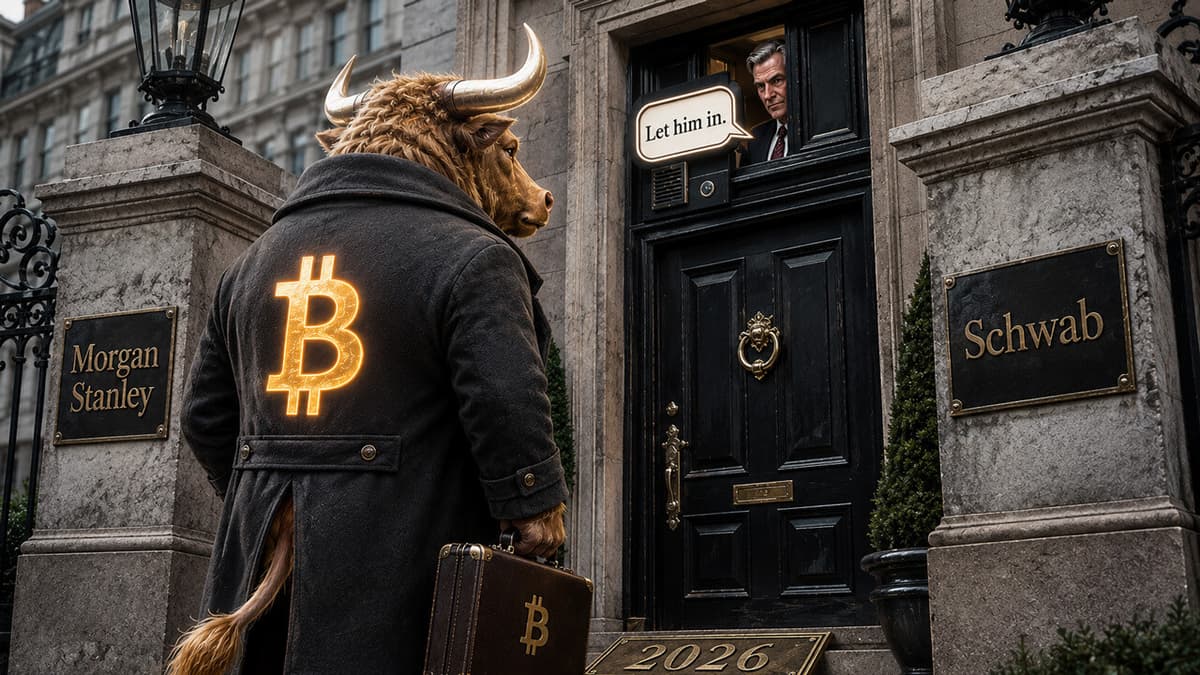
Morgan Stanley and Charles Schwab Are Rushing Into Crypto: What Do They See Coming?
Why It Matters
Integrating crypto trading turns a peripheral service into a core revenue stream for major brokerages and reshapes the competitive landscape between traditional finance and specialist crypto platforms.
Key Takeaways
- •Schwab holds ~20% of U.S. spot crypto ETP assets.
- •Morgan Stanley’s E*Trade crypto project targets H1 2026 launch via Zerohash.
- •Recent FDIC and OCC rulings removed prior‑approval barriers for banks.
- •Bitcoin ETF inflows topped $59.7B, indicating strong institutional interest.
- •Direct brokerage trading aims to capture revenue and client data currently lost.
Pulse Analysis
The rapid accumulation of Bitcoin ETF assets—nearly $60 billion—has revealed a latent appetite for direct crypto exposure among retail and institutional investors. As clients increasingly allocate capital to spot Bitcoin and Ethereum via familiar brokerage accounts, the friction of splitting custody and execution between a broker and a crypto‑centric exchange becomes a competitive disadvantage. Regulatory shifts in 2025‑2026, notably the FDIC’s rescission of prior‑approval requirements and the OCC’s clarification on bank‑held crypto, have cleared a path for legacy institutions to build compliant, end‑to‑end crypto infrastructures.
Charles Schwab is leveraging its existing 20% share of U.S. spot crypto ETP holdings to launch a full‑stack offering that couples custody at its Premier Bank with execution through Paxos. Morgan Stanley, meanwhile, has been quietly developing its crypto capability since September 2025, partnering with Zerohash to deliver a proprietary trading interface for E*Trade clients. Both firms aim to retain the lucrative trade commissions, spread revenue, and behavioral data that currently enrich platforms like Coinbase and Robinhood. By embedding crypto alongside equities, fixed income and mutual funds, they create a seamless client experience that encourages higher wallet share and cross‑selling opportunities.
The broader industry impact hinges on whether crypto becomes a routine line item for brokerage clients or remains a niche add‑on. If ETF inflows stay robust and retail enthusiasm rebounds, direct trading could evolve into a significant profit center, compelling other incumbents to follow suit. Conversely, regulatory uncertainty—such as delays to the CLARITY Act—or a prolonged market lull could relegate crypto to a table‑stakes feature, merely preserving existing client relationships. Either scenario underscores that the firms that secure live, integrated crypto rails now will dictate the next phase of retail crypto adoption and set the benchmark for how traditional finance engages with digital assets.
Morgan Stanley and Charles Schwab are rushing into crypto: what do they see coming?
Comments
Want to join the conversation?
Loading comments...