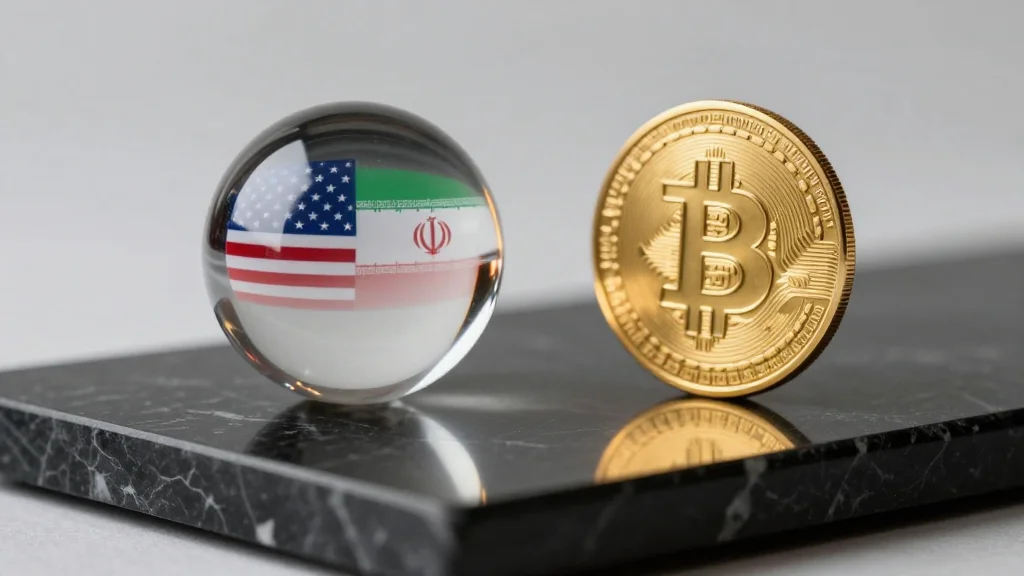
New Polymarket Accounts Net $375K+ Betting on US‑Iran Ceasefire Before Trump’s Announcement

Companies Mentioned
Why It Matters
The Polymarket episode highlights how decentralized prediction markets can quickly become venues for high‑stakes speculation on geopolitical events, blurring the line between public information and potential insider advantage. If regulators extend insider‑trading rules to these platforms, it could impose compliance costs that deter some crypto innovators while providing safeguards for retail participants. Conversely, a lack of clear policy may erode trust, limiting broader adoption of prediction markets as legitimate financial tools. Beyond the immediate profits, the case signals that blockchain transparency can both expose questionable trading patterns and empower investigators. As more political and macro‑economic outcomes become tokenized, the industry faces a pivotal moment to define ethical standards and align with existing securities frameworks.
Key Takeaways
- •At least 50 newly created Polymarket wallets placed "Yes" bets on a US‑Iran ceasefire before Trump’s 6:30 p.m. ET announcement.
- •Combined profits from the wallets total roughly $375,000, with individual gains of $200,000, $125,500 and $48,500.
- •The bets were identified via Dune analytics, showing wallet creation times as early as 10 a.m. ET on April 7.
- •Congressional bills aim to broaden insider‑trading definitions to include crypto prediction markets like Polymarket.
- •Polymarket labeled the ceasefire contract "disputed," potentially delaying payouts for some participants.
Pulse Analysis
The Polymarket surge illustrates a classic arbitrage opportunity amplified by the speed and anonymity of blockchain. Traders who can monitor on‑chain activity in real time gain a decisive edge, especially when political signals are volatile, as they were with Trump's escalating rhetoric. This dynamic mirrors traditional financial markets where high‑frequency traders exploit micro‑second windows, but here the barrier to entry is lower and the oversight weaker.
Historically, prediction markets have been lauded for aggregating dispersed information, yet the Polymarket case reopens the debate about market integrity when participants may act on non‑public cues. The bipartisan legislative push suggests that regulators are catching up, but the challenge lies in crafting rules that preserve the innovative spirit of decentralized finance while curbing abuse. If successful, a regulatory framework could legitimize prediction markets, attracting institutional players and expanding liquidity. Failure to act, however, risks a backlash that could stifle growth and drive activity to less transparent, offshore platforms.
Looking ahead, the industry’s response will hinge on its ability to self‑regulate. Platforms might introduce KYC requirements for high‑value bets or develop on‑chain provenance tools to flag suspicious timing patterns. Such measures could pre‑empt stricter government mandates and reassure users that the market is fair. Ultimately, the Polymarket episode serves as a litmus test: the sector’s willingness to adopt safeguards will determine whether prediction markets become a mainstream financial instrument or remain a niche, controversy‑prone corner of crypto.
New Polymarket accounts net $375K+ betting on US‑Iran ceasefire before Trump’s announcement
Comments
Want to join the conversation?
Loading comments...