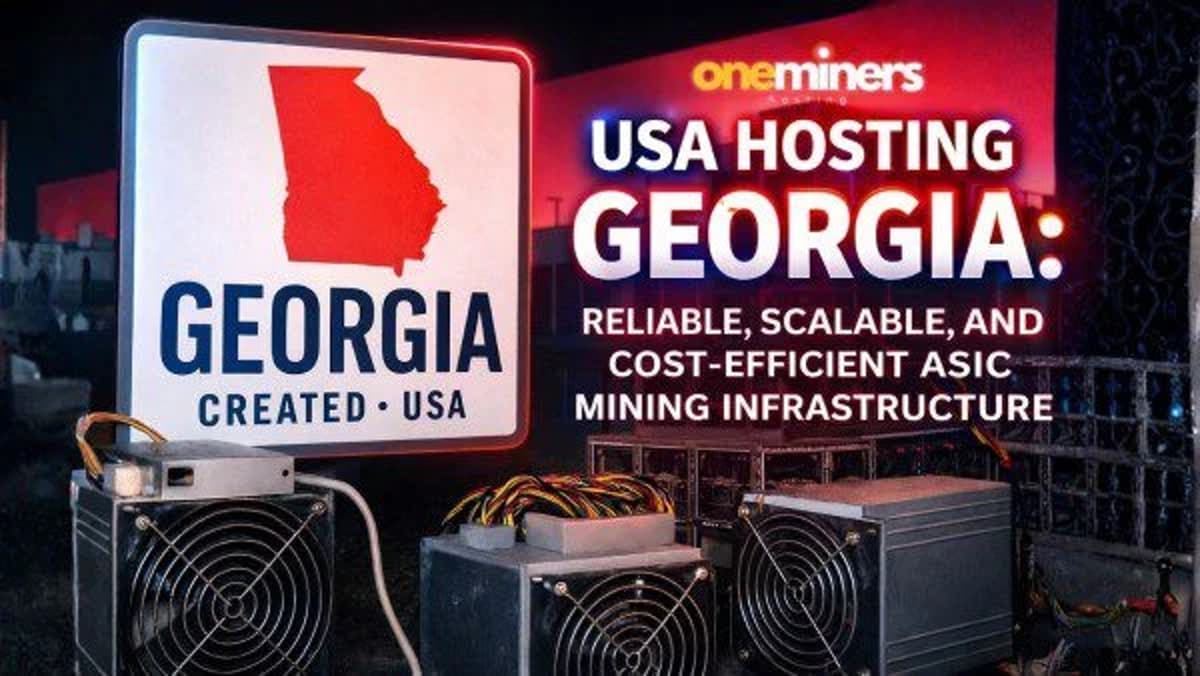
OneMiners USA Hosting – Georgia: Reliable, Scalable, and Cost-Efficient ASIC Mining Infrastructure
•February 3, 2026
0
Companies Mentioned

Why It Matters
The model demonstrates how integrating energy generation with compute can lower operating costs and improve predictability for miners and AI workloads, setting a template for future U.S. digital‑infrastructure projects.
Key Takeaways
- •Georgia campus offers 20 MW ASIC hosting capacity
- •Tiered electricity pricing starts at $0.060/kWh
- •No service fees; all management bundled
- •Immersion cooling available for higher efficiency
- •South Carolina converts stranded gas to 30 MW compute
Pulse Analysis
OneMiners’ Georgia campus illustrates a maturing approach to crypto‑mining infrastructure, moving beyond speculative builds toward enterprise‑grade data‑center standards. By delivering 20 MW of purpose‑built capacity, engineered airflow, and optional immersion cooling, the site ensures consistent uptime and hardware longevity. Transparent, tiered power pricing—$0.060/kWh for premium hosting—combined with a no‑service‑fee policy gives miners a predictable cost structure, a rare commodity in an industry where marginal efficiency translates directly into profitability.
The South Carolina expansion tackles a different challenge: converting stranded natural‑gas into usable electricity for high‑density compute. By situating modular, containerized data‑centers adjacent to on‑site generators, OneMiners eliminates transmission losses and grid bottlenecks, delivering up to 30 MW of power for both Bitcoin ASICs and AI workloads. This flexibility enables operators to shift capacity between blockchain mining and AI inference based on market signals, maximizing asset utilization and revenue streams while supporting emerging AI demand.
Together, these dual strategies signal a broader shift toward energy‑integrated compute ecosystems in the United States. Aligning power generation with workload requirements reduces operational risk, lowers total cost of ownership, and offers a scalable blueprint for future deployments. As AI and blockchain continue to drive demand for dense, reliable compute, providers that can bundle transparent pricing, advanced cooling, and on‑site energy conversion will likely capture a competitive edge in the evolving digital‑infrastructure market.
OneMiners USA Hosting – Georgia: Reliable, Scalable, and Cost-Efficient ASIC Mining Infrastructure
0
Comments
Want to join the conversation?
Loading comments...