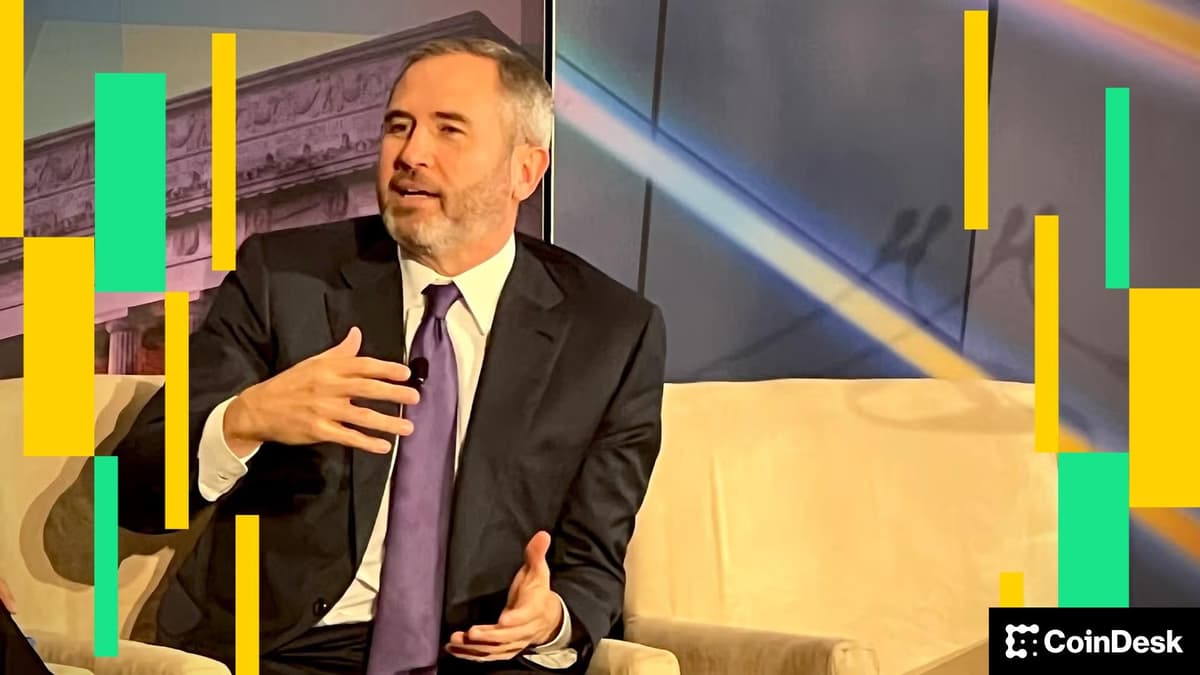
Ripple Injects $150 Million Into LMAX to Push RLUSD Stablecoin for Institutions
•January 15, 2026
0
Companies Mentioned


Why It Matters
The injection accelerates stablecoin adoption in regulated finance, giving institutions a unified, low‑friction collateral tool across digital and traditional assets.
Key Takeaways
- •Ripple invests $150M to embed RLUSD in LMAX platform.
- •RLUSD becomes collateral for spot, futures, and CFD trades.
- •LMAX reported $8.2T institutional volume, boosting stablecoin exposure.
- •RLUSD market cap exceeds $1.4B, targeting regulated institutions.
- •Integration promises margin efficiency and unified credit infrastructure.
Pulse Analysis
Stablecoins have moved beyond retail speculation, becoming essential bridges between crypto and traditional finance. Regulators worldwide are clarifying frameworks that allow compliant tokens to serve as collateral, while institutional investors seek assets that combine digital speed with fiat‑backed stability. In this environment, Ripple’s RLUSD, a fully fiat‑backed token, offers a regulated alternative that satisfies capital‑efficiency requirements and reduces operational complexity for large traders.
The $150 million infusion into LMAX Group underscores Ripple’s strategy to embed its token within established trading venues. By integrating RLUSD into LMAX’s exchange, custody, and kiosk platforms, the partnership enables seamless use of the stablecoin for spot, perpetual futures, and CFD products. Clients can consolidate margin across asset classes, freeing liquidity and lowering funding costs. LMAX’s $8.2 trillion institutional volume provides RLUSD with immediate deep liquidity, while Ripple Prime’s connection adds a unified credit line, enhancing settlement speed and transparency.
For the broader market, this collaboration signals a maturation of the institutional stablecoin ecosystem. Competing providers will need comparable integration depth and regulatory credentials to attract the same tier of banks and asset managers. As more firms adopt stablecoins for collateral, we can expect tighter spreads, increased cross‑asset trading, and a gradual shift toward digital settlement standards. Ripple’s aggressive capital backing and LMAX’s trading reach position RLUSD to become a benchmark stablecoin for regulated finance, potentially reshaping how institutions manage capital across the FX‑crypto spectrum.
Ripple injects $150 million into LMAX to push RLUSD stablecoin for institutions
0
Comments
Want to join the conversation?
Loading comments...