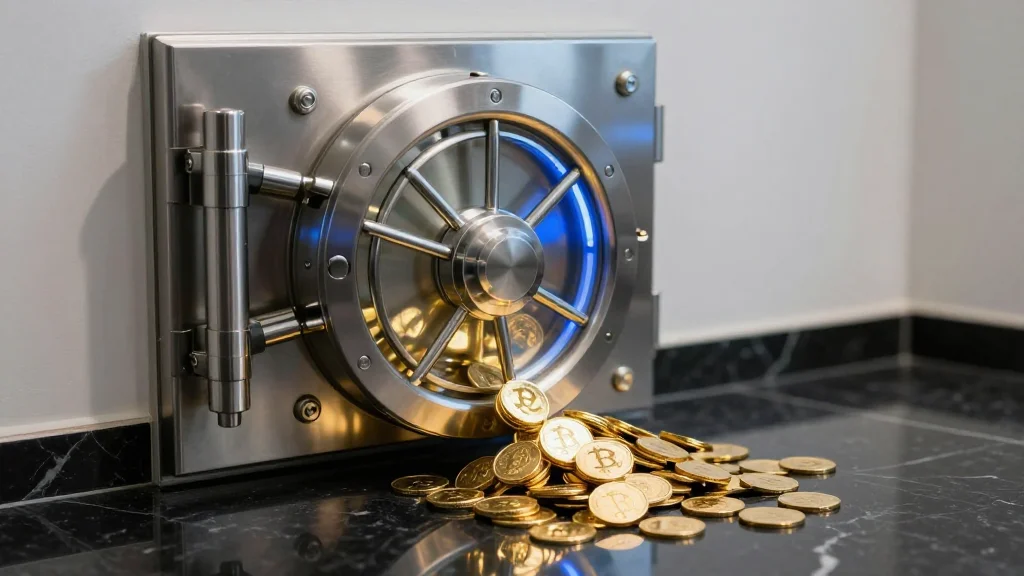
Ripple Unlocks $1.35 B of XRP and Eyes $1 B Treasury SPAC as Utility Spikes 35%

Why It Matters
The escrow release and the proposed $1 billion XRP treasury represent the most significant supply‑side and demand‑side events for Ripple in 2026. By potentially adding $1.35 billion of XRP to the market while simultaneously creating a new institutional buying conduit, Ripple is testing whether coordinated supply management can coexist with large‑scale capital inflows. The 35% jump in XRPL transaction volume signals that the network’s utility is expanding beyond payments into tokenized assets and stablecoins, a trend that could underpin longer‑term price appreciation if matched by liquidity. Furthermore, the flash‑loan‑proof amendment positions the XRP Ledger as a uniquely secure DeFi platform. While this may deter some high‑frequency arbitrage strategies, it could attract risk‑averse institutions seeking a safer environment for settlement and asset tokenization. The interplay of security, utility growth, and innovative treasury structures will likely set a benchmark for how large‑cap crypto assets manage supply and demand in a maturing market.
Key Takeaways
- •June 1 escrow release of 1 billion XRP (~$1.35 billion) with 60‑80% re‑locking expected
- •Bloomberg‑cited $1 billion SPAC raise to create an XRP‑focused public treasury
- •XRPL daily transactions up 35% QoQ to 2.48 million, RWA market cap up 124% to $2.25 billion
- •Spot XRP ETF holdings rose 2% to 775.4 million XRP (≈1.3% of supply)
- •Draft XRPL amendment blocks flash‑loan attacks, trading security for capital‑efficiency
Pulse Analysis
Ripple’s dual‑track strategy—managing supply through predictable escrow releases while courting institutional capital via a SPAC‑styled treasury—reflects a maturation phase rarely seen in crypto. Historically, large‑cap tokens have struggled to generate headline‑grabbing price moves without a clear catalyst; XRP’s recent utility surge provides that narrative, but the market remains price‑neutral because supply concerns linger. The escrow’s re‑locking mechanism is a clever hedge against dilution, yet the headline $1.35 billion addition still forces traders to reassess support levels. If the SPAC successfully locks in $1 billion of new capital, the net effect could be a modest supply increase offset by a sizable demand boost, potentially nudging the token above the $1.50 resistance.
The flash‑loan‑proof amendment adds another layer of differentiation. By eliminating a common exploit vector, XRPL becomes more attractive to banks and asset managers wary of DeFi risks. However, the loss of flash‑loan functionality may also limit the ecosystem’s ability to attract liquidity‑intensive strategies that currently thrive on Ethereum. As tokenized real‑world assets continue to dominate XRPL’s activity, the ledger may carve out a niche as a secure settlement layer rather than a full‑blown DeFi hub. This specialization could sustain a steady, if not explosive, demand for XRP, reinforcing the token’s role as a bridge currency while tempering expectations of 10x‑50x rallies.
In sum, XRP’s price outlook hinges on whether institutional appetite materializes fast enough to absorb the escrow‑driven supply influx. A successful SPAC raise and continued RWA growth would likely push the token into a new price corridor, whereas a muted response could keep XRP trapped in its current consolidation range. Investors should watch the June escrow, SPAC filing milestones, and any regulatory signals regarding XRP‑focused treasury vehicles as the primary barometers of future momentum.
Ripple unlocks $1.35 B of XRP and eyes $1 B treasury SPAC as utility spikes 35%
Comments
Want to join the conversation?
Loading comments...