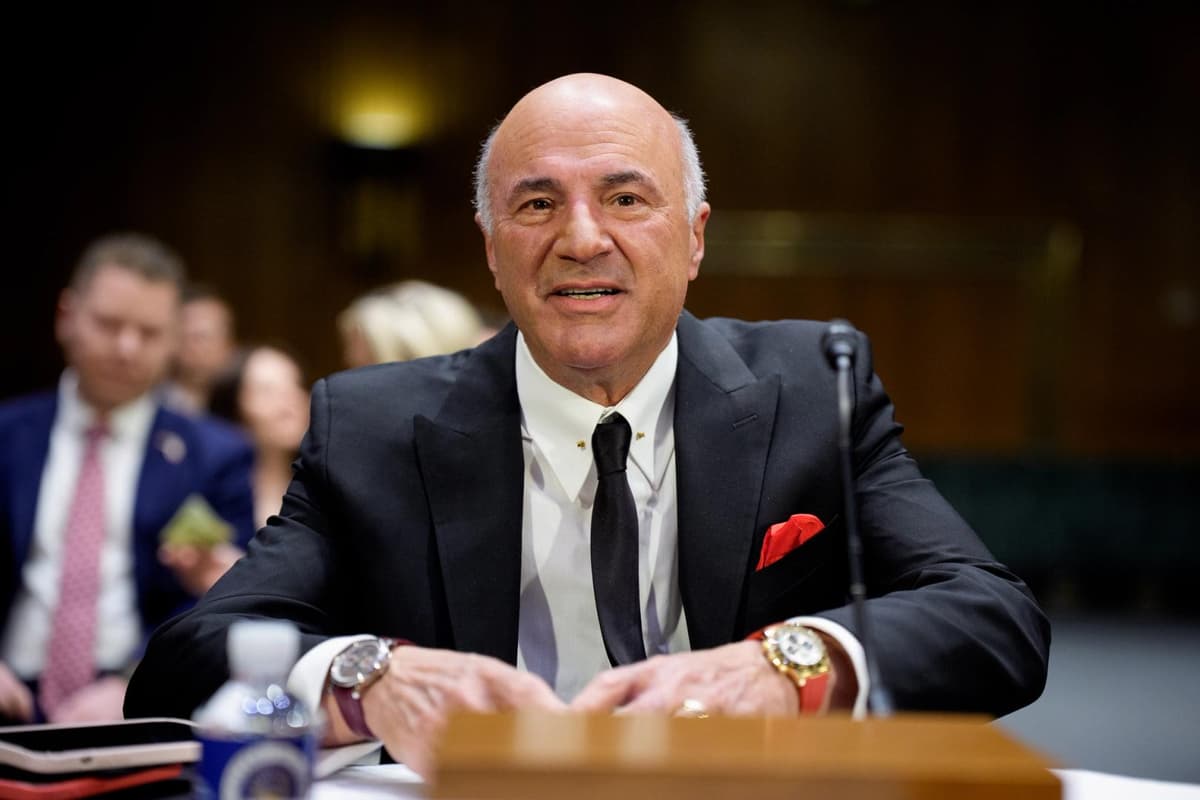
Shark Tank's Kevin O’Leary on Betting Big on Data Centers and Why Most Crypto Tokens Will Never Come Back
•January 21, 2026
0
Companies Mentioned


Why It Matters
Owning and preparing infrastructure gives O'Leary a strategic foothold in the AI and crypto boom, while his token skepticism highlights a shift toward tangible assets that institutional investors can reliably monetize.
Key Takeaways
- •O'Leary controls 26,000 acres for AI, cloud, crypto.
- •Plans to lease shovel‑ready land, not build facilities.
- •Predicts half of announced data centers will never materialize.
- •Claims power contracts cheaper than Bitcoin's value.
- •Believes only Bitcoin and Ethereum capture 97% market volatility.
Pulse Analysis
The land‑acquisition strategy O'Leary is pursuing reflects a broader industry pivot from speculative tokens to the physical underpinnings of digital workloads. By securing acreage with built‑in utilities—power, water, fiber, and air rights—he creates a ready‑to‑build platform that lowers entry barriers for miners and AI providers. This model mirrors traditional real‑estate development, where location and infrastructure dictate value, and it aligns with the escalating energy demands of proof‑of‑work mining and large‑scale machine‑learning clusters.
O'Leary’s commentary on token dynamics underscores a market reality: a handful of foundational blockchains dominate capital flows. Data from Charles Schwab shows nearly 80% of the sector’s $3.2 trillion valuation is concentrated in Bitcoin and Ethereum, while thousands of alt‑coins languish with 60‑90% price declines. By emphasizing that only two assets capture the bulk of volatility, O'Leary signals that investors seeking exposure should focus on assets with proven network effects and liquidity, rather than chasing speculative projects that lack sustainable use cases.
Regulatory clarity remains the missing piece for mass institutional participation. O'Leary points to the U.S. crypto‑market‑structure bill, noting that provisions restricting stablecoin yield could hinder adoption. A balanced framework that permits yield offerings while ensuring consumer protection would unlock significant capital, especially as stablecoin revenue streams—exemplified by Coinbase’s $355 million Q3 2025 earnings—demonstrate profitability. Once the legislative hurdles are cleared, the combination of ready‑to‑deploy infrastructure and a clear regulatory path could accelerate institutional allocations into Bitcoin, reinforcing O'Leary’s thesis that the future of crypto lies in its physical foundations.
Shark Tank's Kevin O’Leary on betting big on data centers and why most crypto tokens will never come back
0
Comments
Want to join the conversation?
Loading comments...