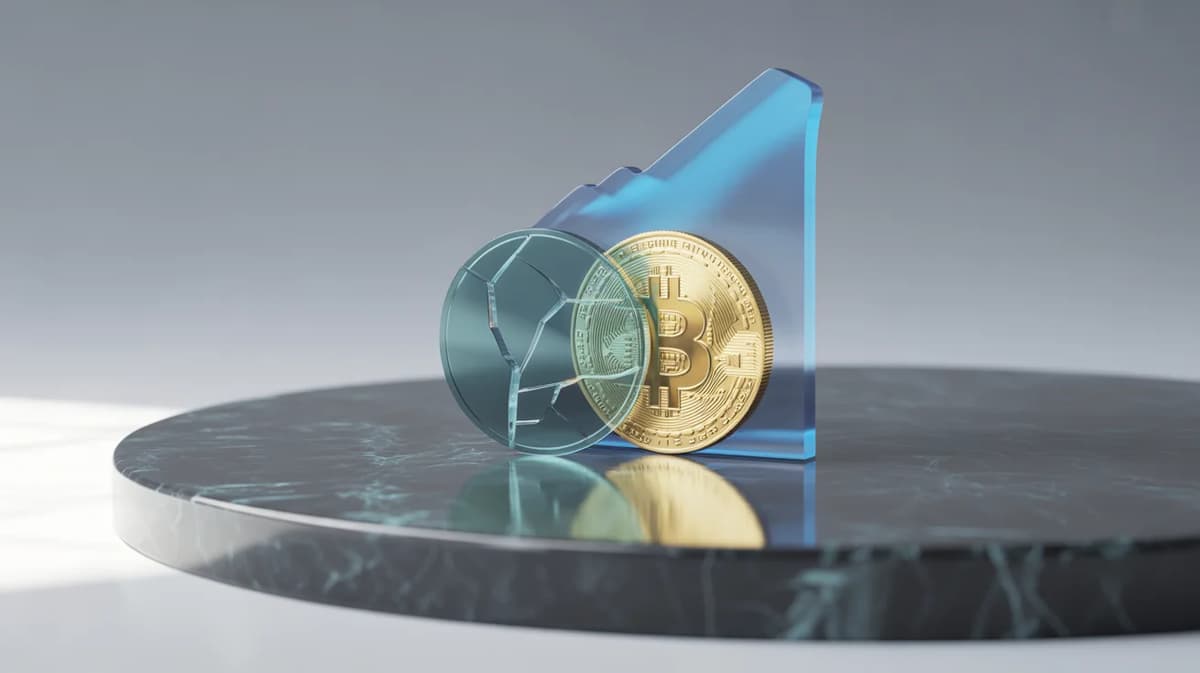
S&P Downgrades Tether's USDT, Citing Falling Bitcoin Prices as Risk
•November 26, 2025
0
Why It Matters
The downgrade signals heightened credit risk for the world’s largest stablecoin, potentially shaking investor confidence and prompting tighter regulatory scrutiny.
Key Takeaways
- •Bitcoin now comprises over 30% of USDT reserves
- •S&P cut USDT rating from AA- to A+
- •Higher Bitcoin volatility raises redemption risk for USDT
- •Tether may need to diversify reserve assets quickly
- •Downgrade could pressure stablecoin market confidence
Pulse Analysis
Stablecoins have become a cornerstone of crypto liquidity, with Tether’s USDT accounting for roughly 70% of the market’s dollar‑linked tokens. By assigning a credit rating, agencies like S&P provide a proxy for the financial health of these digital assets, offering investors a familiar risk metric. The recent downgrade stems from a shift in Tether’s reserve strategy: an increasing portion of its backing is now held in Bitcoin, a highly volatile asset, which diverges from the traditionally conservative mix of cash, government bonds, and fiat equivalents.
Bitcoin’s price swings have intensified over the past year, and its rising share—estimated at over 30% of USDT’s reserves—means that a sudden market correction could erode the stablecoin’s collateral value. This exposure raises concerns about Tether’s ability to meet redemption demands during a Bitcoin downturn, potentially triggering a liquidity crunch. Market participants may reassess the safety of holding USDT for trading or settlement, especially as alternative stablecoins with more diversified reserves gain attention.
The broader implications extend beyond Tether. A downgrade can influence regulatory perspectives, prompting authorities to consider stricter oversight of reserve disclosures and risk management practices across the stablecoin sector. Investors and exchanges might diversify away from USDT, accelerating the growth of competitors like USDC and BUSD that emphasize transparent, low‑volatility backing. For Tether, the path forward likely involves rebalancing its asset mix and enhancing transparency to restore confidence and stabilize its credit standing.
S&P Downgrades Tether's USDT, Citing Falling Bitcoin Prices as Risk
0
Comments
Want to join the conversation?
Loading comments...