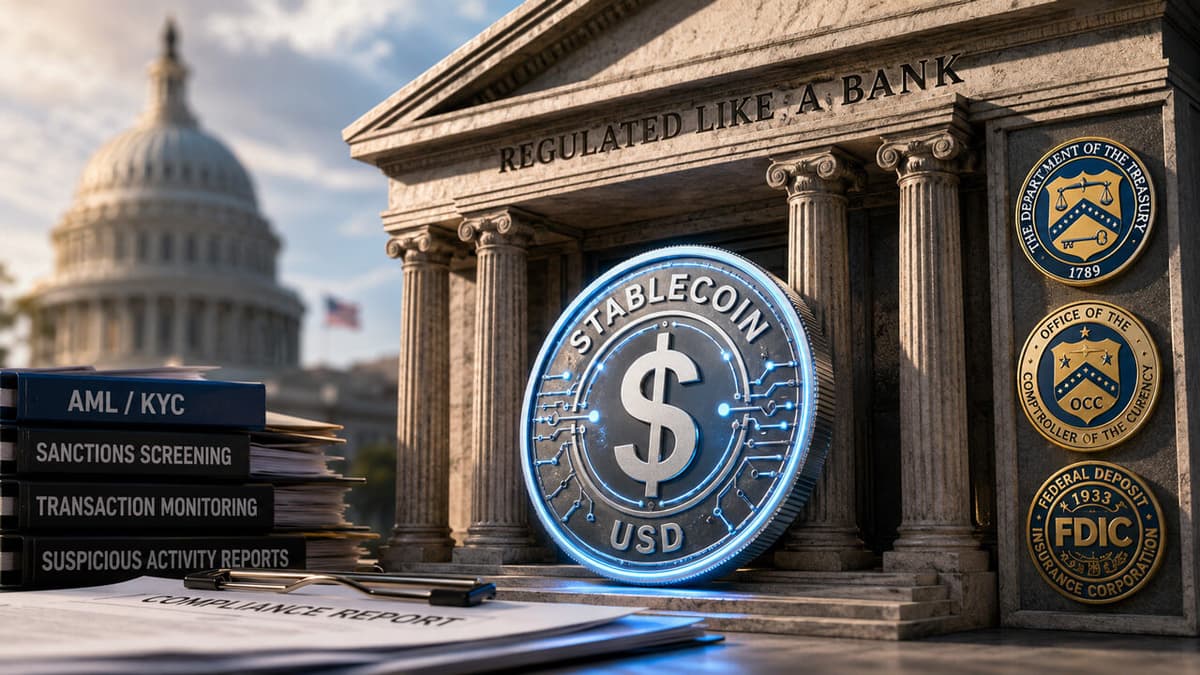
Stablecoin Regulation Converts Issuers Into Psuedo-Banks While Adding a Barrier to Entry for Smaller Players
Companies Mentioned
Why It Matters
The rules will likely consolidate the stablecoin market around well‑capitalized firms, limiting competition and shaping the next generation of dollar‑denominated digital payments.
Key Takeaways
- •Weekly issuance reports and quarterly financial filings become mandatory
- •Compliance costs turn stablecoin issuers into pseudo‑banks
- •Smaller issuers face prohibitive regulatory overhead
- •Market expected to consolidate around large, compliant players
Pulse Analysis
The Treasury’s joint FinCEN‑OFAC proposal, coupled with OCC and FDIC drafts, marks the first time U.S. regulators will require stablecoin issuers to operate under the same anti‑money‑laundering and sanctions regime as traditional banks. Beyond a simple peg, issuers must now maintain customer‑identification programs, transaction‑monitoring systems, and regular data feeds to a primary regulator. This regulatory overlay transforms a token launch from a lean tech project into a compliance‑intensive financial operation, raising operating expenses dramatically.
For the $320 billion stablecoin market, the new rules create a clear divide between incumbents and newcomers. Large players such as Tether and Circle already employ seasoned compliance teams and banking relationships, allowing them to absorb weekly reporting and annual audit requirements. Smaller firms, however, must invest in costly monitoring vendors, legal counsel, and reporting infrastructure, turning compliance capacity into the primary competitive moat. The result is an industry tilt toward consolidation, with only those able to meet the supervisory burden likely to survive.
Looking ahead, the GENIUS Act’s prohibition on paying interest to token holders combined with the OCC’s scrutiny of affiliate arrangements pushes issuers to compete on liquidity, integration, and institutional access rather than yield. As regulated stablecoins gain credibility with banks, brokers, and corporate treasuries, they become a quasi‑banking layer for dollar transactions. Firms that can navigate the new supervisory regime may become essential infrastructure for the broader financial system, while those unable to shoulder the compliance load risk being edged out before the framework fully takes effect in 2027.
Stablecoin regulation converts issuers into psuedo-banks while adding a barrier to entry for smaller players
Comments
Want to join the conversation?
Loading comments...