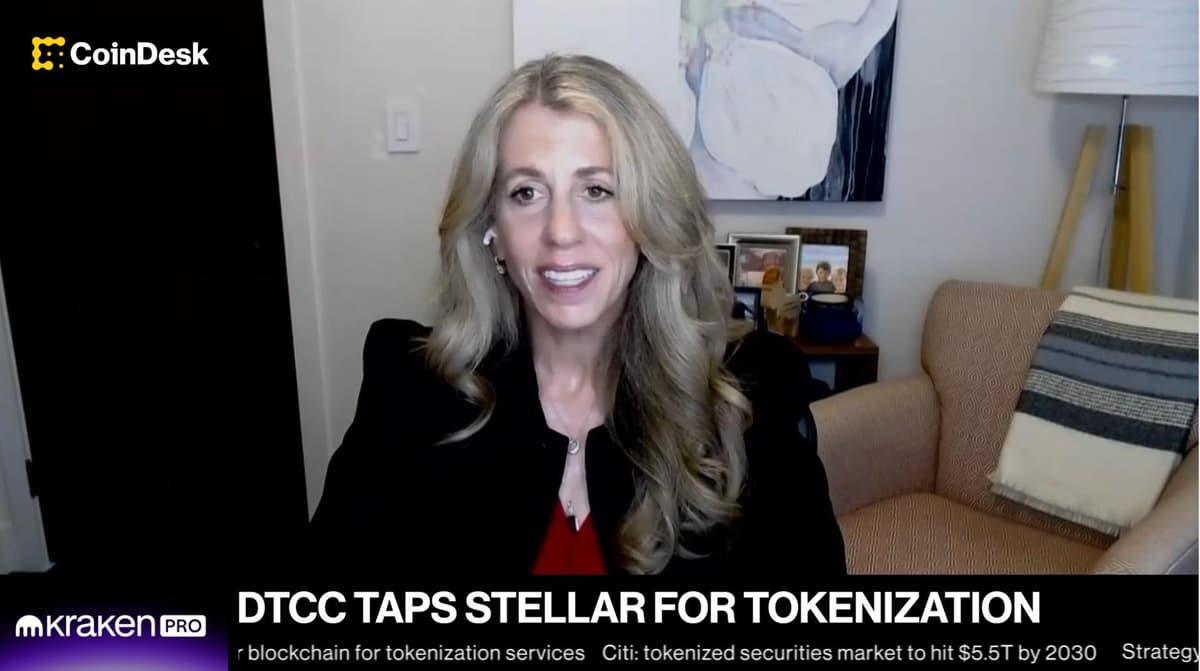
Stellar CEO Says Clarity Act Would Help, but Tokenization Isn't Dependent on It
Companies Mentioned

Why It Matters
The DTCC‑Stellar partnership validates public blockchains for high‑volume, regulated finance, accelerating the shift from pilot projects to production‑grade tokenized assets. It signals that compliance‑focused infrastructure can meet the reliability standards of legacy market participants.
Key Takeaways
- •DTCC selected Stellar as first public blockchain for tokenized settlement
- •Stellar's tokenized assets grew from $1B to $3B in five months
- •Network uptime reached 99.9999% while handling billions of quarterly transactions
- •Compliance tools built into Stellar reduce need for custom smart contracts
- •CEO predicts tokenization will distribute across several public blockchains
Pulse Analysis
The Depository Trust & Clearing Corporation’s decision to integrate Stellar into its tokenized securities settlement platform marks a watershed moment for blockchain adoption in traditional finance. DTCC processes roughly $4.7 quadrillion in securities transactions annually, and its endorsement of a public ledger suggests confidence that blockchain can handle comparable scale and complexity. By linking to Stellar, DTCC aims to streamline issuance, settlement, and custody of tokenized assets, potentially lowering costs and settlement times for institutional investors who have long awaited a regulatory‑compliant solution.
Stellar’s rapid growth—from $1 billion to $3 billion in tokenized real‑world assets within five months—demonstrates the network’s appeal to firms like Franklin Templeton that are already issuing tokenized products. The platform’s architecture embeds compliance, privacy, and scalability features, reducing reliance on bespoke smart contracts and simplifying integration with existing back‑office systems. Its reported 99.9999% uptime and ability to process billions of transactions each quarter address the reliability concerns that have historically hindered blockchain use in high‑value, low‑latency markets.
Regulatory clarity remains a pivotal factor, with the GENIUS Act and the proposed Clarity Act offering a more predictable framework for tokenized securities. While Dixon acknowledges that legislation would smooth the path, she stresses that tokenization momentum will not stall if bills lag. Looking ahead, she envisions a multi‑chain ecosystem where several public blockchains compete on technical merits, rather than a single dominant platform, fostering innovation and resilience across the tokenized asset landscape.
Stellar CEO says Clarity Act would help, but tokenization isn't dependent on it
Comments
Want to join the conversation?
Loading comments...