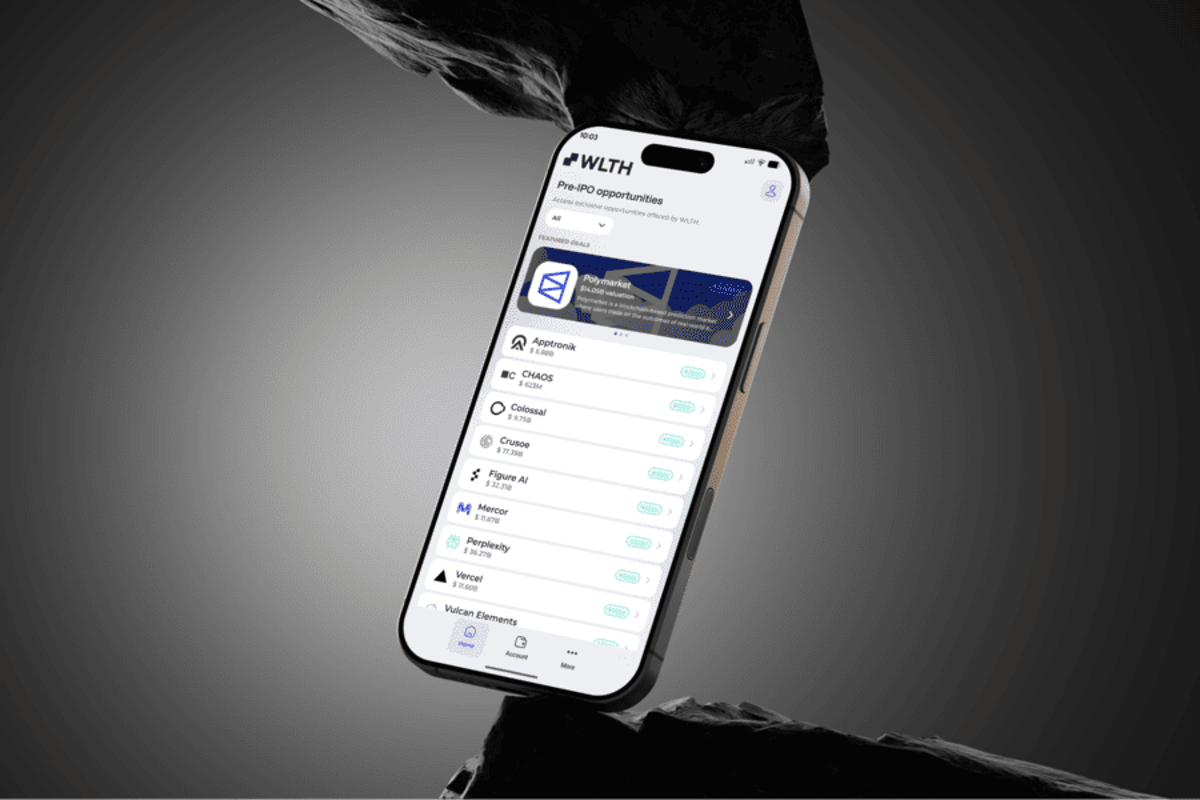
The New Frontier of Finance: How WLTH Is Turning Tokenisation Into Real Market Access
Why It Matters
The app opens previously exclusive private‑market deals to a wider retail base, potentially unlocking new capital flows and accelerating mainstream tokenisation adoption.
Key Takeaways
- •WLTH app offers tokenised IPOs with $20 minimum investment.
- •Fractional ownership lowers barriers to private‑market deals for retail investors.
- •Platform removes traditional intermediaries, streamlining access via blockchain.
- •Real‑world asset tokenisation promises greater liquidity and global participation.
- •WLTH positions itself as a participation‑driven fintech ecosystem.
Pulse Analysis
Tokenisation has emerged as a cornerstone of the next wave of financial innovation, with banks and asset managers experimenting with blockchain‑based securities to cut costs and boost settlement speed. Analysts estimate that digitising real‑world assets could unlock trillions of dollars over the next decade, yet most pilots remain confined to institutional corridors, hampered by complex onboarding and high minimums. The gap between technology and genuine market participation has become the sector’s biggest hurdle, prompting fintechs to focus on usability as the true catalyst for growth.
Enter WLTH, a mobile‑first platform that translates tokenisation theory into practice. By offering fractional stakes in pre‑IPO rounds, venture‑capital deals, and other private‑market assets for as little as $20, WLTH lowers the capital threshold that traditionally barred retail investors. The app’s seamless integration with Apple and Google stores removes the need for specialized wallets or broker relationships, while blockchain back‑end ensures transparent ownership and near‑instant settlement. This combination of low entry points and streamlined user experience is reshaping how investors discover and allocate capital, expanding the addressable market for tokenised securities.
The broader implications extend beyond individual investors. As more platforms like WLTH prove that tokenised assets can be accessed at scale, regulators are compelled to refine frameworks that balance innovation with investor protection. Greater liquidity and global reach could attract fresh capital to sectors such as infrastructure and real estate, accelerating the shift toward open‑participation economies. For the fintech industry, WLTH’s model underscores a strategic pivot: success will hinge not just on blockchain infrastructure, but on delivering intuitive, inclusive products that democratise financial opportunity.
The New Frontier of Finance: How WLTH is Turning Tokenisation into Real Market Access
Comments
Want to join the conversation?
Loading comments...