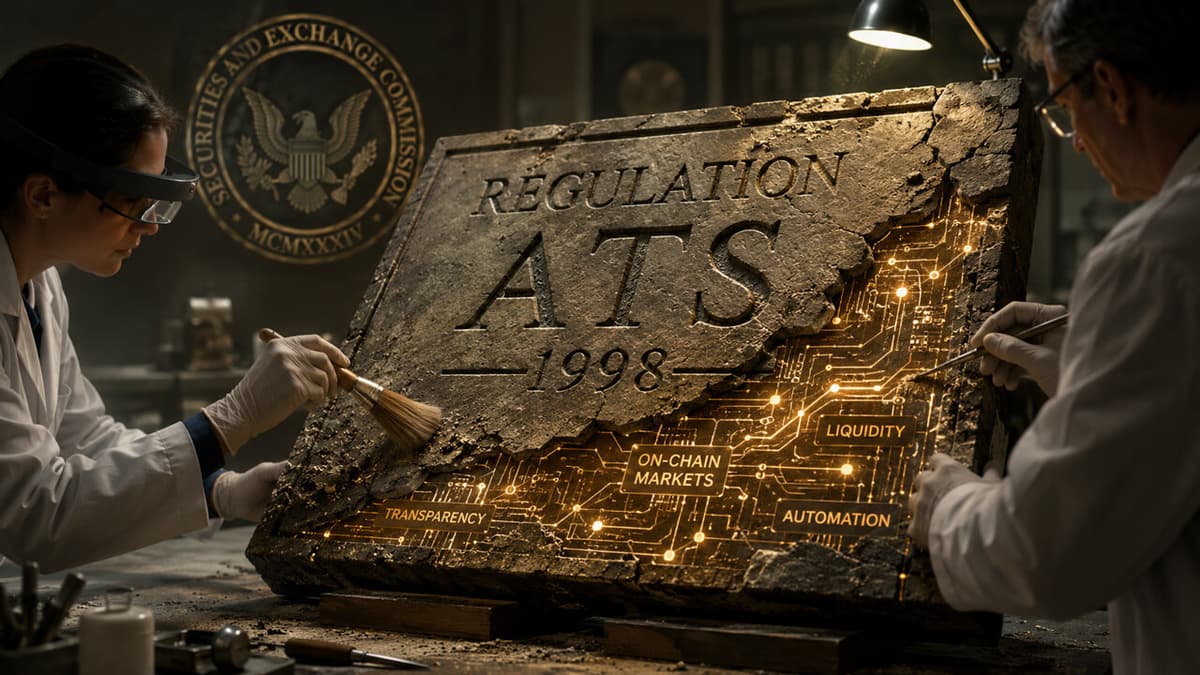
The SEC Looks at a 1990s Fix for Crypto Markets to Allow True “Innovation Pathway”
Companies Mentioned
Why It Matters
A clear, SEC‑backed pathway could reduce legal uncertainty for crypto platforms, encouraging domestic innovation while protecting investors.
Key Takeaways
- •SEC may grant conditional relief for on‑chain trading venues.
- •Path mirrors 1998 Regulation ATS, offering a two‑step compliance route.
- •Hybrid crypto firms could register; fully decentralized protocols may stay excluded.
- •Formal rulemaking will later define exchange, broker‑dealer, clearing roles.
- •SEC urges Congress to pass the CLARITY Act for stablecoin clarity.
Pulse Analysis
The SEC’s proposed innovation pathway reflects a pragmatic lesson from the late‑1990s electronic‑trading boom, when the agency introduced Regulation ATS to accommodate alternative trading systems without overhauling the existing exchange framework. By offering a limited, conditional exemption now, the commission aims to give on‑chain venues a foothold while it works through the more complex task of redefining exchange, broker‑dealer, and clearing functions for software‑driven markets. This incremental approach balances the need for investor protection with the desire to foster technological advancement in a rapidly evolving sector.
For crypto firms that have operated in a regulatory gray zone, the pathway could provide a concrete route to compliance. Hybrid platforms that already act like broker‑dealers or clearing houses would benefit from tailored registration or no‑action relief, allowing them to disclose activities, meet custody standards, and report trades under a framework that acknowledges on‑chain efficiencies. However, fully decentralized protocols—those that execute trades, settle, and record ownership without any intermediary—may remain outside the scope of the initial relief, preserving a degree of legal uncertainty for the most autonomous projects.
The broader significance lies in the SEC’s push for legislative alignment through the CLARITY Act, which seeks to clarify stablecoin and tokenization rules. By signaling willingness to work with Congress, the agency hopes to cement a stable regulatory environment that attracts domestic investment and reduces the incentive for offshore migration. If successful, the two‑step pathway could become a template for future fintech innovations, demonstrating how regulators can adapt legacy frameworks to modern, code‑centric markets without sacrificing oversight.
The SEC looks at a 1990s fix for crypto markets to allow true “innovation pathway”
Comments
Want to join the conversation?
Loading comments...