Turkish Lira Stablecoins Show Why Europe’s Regulated Euro Tokens May Struggle
Companies Mentioned
Why It Matters
The data shows stablecoin adoption follows real‑world payment friction, not regulatory ambition, signaling that Europe’s regulated euro token may struggle to gain traction. This highlights a strategic gap for policymakers aiming to digitize the euro on‑chain.
Key Takeaways
- •Zodia processed $3.4 B in Turkish lira stablecoin transactions in 2025.
- •Lira tokens ranked second after the dollar, ahead of euro.
- •Euro‑pegged stablecoins hold only tens of millions, far behind emerging‑market tokens.
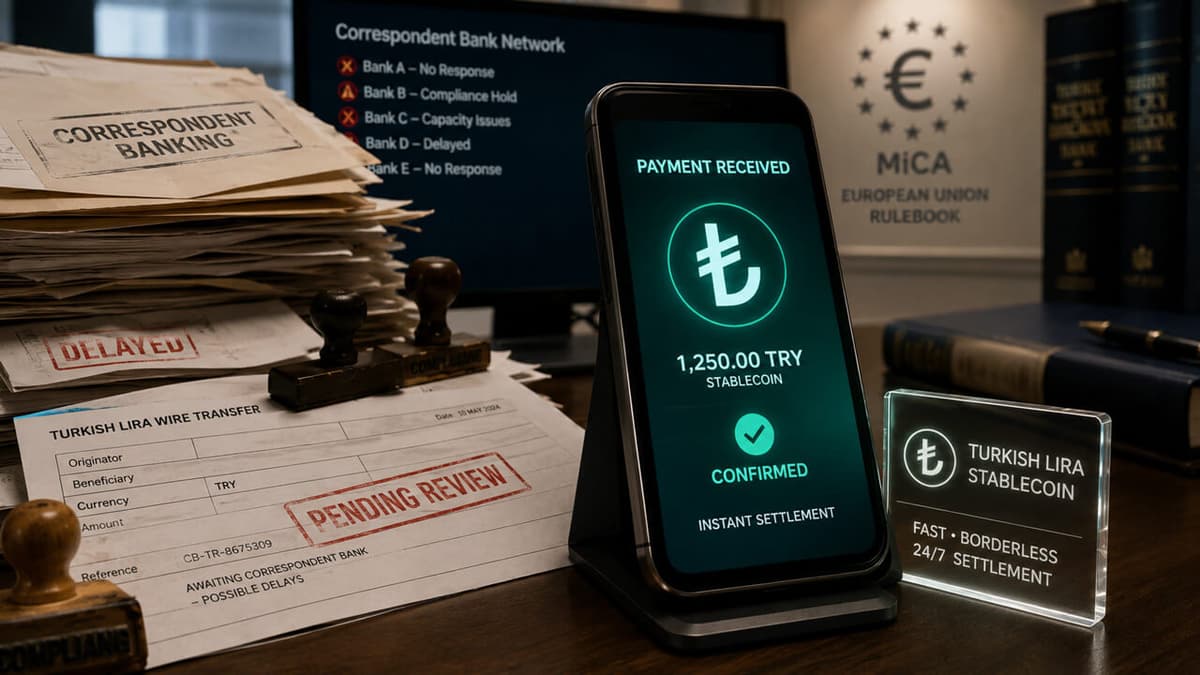
- •Correspondent banking friction pushes Turkish users to tokenized lira.
- •Europe’s MiCA euro token may lack demand without clear use‑case.
Pulse Analysis
Stablecoins have become a litmus test for where on‑chain finance can add real value. While dollar‑pegged tokens dominate with $110.5 billion in circulation, Zodia’s data reveals that Turkish lira‑backed tokens moved $3.4 billion in 2025, eclipsing euro‑pegged counterparts that sit in the tens‑of‑millions range. The lira’s surge is not a function of Turkey’s economic size but a response to the costly, slow correspondent‑banking corridors that force users to seek faster, cheaper settlement via tokenization. By converting fiat into a stablecoin, Turkish businesses and individuals bypass layers of fees and settlement uncertainty, instantly accessing global liquidity.
In Europe, the situation is starkly different. The euro’s domestic banking rails already clear quickly and cheaply, leaving little friction for a tokenized version to solve. Consequently, the 37‑bank consortium’s MiCA‑compliant euro token, slated for late 2026, confronts a demand vacuum. Without a clear pain point, the euro token risks becoming a regulatory showcase rather than a functional payment instrument, especially as the European Central Bank pursues a separate digital euro that may already satisfy on‑chain needs.
The broader implication is that stablecoin success hinges on tangible use‑cases, particularly in emerging markets where local currencies face volatility and banking inefficiencies. As dollar‑stablecoins attract savings from high‑risk economies, local‑currency tokens like the lira act as bridges to that liquidity. Regulators must therefore focus on reducing payment friction and ensuring supervisory frameworks can handle rapid capital flows, rather than assuming that a well‑regulated token will automatically achieve adoption. Europe’s challenge will be to create a compelling on‑chain utility for the euro that mirrors the friction‑driven demand seen in Turkey and other emerging markets.
Turkish lira stablecoins show why Europe’s regulated euro tokens may struggle
Comments
Want to join the conversation?
Loading comments...