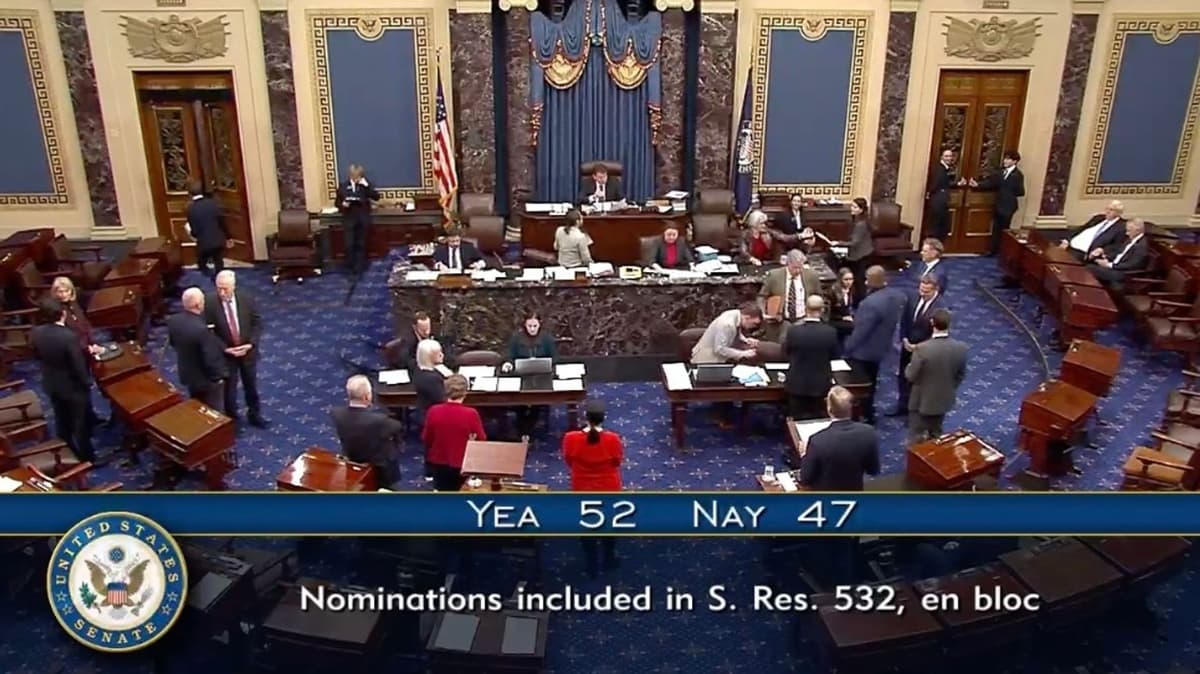
U.S. Senate Rolls Toward Last Vote on Confirming Crypto Regulators at CFTC, FDIC
•December 11, 2025
0
Why It Matters
Confirming these chairs will shape the regulatory framework governing digital assets, influencing market stability and industry growth. Their leadership will affect how the U.S. competes globally in crypto innovation and consumer protection.
Key Takeaways
- •Senate moves toward final vote on crypto regulator nominees
- •Mike Selig nominated to lead CFTC, Travis Hill for FDIC
- •Vote expected early next week after 52‑47 procedural approval
- •Confirmation part of 97 Trump nominees considered together
- •CFTC and FDIC chairs will shape U.S. crypto oversight
Pulse Analysis
The U.S. Senate is poised to cast its final votes on two of the most consequential crypto‑regulatory appointments of the year. After a narrow 52‑47 procedural win on Thursday, the chamber expects to seal the confirmations early next week. Both nominations are bundled with a sweeping package of 97 Trump‑era candidates, reflecting the Republican majority’s strategy of handling multiple confirmations in a single vote. Mike Selig, a senior SEC official with a track record on digital assets, is slated for the CFTC chair, while Travis Hill, a veteran banking regulator, eyes the FDIC helm.
The CFTC and FDIC sit at the nexus of U.S. crypto oversight, each bringing distinct enforcement tools. The CFTC, traditionally focused on derivatives, has recently expanded its purview to include spot‑market trading and stablecoin compliance, positioning it as the primary arbiter of market integrity. Meanwhile, the FDIC’s expanding supervisory reach over crypto‑friendly banks could tighten deposit insurance standards and influence how fintech firms access capital. With Selig’s SEC background and Hill’s banking experience, policymakers anticipate a coordinated push toward clearer rules, heightened consumer protection, and stronger market surveillance.
Industry participants are watching the outcome closely, as regulatory certainty remains a key driver of investment in digital assets. A confirmed CFTC chair with a pro‑innovation stance could accelerate the rollout of futures contracts and bring more institutional liquidity to the market. Conversely, a stricter FDIC approach may compel crypto‑focused banks to bolster risk frameworks, potentially curbing the rapid growth of deposit‑taking platforms. Overall, the Senate’s decision will set the tone for the next legislative cycle, influencing both congressional debates on crypto legislation and the global competitiveness of the U.S. financial system.
U.S. Senate Rolls Toward Last Vote on Confirming Crypto Regulators at CFTC, FDIC
0
Comments
Want to join the conversation?
Loading comments...