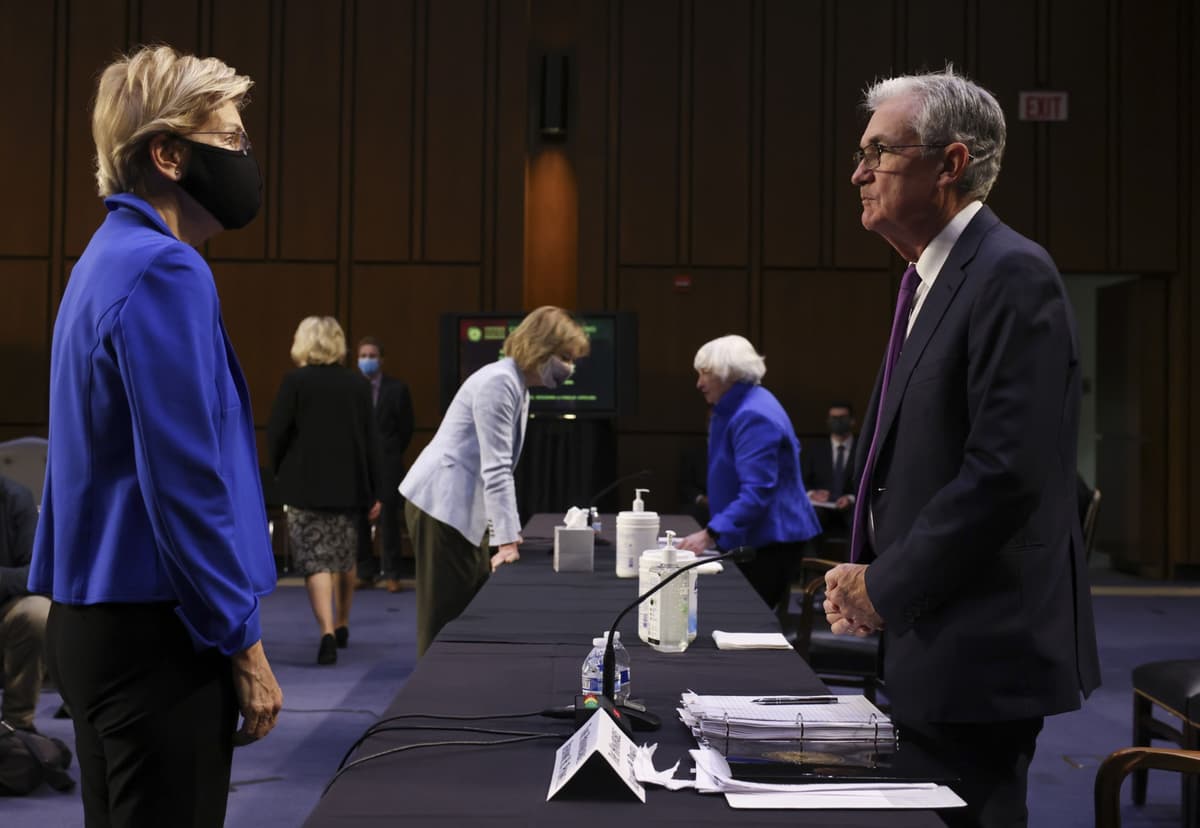
Warren Warns Fed, Treasury Against Crypto Bailout
•February 19, 2026
0
Companies Mentioned


Why It Matters
A bailout could set a precedent for taxpayer‑funded support of speculative assets, distorting markets and rewarding elite investors. Warren’s stance forces policymakers to weigh consumer protection against political pressure from the crypto sector.
Key Takeaways
- •Warren demands written pledge against crypto bailouts.
- •Bitcoin lost ~50% value since October 2023.
- •Treasury and Fed have powers to provide emergency liquidity.
- •Consumer fraud losses exceed $350 million from Bitcoin ATMs.
- •Critics warn bailout would shift taxpayer money to billionaires.
Pulse Analysis
The crypto market’s recent tumble has reignited a debate over government intervention in digital assets. Bitcoin’s price has slumped by roughly half since its October peak, erasing billions of dollars in market capitalisation and prompting a wave of sell‑offs by firms holding crypto‑backed tokens. Against this backdrop, Senator Elizabeth Warren’s formal request for a written pledge from the Treasury and the Federal Reserve underscores growing congressional unease about using public funds to prop up a volatile, speculative sector. Her letter frames a bailout as a transfer of taxpayer money to a handful of affluent investors, a narrative that resonates with broader concerns about fiscal responsibility and market fairness.
Warren’s warning also spotlights the extraordinary powers at the disposal of the Treasury’s Exchange Stabilization Fund and the Fed’s Section 13(3) emergency lending authority. While these tools have historically been deployed to stabilize banks during crises, extending them to crypto firms would set a novel precedent, potentially encouraging risk‑taking by firms that anticipate a government safety net. Such a precedent could distort capital allocation, inflate asset prices, and undermine confidence among private investors who may view government support as an implicit endorsement of the sector’s long‑term viability.
Beyond the macro‑economic implications, the senator emphasizes consumer protection, citing more than $333 million lost to Bitcoin ATM fraud and billions siphoned by high‑profile crypto scams. By urging regulators to focus on tighter oversight rather than liquidity assistance, Warren aligns with a growing chorus demanding clearer rules, anti‑fraud measures, and transparent reporting standards. The outcome of this debate will shape the regulatory landscape for digital assets, influencing everything from institutional participation to the everyday user’s exposure to risk in an increasingly digitized financial ecosystem.
Warren warns Fed, Treasury against crypto bailout
0
Comments
Want to join the conversation?
Loading comments...