Weekend Sell-Off Hits EdgeX’s Nasdaq-Linked Perp as $13M in Longs Liquidated
•December 15, 2025
0
Companies Mentioned


Why It Matters
The incident highlights the heightened risk of off‑hour volatility and thin liquidity in crypto‑linked equity products, prompting traders and platforms to reassess risk controls.
Key Takeaways
- •$13 M liquidated in EdgeX Nasdaq‑linked perp over weekend.
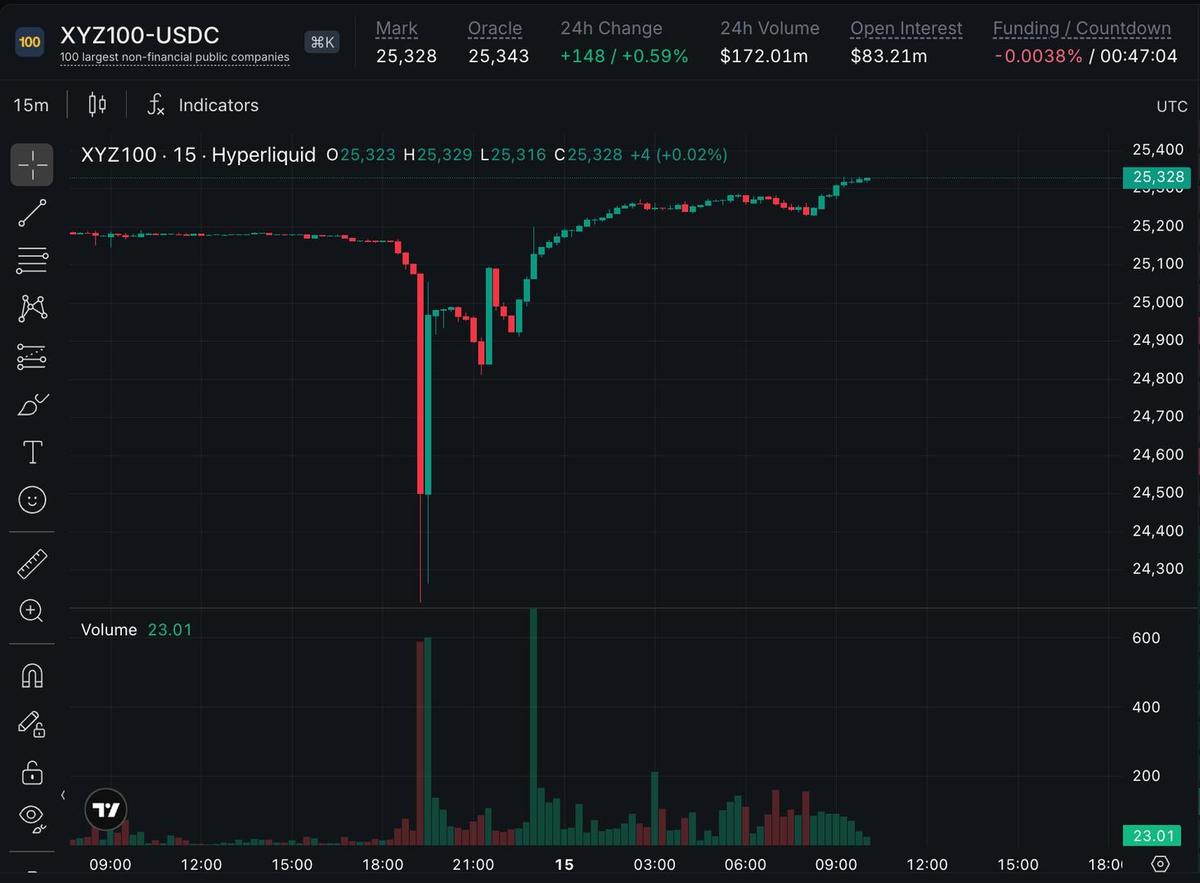
- •New wallet shorted $10 M XYZ100 via six‑hour TWAP.
- •Price fell >3.5% triggering $7.4 M trader loss.
- •Thin order book amplifies moves outside regular market hours.
- •EdgeX processed $167 B perp volume last month, rivaling top venues.
Pulse Analysis
Tokenized equity perpetual futures have surged in popularity, offering crypto traders exposure to traditional indices without leaving the blockchain. Platforms like EdgeX enable 24/7 trading, but this continuous market operates without the depth and price discovery mechanisms of the underlying equity exchanges. When markets close, order books can become thin, and large, algorithmic orders can move prices dramatically, as seen in the recent XYZ100 liquidation cascade.
The weekend event was sparked by a single wallet deploying a six‑hour TWAP strategy to short roughly $10 million worth of XYZ100 contracts. The aggressive sell pressure drove the contract price down over 3.5 % within minutes, instantly eroding collateral for leveraged longs. With no macro news to justify the move, participants on social media questioned potential manipulation, emphasizing that the lack of institutional market makers during off‑hours leaves the perp vulnerable to capital‑driven swings. This scenario illustrates how on‑chain data can reveal concentrated risk and why robust monitoring tools are essential for exchanges.
For traders, the episode serves as a cautionary tale about the perils of high‑leverage positions in thinly‑liquidated crypto perps. Platforms must enhance margin frameworks and consider dynamic funding rates to mitigate abrupt price shocks. Regulators may also scrutinize tokenized equity products as they blur lines between traditional securities and decentralized finance, potentially prompting new compliance standards. Ultimately, balancing accessibility with sound risk management will determine the long‑term viability of crypto‑linked equity derivatives.
Weekend Sell-Off Hits EdgeX’s Nasdaq-Linked Perp as $13M in Longs Liquidated
0
Comments
Want to join the conversation?
Loading comments...