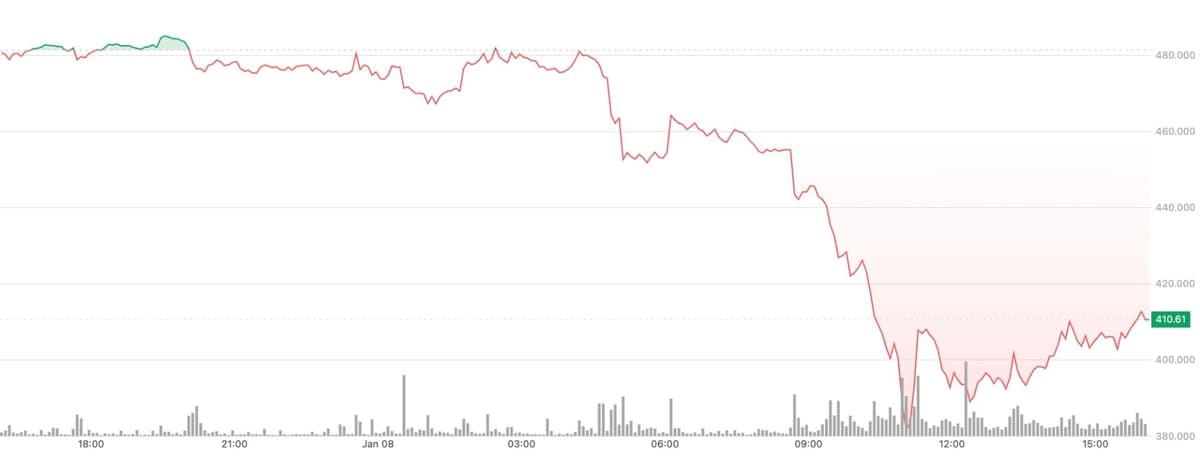
Zcash Governance Clash Tanked the Token. Here's Why It May Not Be as Big as It Seems.
•January 8, 2026
0
Companies Mentioned


Why It Matters
The split highlights how governance disputes can quickly erode investor confidence in privacy‑focused cryptocurrencies, potentially reshaping market dynamics among competing tokens.
Key Takeaways
- •ECC developers formed new company, leaving Bootstrap governance
- •ZEC token fell up to 19% after announcement
- •Protocol unchanged; development continues under new entity
- •Monero rose 6.5%, widening market‑cap lead over ZEC
- •Governance dispute underscores challenges for privacy crypto
Pulse Analysis
Zcash’s recent turmoil stems from a deep‑seated governance rift between its development arm, the Electric Coin Company, and Bootstrap, the nonprofit steward of the network. The developers argued that Bootstrap’s cautious board stifled innovation, especially around the proposed privatization of the Zashi mobile wallet. By forming a new, board‑free entity, the team aims to sidestep bureaucratic constraints while still contributing to Zcash’s open‑source codebase. This move underscores a growing tension in decentralized projects: balancing community oversight with the agility needed to advance complex cryptographic features.
The market reacted swiftly. ZEC’s price slumped nearly 19% on the news, erasing a portion of its meteoric 880% gain in 2025. Investors, wary of governance instability, shifted attention to Monero, which surged 6.5% and expanded its market‑cap advantage to roughly $8.4 billion versus ZEC’s $7 billion. The episode illustrates how perceived leadership disputes can trigger rapid capital reallocation within the privacy‑coin niche, where user trust and network resilience are paramount.
Looking ahead, Zcash’s experience may serve as a cautionary tale for other privacy protocols navigating regulatory scrutiny and internal politics. While the protocol itself remains technically intact, the split could influence future funding models, grant structures, and community engagement strategies. Projects may increasingly explore hybrid governance frameworks that preserve open‑source integrity while granting development teams enough freedom to iterate quickly, a balance that could determine long‑term competitiveness in the privacy‑centric blockchain arena.
Zcash governance clash tanked the token. Here's why it may not be as big as it seems.
0
Comments
Want to join the conversation?
Loading comments...