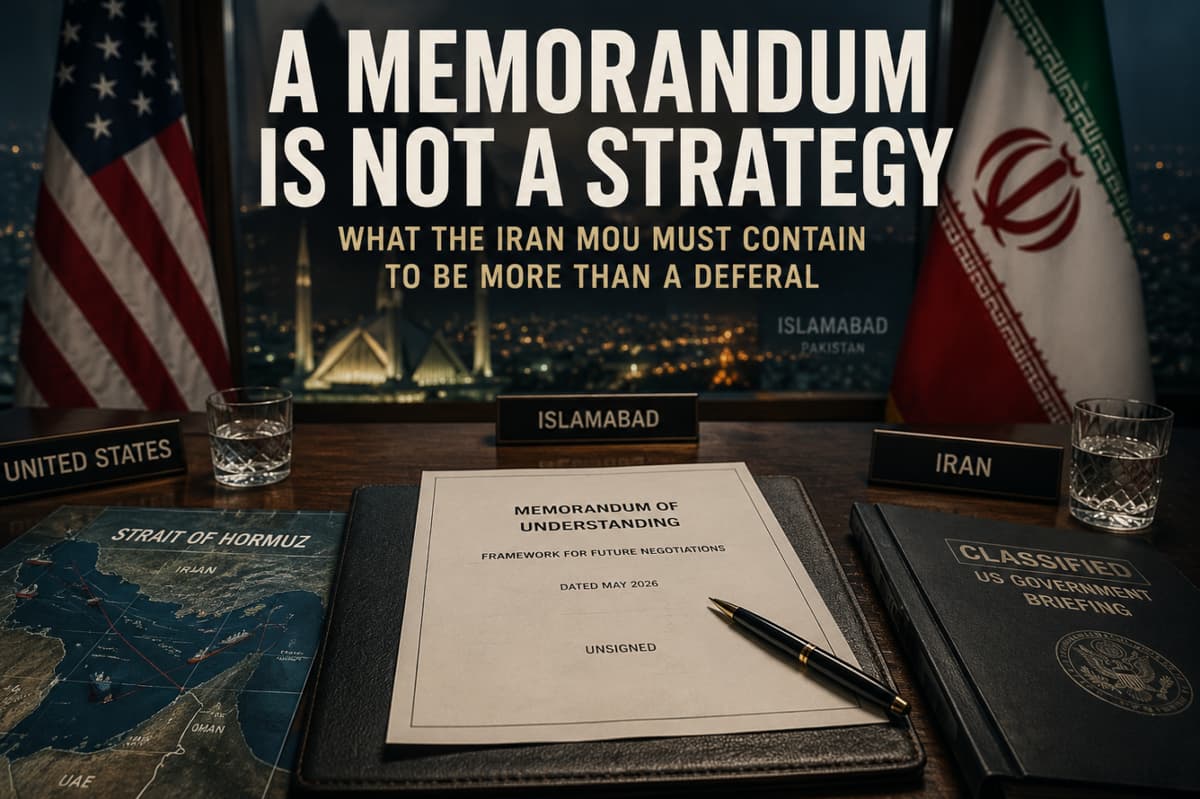
A Memorandum Is Not a Strategy: What the Iran MoU Must Contain to Be More Than a Deferral
Key Takeaways
- •MoU must set IAEA verification timeline for Iranian nuclear sites
- •Define disposition of Iran’s existing highly enriched uranium stockpile
- •Link Iranian compliance to phased US sanctions relief and blockade lift
- •Establish multilateral mechanism, not bilateral, to secure Strait of Hormuz
- •Include deadline and consequences for negotiating the deferred nuclear file
Pulse Analysis
The United States’ pivot toward a concise memorandum of understanding with Iran marks a rare diplomatic pause in a conflict that has already cost roughly $29 billion. While the cease‑fire reduces immediate kinetic risks, policymakers and congressional leaders stress that without a concrete theory of victory the MoU risks becoming a placeholder. By anchoring the agreement in verifiable milestones—such as scheduled IAEA inspections at Natanz, Isfahan and Fordow—the United States can transform a symbolic gesture into a enforceable framework that curtails Tehran’s nuclear ambitions.
Beyond verification, the memorandum must address the lingering highly enriched uranium stockpile and tie Iranian compliance to a calibrated sanctions relief schedule. A clear, sequenced pathway that links specific nuclear and maritime actions to the lifting of the naval blockade and the unfreezing of assets provides the leverage needed to ensure Tehran’s adherence. This architecture not only safeguards non‑proliferation objectives but also protects global oil flows, as the Strait of Hormuz remains a chokepoint for world energy supplies.
Finally, the MoU’s durability hinges on multilateral stewardship and rigorous interagency vetting. Recent commitments from the United Kingdom—£115 million (≈$145 million) in naval assets—and a 40‑nation coalition demonstrate the feasibility of a collective security mechanism for the Hormuz corridor. Reactivating the National Security Council’s red‑team process to stress‑test the draft will embed intelligence, Treasury and energy perspectives, ensuring the agreement withstands future geopolitical shocks. In sum, embedding verification, sanctions sequencing, and multilateral oversight transforms a deferral into a strategic settlement with lasting regional and global implications.
A Memorandum Is Not a Strategy: What the Iran MoU Must Contain to Be More Than a Deferral
Comments
Want to join the conversation?