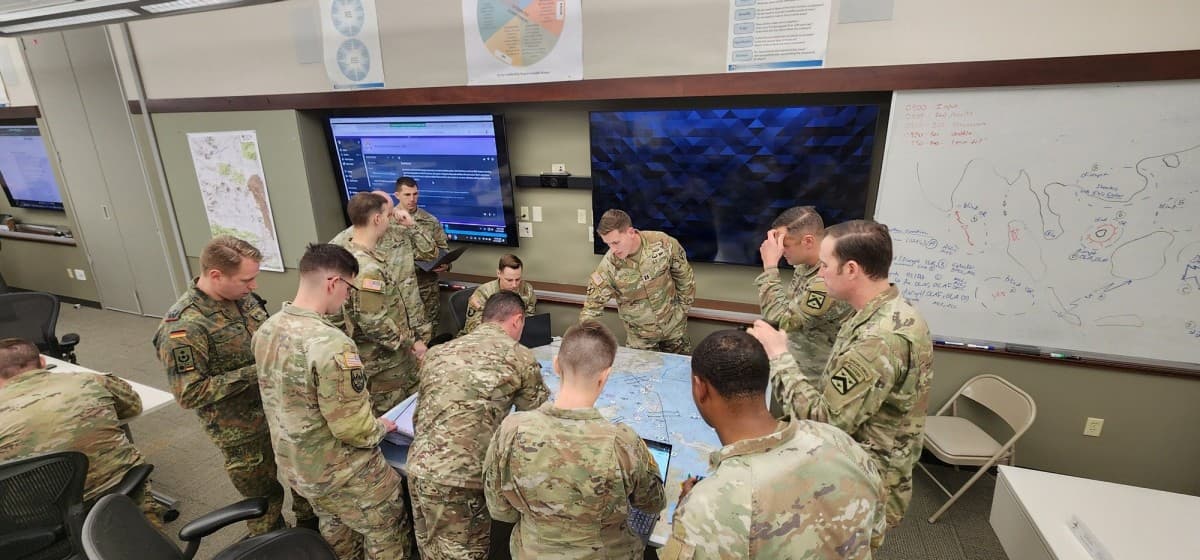
AI-First Professional Military Education: Validating the Grade Chain Before the Kill Chain
Key Takeaways
- •PME must test AI grading before battlefield AI use
- •Athena AI matched faculty grades within 5% for 84% of exams
- •Simulated council of 100 AI graders reveals uncertainty and bias
- •Multiple LLM models (GPT‑4.1, Claude 4.5) produce divergent assessments
- •AI‑assisted grading can expose rubric flaws and improve curricula
Pulse Analysis
The U.S. Department of War has declared an AI‑first posture, envisioning artificial intelligence as a force multiplier across the entire kill chain—from campaign planning to target engagement. However, the strategy’s success hinges on leaders who can interrogate AI recommendations, not merely follow them. Professional Military Education (PME) institutions are uniquely positioned to provide that crucible, using the "grade chain"—the routine process of evaluating student essays—as a low‑risk laboratory for human‑machine teaming. By embedding AI grading assistants in classrooms, the military can gather empirical evidence on how AI influences human judgment, bias detection, and decision confidence before those tools are entrusted with life‑or‑death choices on the battlefield.
A concrete illustration comes from the Athena AI‑grading assistant deployed at the Command and General Staff College. In blind trials, Athena’s scores fell within five percentage points of faculty grades for 84% of fifty exams, with an average absolute difference of just 2.6%. Beyond raw consistency, Athena uncovered contradictory language in rubrics, prompting faculty to refine assessment criteria for future cohorts. The system was further expanded into a simulated council of 100 AI graders, representing diverse grading archetypes and even multiple large language models such as GPT‑4.1 and Claude 4.5. This ensemble approach highlighted variance among models, teaching future commanders to probe confidence scores and dissenting opinions—skills directly transferable to combat decision‑making.
The implications extend beyond the military. As higher education wrestles with the influx of commercial AI tools, PME’s experiment demonstrates how AI can augment—not replace—human expertise. By capturing students’ interaction logs with AI, instructors can assess cognitive processes, offering a novel "show your work" paradigm for essays. This not only safeguards the integrity of intellectual assessment but also frees faculty to focus on mentorship and strategic problem‑solving. In short, validating the grade chain equips the armed forces with a tested, trustworthy AI framework, turning a potential gamble into a disciplined, data‑driven strategy.
AI-First Professional Military Education: Validating the Grade Chain Before the Kill Chain
Comments
Want to join the conversation?