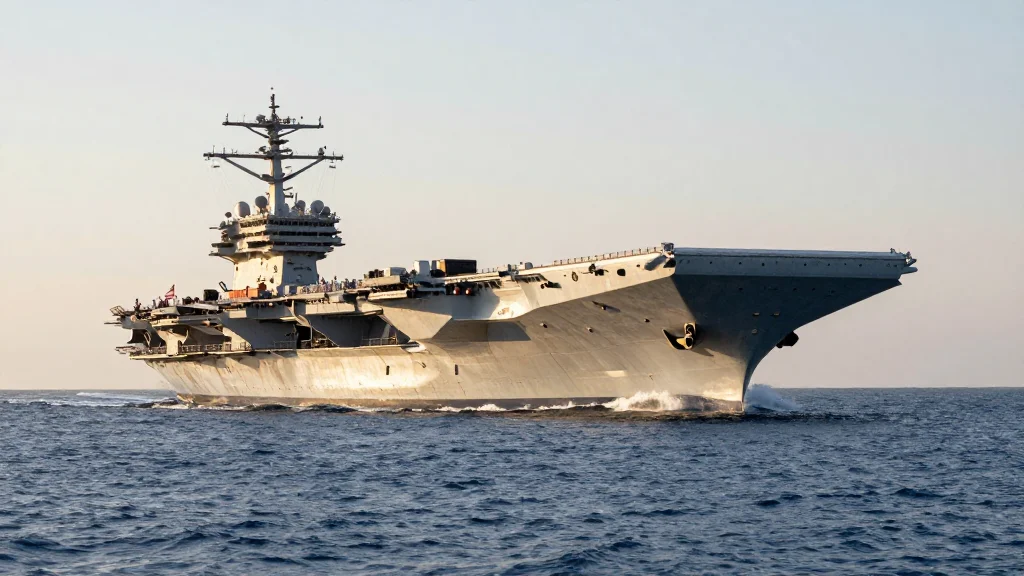
Aircraft Carrier Strike Group To Leave Middle East, Reducing Footprint Amid Iran War
Key Takeaways
- •USS Gerald R. Ford returns after 300‑day deployment.
- •Two carriers remain in Arabian Sea to enforce Iranian blockade.
- •US retains Dwight D. Eisenhower and Theodore Roosevelt for future missions.
- •Blockade has turned back or intercepted more than 40 Iranian vessels.
- •Crew fatigue and repair issues raise concerns over sustained carrier operations.
Pulse Analysis
The departure of the USS Gerald R. Ford marks the first significant reduction in U.S. carrier presence in the Middle East since the early 2000s, when six strike groups were deployed for the Iraq invasion. By contrast, today’s force consists of three groups, reflecting a strategic shift toward a more measured posture amid a fragile cease‑fire with Iran. The Ford’s extended 300‑day tour, which included operations across three continents, underscores how the Navy is stretching its newest capital ship to meet simultaneous geopolitical demands, from counter‑Venezuelan missions in the Caribbean to deterrence in the Persian Gulf.
While the remaining carriers—USS George H.W. Bush and USS Abraham Lincoln—continue to enforce a maritime blockade that has turned back over 40 Iranian vessels, the reduction in firepower could embolden Tehran to test the limits of the embargo. Analysts note that the blockade has already squeezed Iran’s oil exports, creating a growing stockpile of stranded crude on tankers. However, the effectiveness of the pressure hinges on sustained naval presence; the loss of the Ford’s advanced missile and air‑strike capabilities may limit rapid response options if tensions flare.
Looking ahead, the U.S. retains two additional carrier strike groups—USS Dwight D. Eisenhower and USS Theodore Roosevelt—positioned for rapid redeployment later this year. Their availability provides a strategic cushion, allowing Washington to re‑escalate if diplomatic avenues stall. Yet, crew fatigue and recent maintenance setbacks on the Ford raise questions about the long‑term viability of prolonged carrier rotations. Balancing operational readiness with personnel welfare will be a key factor in shaping America’s naval strategy in a conflict that appears to be evolving into a protracted economic siege rather than a conventional war.
Aircraft Carrier Strike Group To Leave Middle East, Reducing Footprint Amid Iran War
Comments
Want to join the conversation?