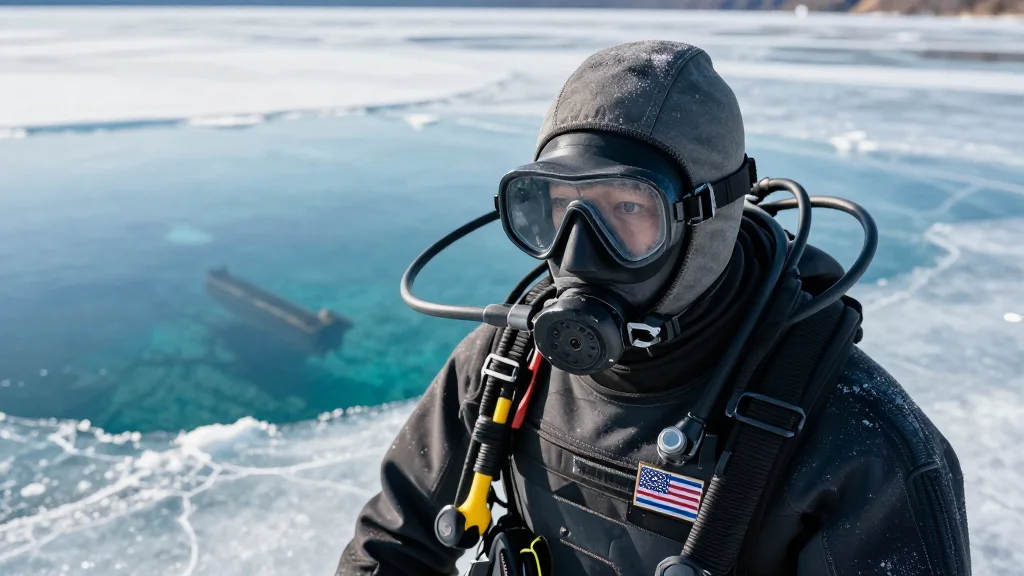
American and Estonian Divers Train Under Ice in Baltic
Key Takeaways
- •U.S. Navy Seabees train with Estonian divers in ice
- •Exercise covered ice dives, demolition, and barge salvage
- •Focus on cold‑weather readiness enhances Baltic maritime security
- •Collaboration supports humanitarian mine action and infrastructure protection
Pulse Analysis
Cold‑water diving remains one of the most demanding specialties within naval operations, requiring rigorous equipment testing, precise planning, and seamless team coordination. The U.S. Navy’s Construction Battalion (Seabees) leveraged the unique conditions of Estonia’s frozen lakes to validate dive gear performance and emergency protocols under ice. By integrating classroom theory with hands‑on ice dives and a barge salvage mission, the program not only sharpened individual diver skills but also generated actionable data for future Arctic and sub‑Arctic deployments, reinforcing the Navy’s broader E‑E‑A‑T (experience, expertise, authority, trust) credentials in extreme environments.
Strategically, the Baltic Sea is a focal point for NATO’s forward defense posture, and Estonia’s coastline sits at the frontline of potential maritime threats. The joint exercise addressed lingering explosive remnants of war and other underwater hazards that jeopardize commercial shipping lanes and critical infrastructure. By conducting live‑fire demolition drills and hazard‑identification surveys, the partners demonstrated a proactive approach to safeguarding sea‑lines of communication, thereby deterring adversarial actions and reassuring regional allies of a credible, ready response capability.
Beyond immediate tactical gains, the collaboration underscores a growing emphasis on allied interoperability and humanitarian mine action. Sharing best practices between U.S. Seabees and Estonian rescue personnel accelerates the diffusion of innovative techniques, from ice‑anchor deployment to rapid salvage procedures. This synergy not only enhances collective readiness but also positions both nations to lead future multinational training initiatives, ensuring that cold‑weather diving expertise remains a resilient pillar of maritime security in an increasingly contested Arctic and Baltic theater.
American and Estonian divers train under ice in Baltic
Comments
Want to join the conversation?