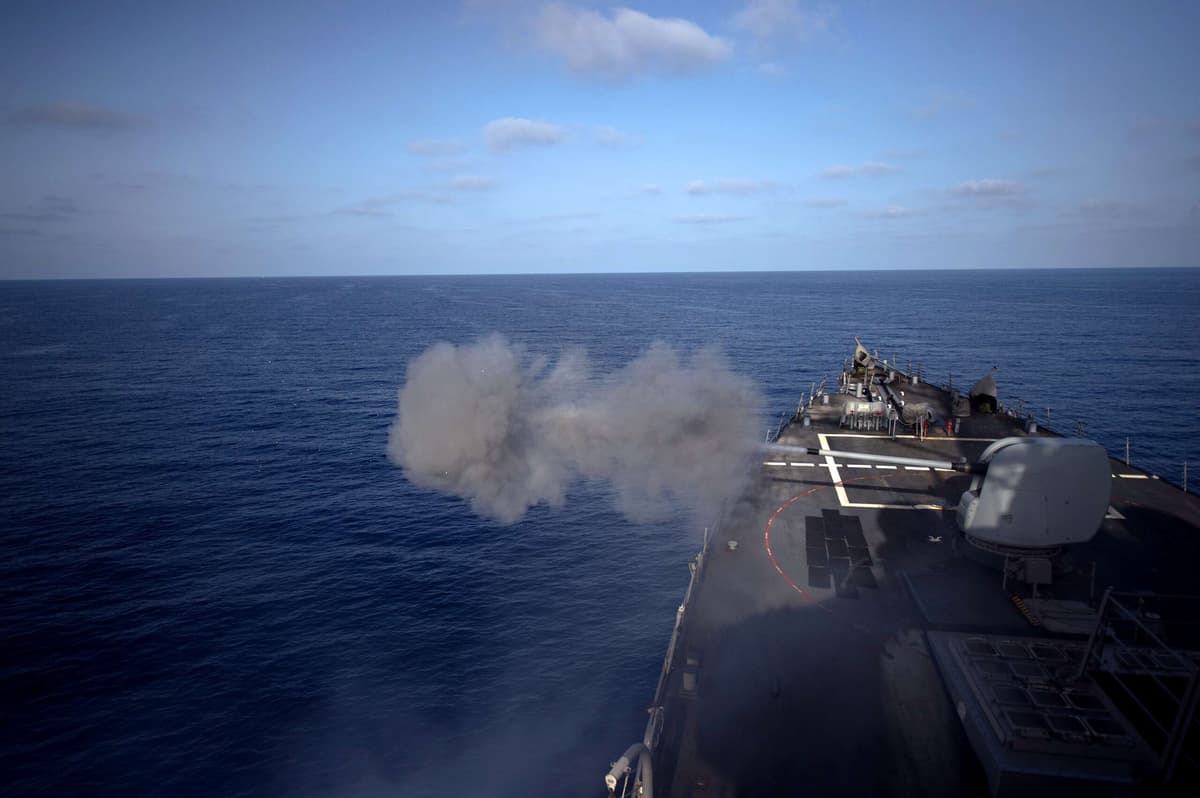
American Destroyer Opens Fire in the Mediterranean
Key Takeaways
- •USS Arleigh Burke demonstrated live‑fire of its MK 45 5‑inch gun
- •The destroyer’s Aegis system supports air, missile, and surface defense
- •Arleigh Burke class ships carry up to 90 VLS cells for diverse munitions
- •Recent drills underscore U.S. 6th Fleet’s presence in a contested Mediterranean
Pulse Analysis
The Mediterranean remains a strategic crossroads where European, African, and Middle‑Eastern interests intersect, making naval presence a cornerstone of regional stability. The U.S. 6th Fleet, headquartered in Naples, routinely deploys destroyers like the Arleigh Burke to conduct patrols, joint exercises, and freedom‑of‑navigation operations. By showcasing live‑fire capabilities, the Navy signals to both allies and potential adversaries that its forward‑deployed forces are fully operational and ready to respond to emerging threats, reinforcing the broader transatlantic security architecture.
At the heart of the Arleigh Burke class’s effectiveness is a blend of kinetic and electronic firepower. The MK 45 5‑inch gun provides rapid, accurate fire for surface engagements, naval gunfire support, and close‑range air defense, while the Aegis combat system, paired with SPY‑1D or the newer SPY‑6 radar, integrates sensor data to track and engage multiple threats simultaneously. With up to 90 vertical‑launch system (VLS) cells, the destroyer can launch Standard surface‑to‑air missiles, Tomahawk land‑attack cruise missiles, and ASROC anti‑submarine rockets, granting it a versatile strike envelope that few surface combatants can match.
The recent live‑fire event follows the April 2024 interception of Iranian ballistic missiles, where Arleigh Burke and USS Carney neutralized at least six projectiles aimed at Israel. This operational success, combined with routine gunnery drills, underscores the ship’s role as a deterrent in a region marked by heightened tensions and contested maritime claims. Continued collaboration with NATO partners during such exercises not only hones interoperability but also projects a unified front against aggression, ensuring that the U.S. maintains a credible and adaptable maritime presence in the Mediterranean for years to come.
American destroyer opens fire in the Mediterranean
Comments
Want to join the conversation?