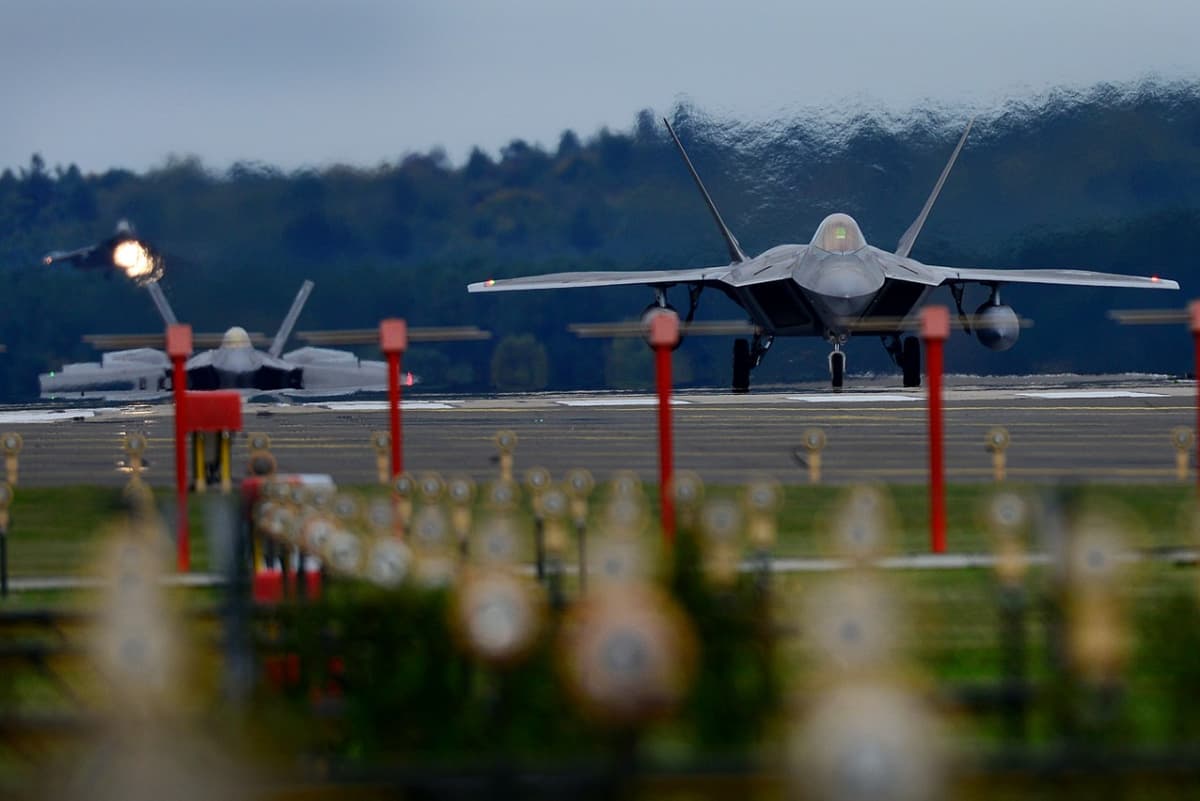
American Stealth Fighters Arrive in UK in Iran Build-Up
•February 17, 2026
0
Key Takeaways
- •Six F-22 Raptors landed at RAF Lakenheath
- •KC-46A and KC-135 tankers enabled transatlantic deployment
- •Moves coincide with heightened US-Iran tensions
- •Two US carrier strike groups near Iranian waters
- •Signals reinforced NATO deterrence posture in Europe
Summary
Six U.S. Air Force F-22 Raptor stealth fighters arrived at RAF Lakenheath in the United Kingdom, escorted by KC-46A Pegasus and KC-135 Stratotanker aerial refuelers. The deployment is part of a broader U.S. force posture aimed at deterring Iran amid rising regional tensions. Simultaneously, the nuclear‑powered carriers USS Abraham Lincoln and USS Gerald R. Ford are operating near the Arabian Sea, positioning two carrier strike groups within reach of Iranian waters. These moves underscore a coordinated transatlantic effort to project power and reassure NATO allies.
Pulse Analysis
The arrival of six F-22 Raptor stealth fighters at the UK’s RAF Lakenheath marks a rare forward deployment of America’s premier air‑superiority platform. Leveraging KC-46A Pegasus and KC-135 Stratotanker support, the jets bypassed the Atlantic without compromising range, showcasing the logistical sophistication of U.S. Air Force expeditionary operations. This move not only reinforces the United Kingdom’s air defence capabilities but also integrates seamlessly with NATO’s integrated air and missile defence architecture, providing a rapid‑response option should the situation in the Middle East deteriorate.
Beyond the aircraft, the simultaneous positioning of the nuclear‑powered carriers USS Abraham Lincoln and USS Gerald R. Ford in the Arabian Sea signals a multi‑domain escalation of U.S. force posture. With two carrier strike groups within striking distance of the Strait of Hormuz, the United States is projecting sea‑based power to complement its air assets, creating a layered deterrent that complicates any potential Iranian calculus. The coordinated deployment reflects a broader strategic shift toward forward‑leaning presence, aimed at reassuring European allies while pressuring Tehran to moderate its rhetoric and nuclear ambitions.
For defense industry observers, the deployment underscores heightened demand for advanced platforms, sustainment contracts, and interoperability solutions across the Atlantic. Suppliers of stealth technology, aerial refuelling systems, and carrier‑based aircraft stand to benefit from increased procurement cycles. Moreover, the visible U.S. commitment may accelerate NATO members’ own modernization programs, as they seek to align capabilities with American standards. As diplomatic talks in Geneva continue, the balance between deterrence and escalation will remain a focal point for policymakers and market analysts alike.
Comments
Want to join the conversation?