Analysis: ISKP’s Exploitation of the Af-Pak Border War
Key Takeaways
- •ISKP launched open war against BLA after May 2025 Mastung video.
- •Pakistan’s military focus split across Taliban, TTP, BLA, and ISKP.
- •ISKP uses Telegram and encrypted apps to recruit Baloch militants.
- •BLA’s 2025 Jaffar Express hijacking escalated its urban attack capability.
- •U.S. counterterrorism faces reduced on‑ground intel after 2021 NATO withdrawal.
Pulse Analysis
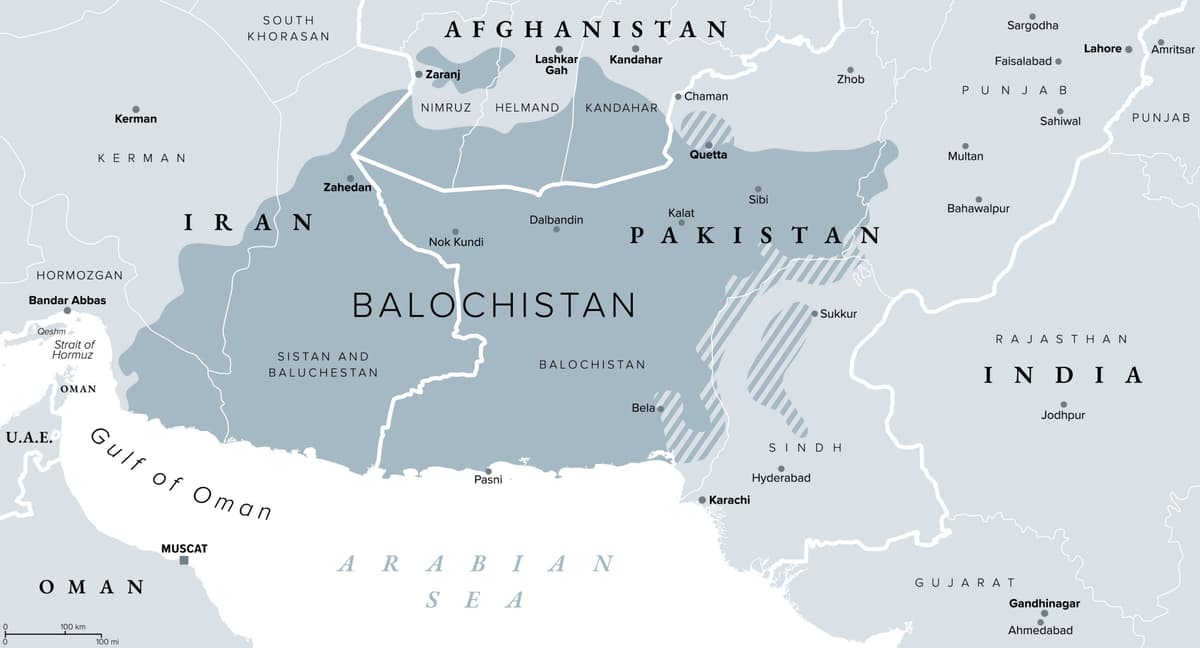
The strategic overlap of the Afghanistan‑Pakistan "open war" and the broader Iran‑Israel‑U.S. confrontation has turned the Durand Line into a fluid battlefield. Pakistan’s declaration in February 2026 to confront the Afghan Taliban stretched its forces thin, while the porous border enabled ISKP to embed operatives in Balochistan’s rugged terrain. This convergence creates a "triple threat" environment where state actors, separatist insurgents, and transnational jihadists compete for influence, reshaping the security calculus for regional powers and allies.
ISKP’s tactics have evolved beyond conventional guerrilla attacks. Since early 2025 the group has leveraged a 36‑minute Pashto propaganda video to legitimize its assault on the BLA, framing Baloch nationalism as "ethnic apostasy." Simultaneously, it has adopted encrypted messaging platforms—Telegram, Element, and semi‑secure channels—to recruit local translators and disseminate jihadist narratives in Balochi. By localizing content and exploiting digital survivability, ISKP can siphon fighters from weakened nationalist groups, turning language barriers into recruitment opportunities while evading traditional surveillance.
For U.S. counter‑terrorism policy, the situation demands a recalibrated approach. The 2021 NATO withdrawal left a vacuum in on‑the‑ground intelligence, forcing reliance on remote sensing and partner networks that are now overstretched. Coordinated efforts must integrate cyber‑monitoring of encrypted jihadist channels with enhanced support for Pakistani and Afghan security forces, emphasizing border‑security cooperation and targeted disruption of ISKP’s financing streams. Failure to adapt could allow ISKP to cement a foothold in Balochistan, further destabilizing a region already strained by competing geopolitical flashpoints.
Analysis: ISKP’s Exploitation of the Af-Pak Border War
Comments
Want to join the conversation?