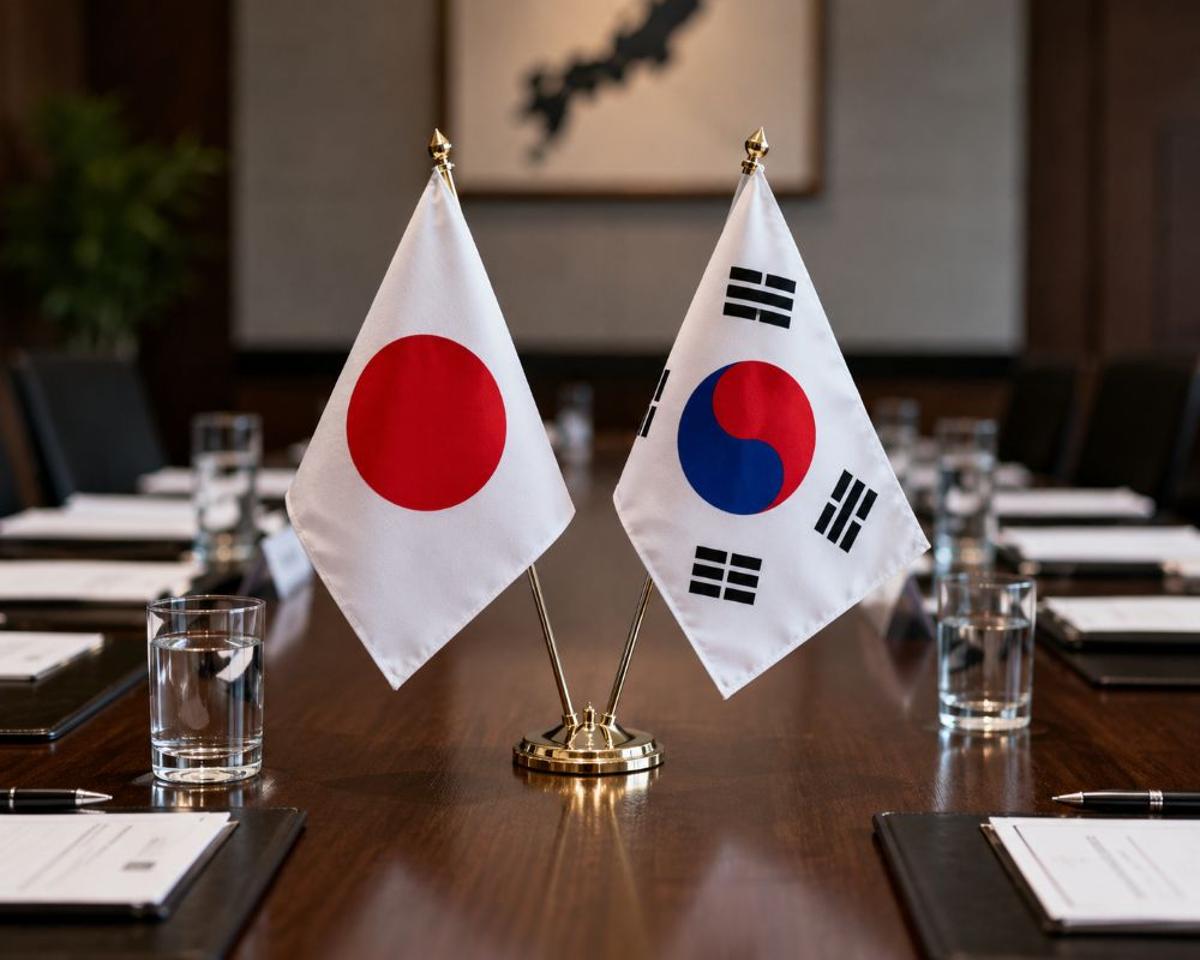
Between Two Fronts: Why Japan-South Korea Security Cooperation Is No Longer Optional
Key Takeaways
- •Dual contingency of Taiwan and North Korea strains U.S. resources
- •Japan‑South Korea coordination essential for regional deterrence
- •Real‑time intelligence sharing and joint planning close coordination gaps
- •Joint defense production and maritime patrols boost resilience
Pulse Analysis
East Asia’s security calculus is undergoing a profound shift. A potential Chinese move on Taiwan combined with an aggressive North Korean posture creates a dual‑contingency scenario that could overwhelm the United States, which is already juggling commitments in Europe and the Indo‑Pacific. In such a context, the traditional U.S.‑centric alliance model is no longer sufficient; frontline allies must assume a larger share of the burden to preserve deterrence and prevent escalation. This reality compels Japan and South Korea to move beyond symbolic gestures and develop a functional, integrated defense posture.
The most immediate avenues for deepening cooperation lie in intelligence, planning, and operational interoperability. Expanding the General Security of Military Information Agreement into an automated, real‑time missile‑tracking network would give both nations early warning of Chinese or North Korean launches. A permanent bilateral—or trilateral with the United States—planning organization could conduct joint wargames, develop shared escalation‑management doctrines, and align command‑and‑control systems. Practical steps such as integrating Japan’s Aegis destroyers with South Korea’s ground‑based missile defenses, synchronizing logistics pipelines, and co‑producing precision‑guided munitions would transform rhetoric into tangible capability, reducing early‑war reliance on U.S. resupply.
Political and historical frictions, however, remain a barrier. Domestic narratives in South Korea about wartime grievances and territorial disputes in Japan can stall policy momentum. Strong leadership that frames cooperation as a strategic necessity—rather than a concession—will be crucial to securing public support. By institutionalizing joint mechanisms and presenting a unified security narrative, Japan and South Korea can mitigate the risk of a fragmented defense posture, safeguard critical sea lanes, and reinforce the broader U.S. alliance architecture. Their coordinated response will shape not only regional stability but also the global perception of allied resolve.
Between Two Fronts: Why Japan-South Korea Security Cooperation Is No Longer Optional
Comments
Want to join the conversation?