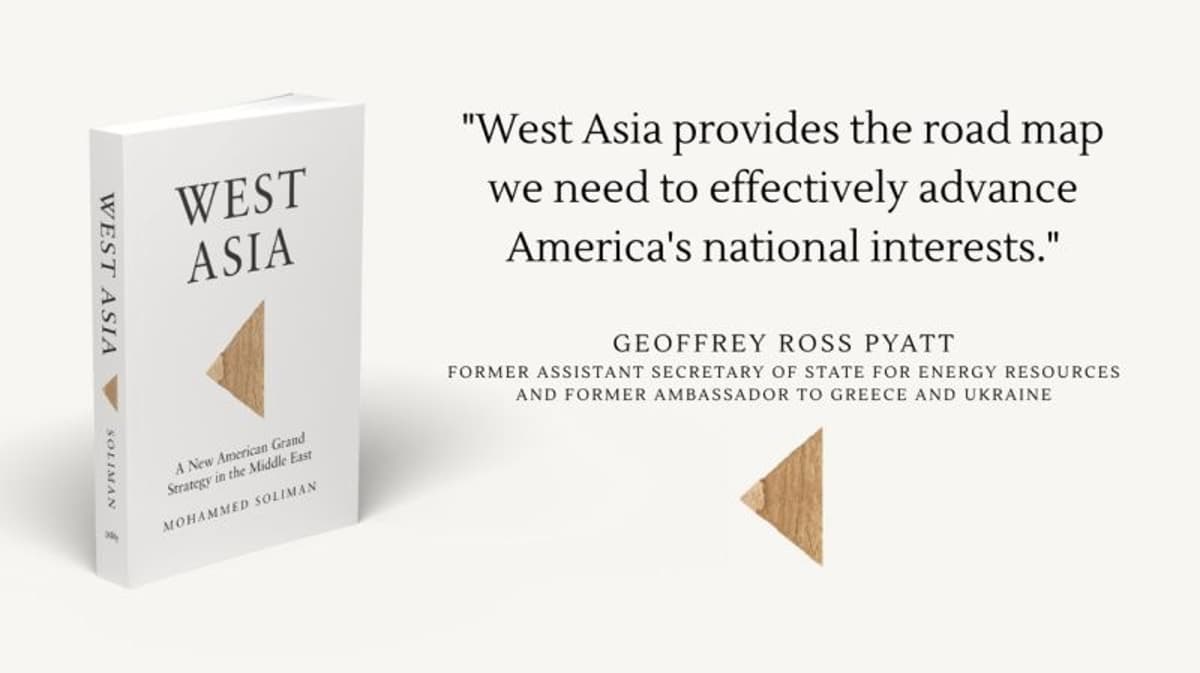
Book Review | West Asia: A New American Grand Strategy in the Middle East
Key Takeaways
- •US must treat Middle East as Indo‑Pacific strategic corridor.
- •China rivalry drives new American grand strategy focus.
- •Maritime chokepoints and tech coalitions crucial for US security.
- •Regional alliances reshape US engagement amid Iran conflict.
- •Asia‑first lens addresses overextension in Middle East.
Pulse Analysis
The United States is at a strategic crossroads, balancing the need to contain China’s rising influence with the desire to avoid a costly, perpetual presence in the Middle East. Soliman’s thesis reframes the region as an extension of the Indo‑Pacific theater, arguing that every diplomatic overture, military deployment, and economic partnership should be measured against its effect on America’s position in the broader China rivalry. By treating the Gulf’s sea lanes and emerging tech‑driven coalitions as integral to the Pacific balance, policymakers can craft a more coherent, Asia‑first grand strategy that reduces redundancy and focuses resources where they matter most.
In practice, this perspective reshapes how Washington engages with key regional actors. The ongoing war in Iran, the burgeoning Abrahamic alliances among Israel, the UAE, and India, and Turkey’s shifting posture all become variables in a larger equation of Indo‑Pacific security. Gulf states that align with U.S. interests can serve as forward bases for monitoring Chinese maritime activity, while collaborative tech initiatives with South Korea and Japan can counter Beijing’s digital expansion. Soliman’s analysis suggests that a calibrated U.S. presence—leveraging partnerships rather than unilateral commitments—will enhance stability and deter adversarial encroachment.
Looking ahead, the book’s insights could influence congressional debates and defense budgeting, urging a pivot toward integrated, cross‑regional planning. Emphasizing maritime chokepoints like the Strait of Hormuz and fostering techno‑economic coalitions may provide the United States with strategic depth without overextending troops. As great‑power competition intensifies, adopting Soliman’s corridor‑centric framework could help the U.S. maintain global influence while avoiding the pitfalls of endless Middle Eastern entanglements.
Book Review | West Asia: A New American Grand Strategy in the Middle East
Comments
Want to join the conversation?