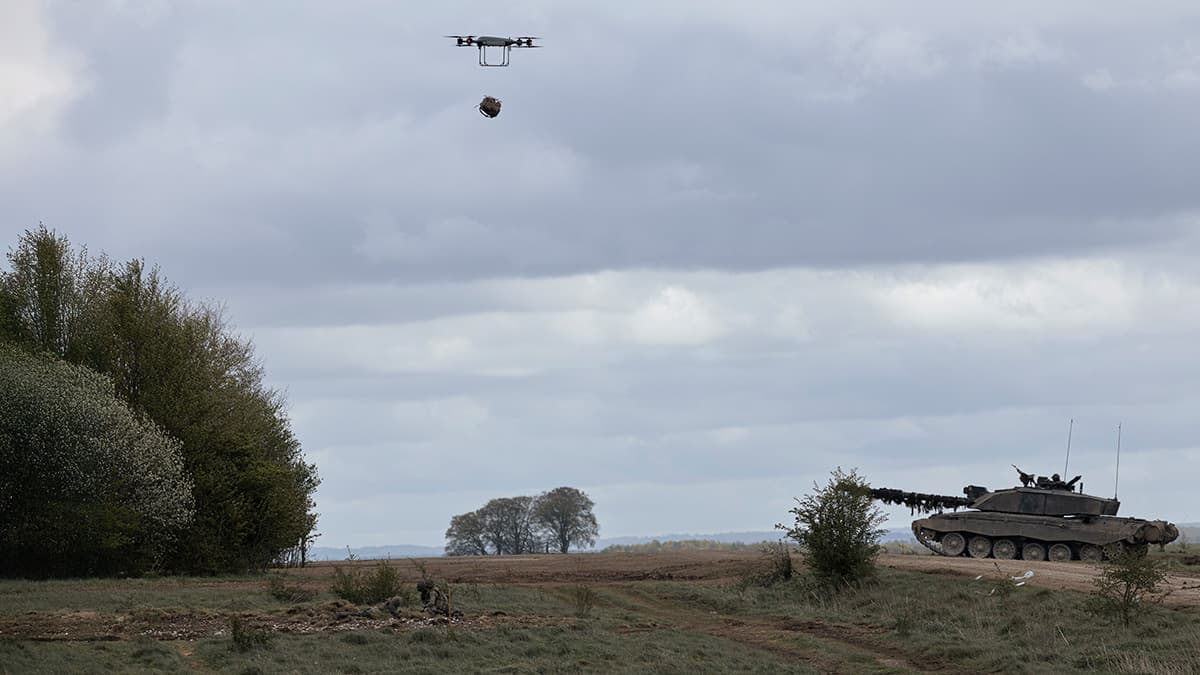
British Army Demonstrates Future Mix of Drones and Armour
Key Takeaways
- •British Army proposes 20‑40‑40 mix: 20% crewed, 40% reusable drones, 40% expendables
- •Two‑division model pairs heavy armoured 3rd Division with light mechanised brigades
- •Project ASGARD will fuse AI targeting with surveillance, artillery and missiles
- •Speed of testing and fielding unmanned systems becomes decisive battlefield advantage
- •Industry will collaborate directly with frontline units to accelerate requirement cycles
Pulse Analysis
The 2025 Strategic Defence Review marks a decisive pivot for the British Army, moving away from a legacy infantry‑centric order of battle toward a blended force architecture. By allocating 20 percent of combat power to crewed platforms and the remaining 80 percent to a mix of reusable and expendable unmanned systems, the UK aims to achieve a “high‑low” capability envelope that can strike at range while preserving manpower. Project ASGARD sits at the heart of this transformation, stitching together AI‑driven sensor fusion, digital targeting webs, and long‑range fire assets to deliver machine‑speed decision cycles on the battlefield.
Operationally, the two‑division construct balances the strengths of heavy armour with the agility of light mechanised units. The 3rd (UK) Division retains tracked tanks and IFVs for decisive close‑battle engagements, while the lighter brigades, equipped with Foxhound and Jackal wheeled platforms, provide rapid‑deployment screens and deep‑fire platforms. Ukraine’s recent experience demonstrates that without sufficient heavy firepower, even well‑trained infantry can falter in counter‑offensives, reinforcing the British decision to preserve a robust manoeuvre element alongside its emerging drone‑centric forces.
The strategic shift also forces a rethink of defence acquisition. Speed, rather than sheer platform cost, becomes the decisive factor; the Army must iterate, test, and field new unmanned solutions within weeks. This necessitates a tighter partnership with industry, where requirement definition is delegated to regiment‑level operators and SMEs deliver modular, scalable technologies. Such an approach promises a more resilient, adaptable force capable of meeting the fluid threats of modern high‑intensity warfare.
British Army demonstrates future mix of drones and armour
Comments
Want to join the conversation?