Key Takeaways
- •Gerald R. Ford CSG entered Red Sea via Suez Canal April 16
- •Abraham Lincoln CSG enforces blockade in northern Arabian Sea
- •Tripoli ARG seized Iranian‑flagged MV Touska after Spruance warning
- •US forces redirected 25 commercial vessels since blockade began
- •Theodore Roosevelt CSG departed San Diego, testing Raytheon Coyote UAS launcher
Pulse Analysis
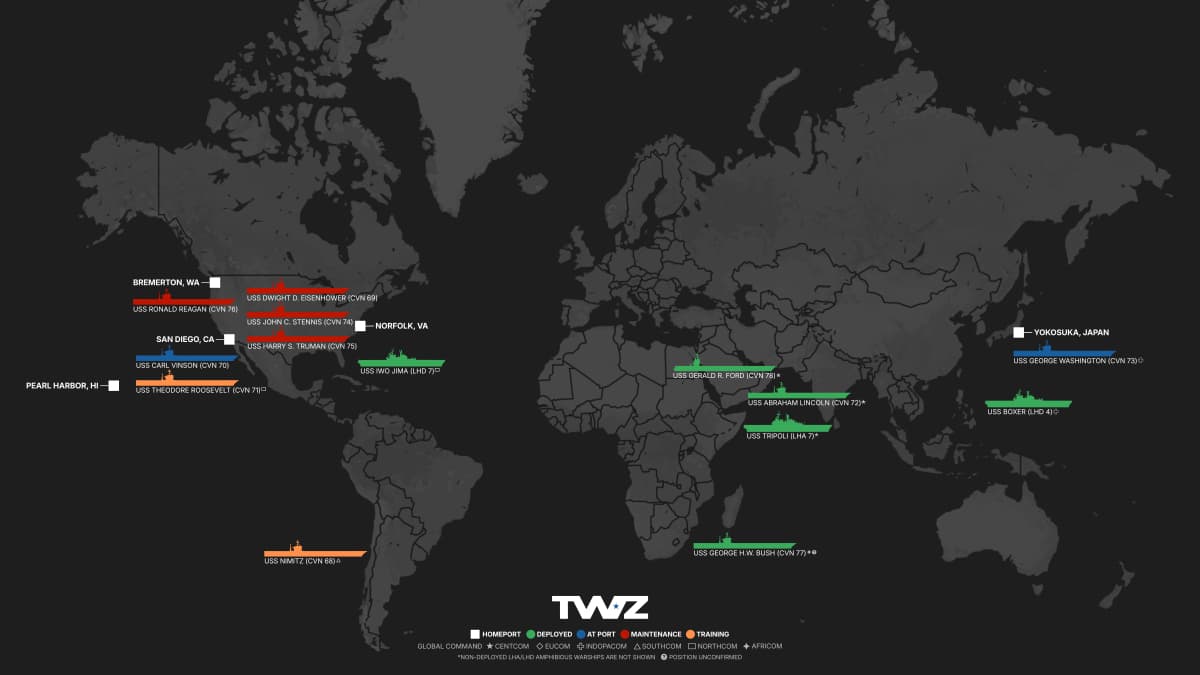
The United States has concentrated three of its most powerful carrier strike groups—Gerald R. Ford, Abraham Lincoln and the soon‑to‑arrive George H.W. Bush—in the CENTCOM area of responsibility, creating a formidable maritime presence aimed at enforcing a newly announced blockade of Iranian ports. By transiting the Suez Canal and operating in the Red Sea, Arabian Sea and off the Horn of Africa, these carriers provide layered coverage that can interdict vessels attempting to supply Tehran, while also deterring any hostile naval action in a region already fraught with tension.
The blockade’s early impact is already measurable. Within the first 48 hours, U.S. forces have forced 25 commercial ships to reverse course or return to Iranian ports, and the Tripoli amphibious ready group, carrying the 31st Marine Expeditionary Unit, seized the Iranian‑flagged MV Touska after USS Spruance fired warning rounds at its engine room. These actions demonstrate a willingness to apply kinetic pressure beyond diplomatic warnings, raising the cost of maritime trade with Iran and prompting shipping companies to reassess routing strategies to avoid potential interdiction.
Looking ahead, the deployment signals that the U.S. Navy is prepared for a prolonged maritime campaign. The Theodore Roosevelt carrier’s departure from San Diego for integrated training, coupled with the testing of Raytheon’s Coyote 8‑cell counter‑UAS launcher, highlights a focus on enhancing defensive capabilities against emerging drone threats. As the situation evolves, the presence of three carriers in the Middle East will likely shape both regional power calculations and global supply‑chain decisions, reinforcing the strategic importance of naval power in modern geopolitical contests.
Carrier Tracker As of April 20, 2026
Comments
Want to join the conversation?