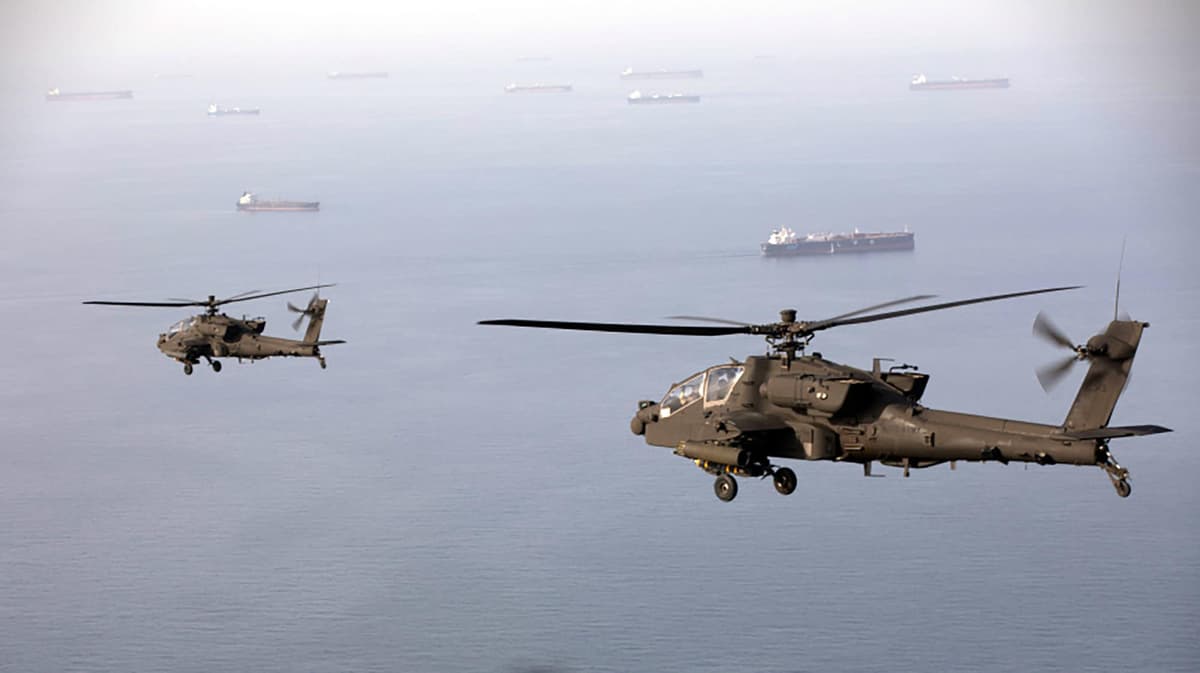
CENTCOM Releases Images of Apaches Over Strait of Hormuz as Iran Reimposes Restrictions
Key Takeaways
- •CENTCOM posted Apache patrol photos amid renewed Iranian restrictions.
- •IRGC gunboats fired on an Indian tanker; crew unharmed.
- •U.S. blockade forced 23 vessels to reverse course.
- •Operation Epic Fury deploys A‑10s and Apaches to hunt fast craft.
- •Apache’s sensors and weapons enable counter‑drone, boat engagements.
Pulse Analysis
The Strait of Hormuz remains one of the world’s most critical maritime chokepoints, funneling about 20% of daily global oil shipments. Recent Iranian moves to reimpose restrictions, coupled with a direct attack on an Indian‑flagged tanker, have revived concerns about the waterway’s vulnerability to geopolitical flashpoints. While Tehran claims the strait is open, its IRGC navy’s aggressive posture underscores a broader strategy to leverage the narrow passage as a bargaining chip against U.S. sanctions.
In response, the United States has amplified its presence through Operation Epic Fury, fielding A‑10 Thunderbolt II aircraft and AH‑64 Apache helicopters to patrol the southern flank. The Apache, equipped with the AN/APG‑78 Longbow radar, electro‑optical/infrared sensors, and a flexible weapons suite—including 30 mm cannon, Hellfire missiles, and guided rockets—offers persistent, high‑precision engagement of fast‑attack craft and one‑way attack drones. Recent counter‑UAS demonstrations highlight the platform’s ability to detect, track, and neutralize low‑observable threats, reinforcing its role as a versatile hunter‑killer in littoral environments.
The escalation carries significant implications for global trade. Any sustained disruption could trigger spikes in crude prices, prompting insurers to raise freight premiums and shippers to reroute vessels around longer, costlier paths. Moreover, the visible U.S. military footprint signals a commitment to freedom of navigation, yet also raises the risk of inadvertent escalation between U.S. forces and Iranian assets. Stakeholders—from energy traders to multinational logistics firms—must monitor the evolving security dynamics as they assess risk mitigation strategies and potential supply‑chain impacts.
CENTCOM Releases Images of Apaches Over Strait of Hormuz as Iran Reimposes Restrictions
Comments
Want to join the conversation?