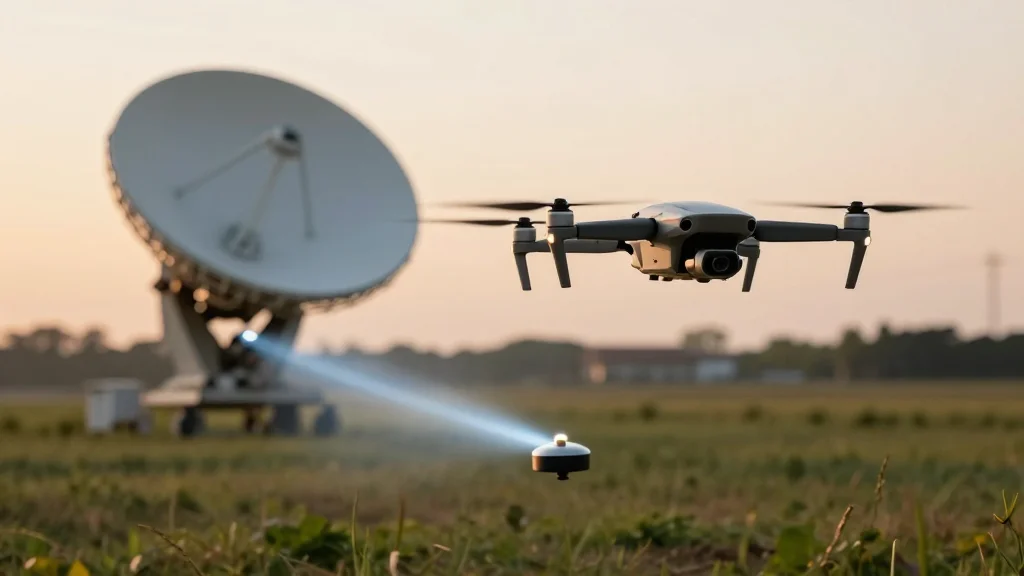
China Tests Directed Energy Beam That Recharges Drones Mid-Flight
Key Takeaways
- •China achieved 3.1‑hour in‑flight drone power via microwave beam
- •Mobile ground emitter kept alignment using GPS and real‑time tracking
- •Microwave charging works in poor weather, can power multiple drones simultaneously
- •Extends drone endurance, freeing payload capacity for sensors or weapons
- •US DARPA pursues rival RF and laser charging, highlighting global race
Pulse Analysis
China’s latest test of a microwave‑based wireless power transfer system signals a potential breakthrough in unmanned aerial endurance. By directing a focused microwave beam from a mobile ground unit to an antenna array beneath a drone, researchers sustained flight for over three hours—far beyond typical battery limits. The experiment proved the concept works not only in a static setup but also while both transmitter and receiver moved, a critical step toward operational deployment. This capability could enable continuous surveillance, strike, or electronic‑warfare missions without the logistical burden of frequent landings.
The technical heart of the system lies in its precise beam‑steering architecture. Combining GPS positioning with a real‑time tracking loop and adaptive flight‑control inputs, the emitter maintained alignment despite motion and environmental disturbances. Microwave frequencies, unlike laser links, are less susceptible to fog, dust or turbulence, offering reliable power delivery in adverse weather. Moreover, a single emitter can theoretically service multiple drones concurrently, presenting a scalable solution for dense battlefield environments where resilience and rapid re‑tasking are essential.
Strategically, the development intensifies the US‑China competition in next‑generation drone logistics. While DARPA funds RF and laser‑based charging projects, China’s focus on microwave transmission emphasizes robustness and multi‑drone scalability. If integrated into future platforms, the technology could reduce onboard battery mass, freeing space for heavier payloads or longer‑range sensors, thereby reshaping drone design philosophy. As militaries worldwide seek to extend the operational envelope of autonomous systems, in‑flight wireless charging is poised to become a pivotal capability in the coming decade.
China Tests Directed Energy Beam That Recharges Drones Mid-Flight
Comments
Want to join the conversation?