CISA Releases Binding Operational Directive on Prioritizing Security Updates Based on Risk
Key Takeaways
- •CISA mandates 3‑60 day remediation based on risk factors
- •Agencies must scan exposed IPs quarterly and update asset tags
- •KEV catalog triggers response actions within 2‑24 hours
- •Contractors may face new FedRAMP or contract clauses
- •Forensic triage required for publicly exposed, exploited vulnerabilities
Pulse Analysis
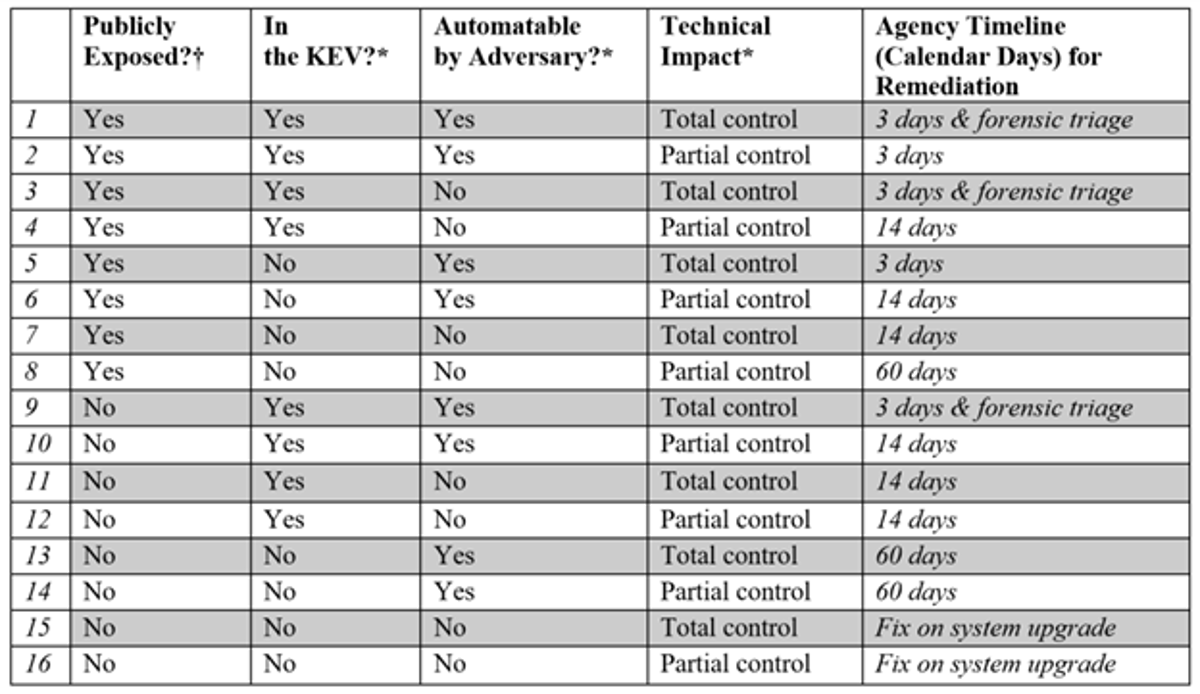
The surge in publicly disclosed vulnerabilities—accelerated by AI‑driven discovery tools—has outpaced traditional patch cycles, prompting CISA to act. Binding Operational Directive 26-04 formalizes a risk‑based approach, compelling agencies to assess each flaw against four criteria: public exposure, inclusion in the Known Exploited Vulnerabilities (KEV) catalog, automation potential, and technical impact. By mapping these factors to remediation windows ranging from three to 60 days, the directive aims to shrink the attacker’s dwell time while preserving resources for lower‑risk issues.
Operationally, the directive reshapes federal vulnerability management. Agencies must embed new processes into their policies, conduct quarterly scans of externally reachable IPs and domains, and maintain an up‑to‑date inventory of assets that can be accessed from the internet. The accompanying implementation guidance tightens response timelines: once a CVE lands in the KEV catalog, teams have as little as two hours to scope the threat, preserve volatile evidence, and begin critical patching. For high‑exposure assets, forensic triage becomes mandatory, ensuring that any compromise is identified before remediation actions potentially erase vital data.
While the BOD targets federal entities, its ripple effects will be felt across the broader supply chain. Contractors operating federal systems, cloud service providers, and firms seeking FedRAMP authorization will likely see similar risk‑based clauses embedded in contracts. Early adoption can give private organizations a competitive edge, demonstrating robust cyber‑hygiene to both government customers and the market at large. Ultimately, the directive sets a new baseline for vulnerability stewardship, encouraging a proactive, data‑driven posture that aligns remediation effort with actual threat severity.
CISA Releases Binding Operational Directive on Prioritizing Security Updates Based on Risk
Comments
Want to join the conversation?