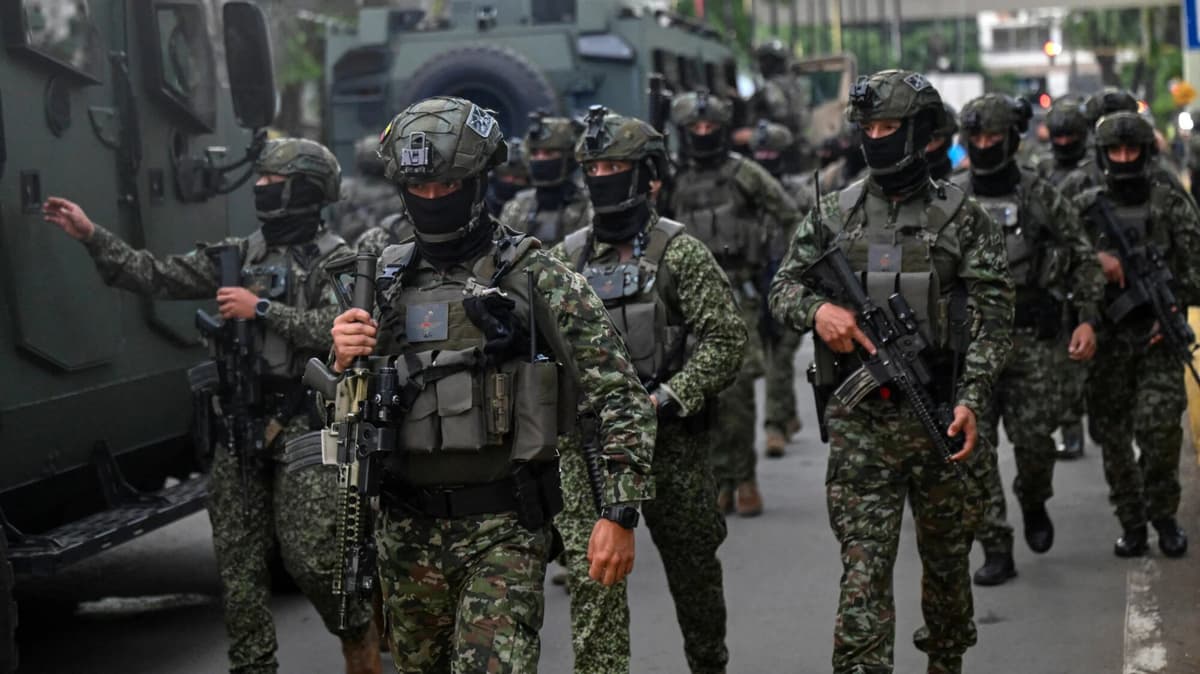
“Es Colombia, Es Ucrania, Y Es…”: The Global Export of Colombian Mercenaries
•March 8, 2026
0
Key Takeaways
- •Colombia retires ~10,000 soldiers yearly, limited civilian jobs
- •Veterans serve in Ukraine, Yemen, Sudan, North Africa
- •Mexican cartels recruit Ukrainian‑experienced Colombian fighters
- •Drone warfare skills flow back to Colombian insurgents
- •Private security demand fuels unregulated global violence market
Summary
Colombia is emerging as a major exporter of military labor, with roughly 10,000 former soldiers entering the private‑security pool each year. These veterans are now fighting in conflict zones from Ukraine to Yemen and are also being hired by Mexican drug cartels. Their experience in counter‑insurgency and high‑intensity warfare, including drone operations, is reshaping combat tactics across continents. The growing pipeline creates a fluid, poorly regulated market for violence centered on Colombian ex‑combatants.
Pulse Analysis
The surge of Colombian ex‑soldiers into the private‑security arena is rooted in decades of state‑sponsored counterinsurgency and the legacy of Plan Colombia. As the Colombian military downsizes, thousands of mid‑career officers face inadequate pensions and scarce civilian opportunities, prompting them to leverage combat experience for lucrative contracts abroad. International firms, initially linked to U.S. contractors, have built recruitment networks that channel these veterans into conflict zones where their tactical expertise is in high demand.
The war in Ukraine has become a crucible for this export, exposing Colombian mercenaries to conventional battlefield environments, sophisticated drone warfare, and trench combat. Those who return home or move to Latin America bring back cutting‑edge tactics, which Mexican cartels like the Jalisco New Generation have eagerly adopted to modernize their arsenals. This cross‑pollination accelerates the diffusion of unmanned systems and urban warfare techniques, blurring the line between state‑level conflict and organized crime, and raising the lethality of illicit violence across the Americas.
Looking ahead, the expanding contractor‑heavy security model threatens to outpace existing oversight mechanisms. Governments and multinational corporations increasingly rely on private forces to mitigate risk, while criminal groups mimic the same approach, creating a marketplace where violence is commodified and loosely regulated. Policymakers must confront the dual challenge of providing viable reintegration pathways for retired soldiers and establishing robust international standards for private military operations to prevent a further erosion of global security norms.
Comments
Want to join the conversation?